
Laibin Cement Prefabricated House
Currently, there is no direct detailed information about 'Laibin Cement Prefabricated House', but we can provide a general introduction to the characteristics of cement prefabricated houses.
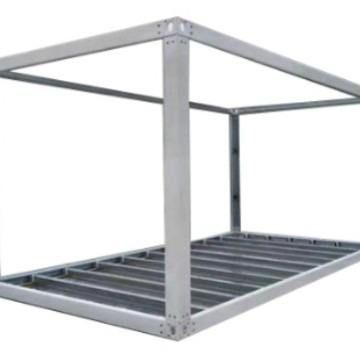
Definition and Principle of Cement Prefabricated Houses
Cement prefabricated houses are a form of construction that utilizes factory-prefabricated components assembled and joined on-site. The core principle involves pre-manufacturing various parts of the house, such as walls, floors, and roof panels, in a factory according to design specifications. These components typically use cement as the primary material, reinforced with steel bars to enhance strength and stability. After production, the components are transported to the construction site and assembled into a complete house structure using reliable connection methods, such as bolting or welding.
Advantages of Cement Prefabricated Houses
- Fast Construction Speed: Since most components are prefabricated in the factory, only assembly work is required on-site, significantly shortening the construction period. Compared to traditional cast-in-place buildings, a substantial amount of time can be saved, making it particularly suitable for projects with tight deadlines.
- Controllable Quality: The factory prefabrication environment is relatively stable, allowing for better control over the quality of component production. From the selection of raw materials and control of mix ratios to the curing of components, operations can be carried out according to strict standards, reducing quality fluctuations and improving the overall quality of the house.
- Environmental Protection and Energy Efficiency: During factory prefabrication, precise material usage can be better achieved, reducing waste. Additionally, on-site construction generates relatively less noise and dust pollution, having a smaller impact on the environment. Furthermore, some cement prefabricated houses can incorporate thermal insulation materials to enhance energy efficiency.
Limitations of Cement Prefabricated Houses
- Transportation Costs: Prefabricated components are generally large and heavy, requiring special transportation equipment and measures during transit, which increases transportation costs. Especially for projects located far from the factory, transportation costs can become a significant factor affecting economic viability.
- Design Flexibility: Compared to traditional buildings, cement prefabricated houses may face certain limitations in design. Since components need to be prefabricated in the factory, their dimensions and shapes must be determined in advance, making it difficult to achieve complex architectural forms and personalized design requirements.



