
Back to blog
Article
Kaifeng Prefabricated House Customization
Admin September 18, 2026
The customization of prefabricated houses in Kaifeng mainly focuses on the transformation of container houses, which is a branch of modular architecture. It features a stable structure, comprehensive functionality, environmental protection, and high efficiency, and is widely used in temporary housing, cultural tourism, emergency response, and other fields, with broad development prospects.
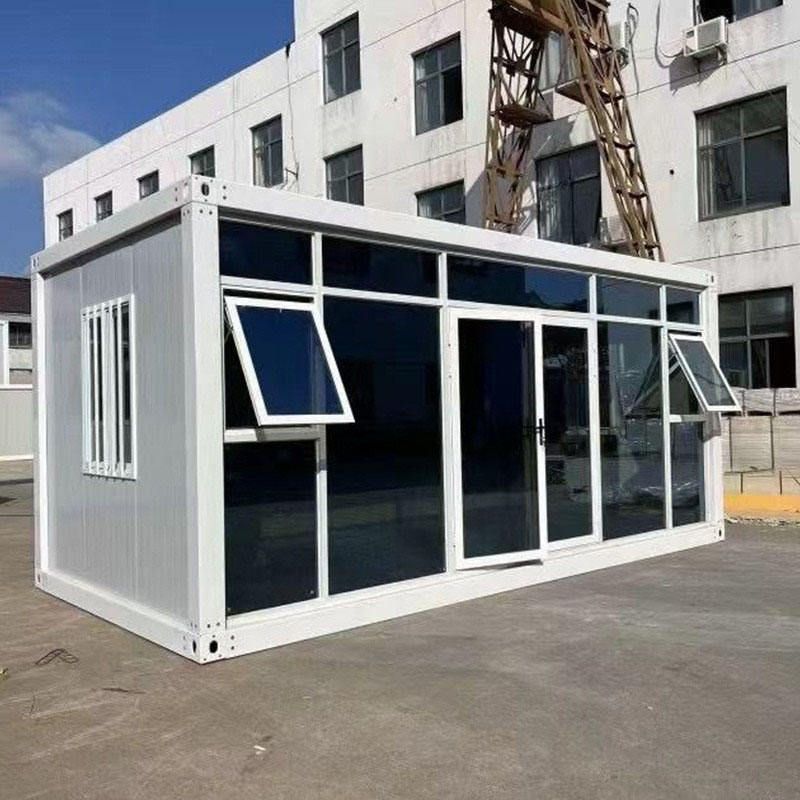
I. Core Features
- Modular Design: Using standard shipping containers (such as 20-foot and 40-foot units) as the base, they are transformed to serve residential or office functions. The internal layout is flexible, allowing for the configuration of bedrooms, bathrooms, kitchens, etc. The positions of doors and windows, as well as the exterior decoration, can be customized.
- High-Performance Structure: They employ high-strength weather-resistant steel frames that can withstand earthquakes of magnitude 8 and typhoons of force 12. The walls are filled with rock wool or polyurethane insulation layers (with a thermal conductivity coefficient ≤ 0.024W/(m·K)), paired with double-glazed windows to ensure warmth in winter and coolness in summer. Water and electricity pipelines are pre-installed in the factory, requiring only connection to municipal interfaces on-site, avoiding secondary trenching.
- Durability and Corrosion Resistance: The surfaces are treated with sandblasting for rust removal, epoxy zinc-rich primers, and polyurethane topcoats, providing a corrosion-resistant lifespan of up to 20 years, suitable for Kaifeng's climatic conditions.
II. Pricing and Costs
Market quotes vary depending on the configuration:
- Pricing by Area: Approximately 1100 yuan per square meter, suitable for fixed custom houses.
- Pricing by Unit: For example, expandable and foldable mobile houses cost about 3350 yuan per unit, emphasizing portability and rapid deployment.
Cost advantages are reflected in the short construction period (factory prefabrication + on-site assembly), material recyclability (100% steel recycling), and low long-term maintenance costs.
III. Application Scenarios
- Temporary Housing: Construction site dormitories, emergency medical shelters, and transitional housing for urban renewal projects.
- Cultural Tourism Industry: Characteristic homestays in tourist attractions and accommodation units in camping bases.
- Commercial Uses: Mobile shops, office containers, and event exhibition halls.
IV. Development Prospects
- Policy Support: Aligning with trends in green building and circular economy, they reduce construction waste by 80% and lower carbon emissions by approximately 40% compared to traditional brick-and-mortar structures.
- Market Demand: Urbanization and the upgrading of the cultural tourism industry are driving the need for rapidly deployable and movable spaces.
- Industrial Chain Improvement: In the future, an integrated industrial chain of design, manufacturing, and leasing services is expected to form, promoting the intensive and low-carbon transformation of Kaifeng's construction industry.
Through technological innovation and scenario expansion, the customization of container houses in Kaifeng is evolving from a single product to a systematic solution, providing a new path for regional sustainable development.



