
Jiuquan Single Mobile Toilet Installation
The installation steps for a single mobile toilet in Jiuquan are relatively simple and usually do not require complex tools or equipment, but adjustments need to be made according to specific scenarios. Here are the specific installation procedures and precautions:
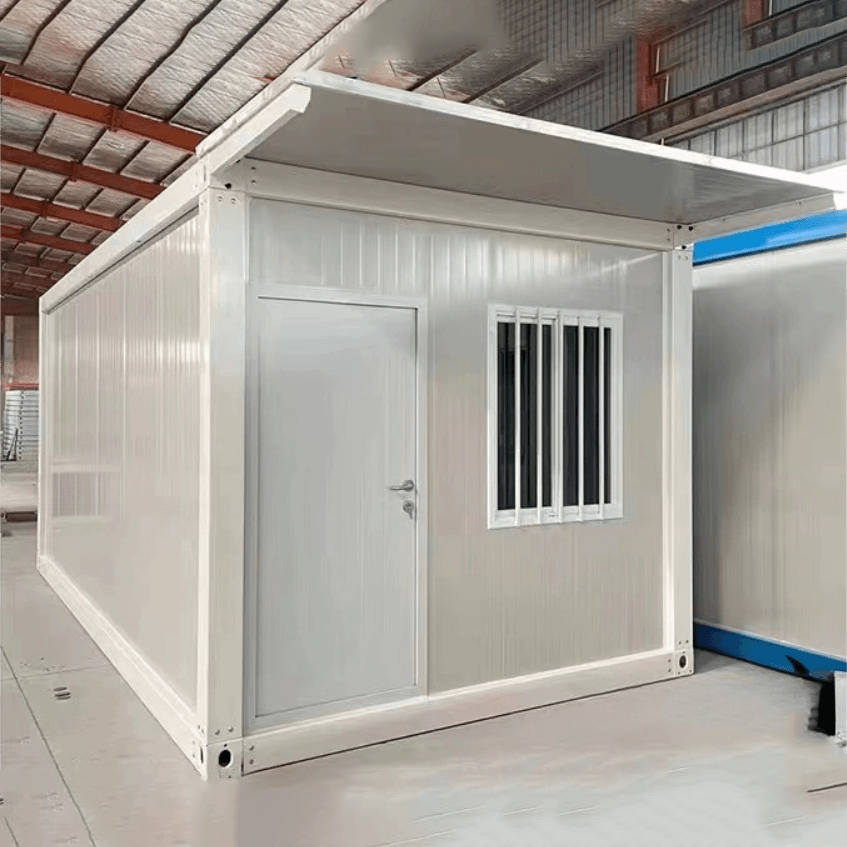
1. Installation Site Selection and Foundation Treatment
It is essential to prioritize selecting a flat and solid ground as the installation foundation to ensure the stability of the mobile toilet after placement. If the installation area has sandy soil (such as desert scenic spots or river beaches), the foundation needs to be reinforced: concrete pouring or laying anti-settlement cushions can be used to prevent the toilet from tilting or shifting due to soft soil. For areas with significant terrain undulations (such as mountain scenic spots), it is necessary to plan the transportation route in advance and use ramps or lifting equipment to hoist the toilet to the designated location, avoiding damage caused by manual handling.
2. Placement and Fixation of the Mobile Toilet Main Body
After moving the mobile toilet to the selected location using a forklift or crane, its levelness needs to be checked. Precise leveling can be achieved by adjusting the bottom support feet or inserting anti-slip shims. If the installation area experiences significant temperature differences between day and night (such as in the Gobi region), expansion joints should be reserved at the connection points or elastic sealing materials should be used to prevent structural cracking or pipeline leakage caused by thermal expansion and contraction of the materials. In areas with strong winds, the toilet should also be fixed to the ground using ground anchors or expansion bolts to enhance its wind resistance.
3. Pipeline and Power Connection (if applicable)
If the mobile toilet is equipped with a sewage discharge system, the sewage pipe should be connected to the municipal sewage network or septic tank, ensuring a tight seal at the interface to prevent sewage leakage. For toilets with a water flushing design, the water inlet pipe should be connected and a water pressure regulator installed to prevent damage to the equipment due to excessive water pressure. If the toilet has built-in lighting, ventilation, or intelligent control systems, it should be connected to a power supply that meets safety standards and equipped with a leakage protection device. After all circuit connections are completed, the joints should be wrapped with insulating tape and properly waterproofed.
4. Functional Testing and Safety Inspection
After installation, each function of the toilet should be tested, including whether the flushing system, sewage discharge system, ventilation system, and lighting equipment are operating normally; checking whether accessories such as door locks and handrails are secure; and confirming that the emergency call device (if any) can be connected properly. At the same time, debris generated during the installation process should be cleaned up, and anti-slip warning signs should be set up around the toilet to ensure safety during use.



