
Jiuquan Finished Mobile Toilet
The finished mobile toilets in Jiuquan come in various types, feature advanced characteristics, and have comprehensive functions to meet the needs of different locations.
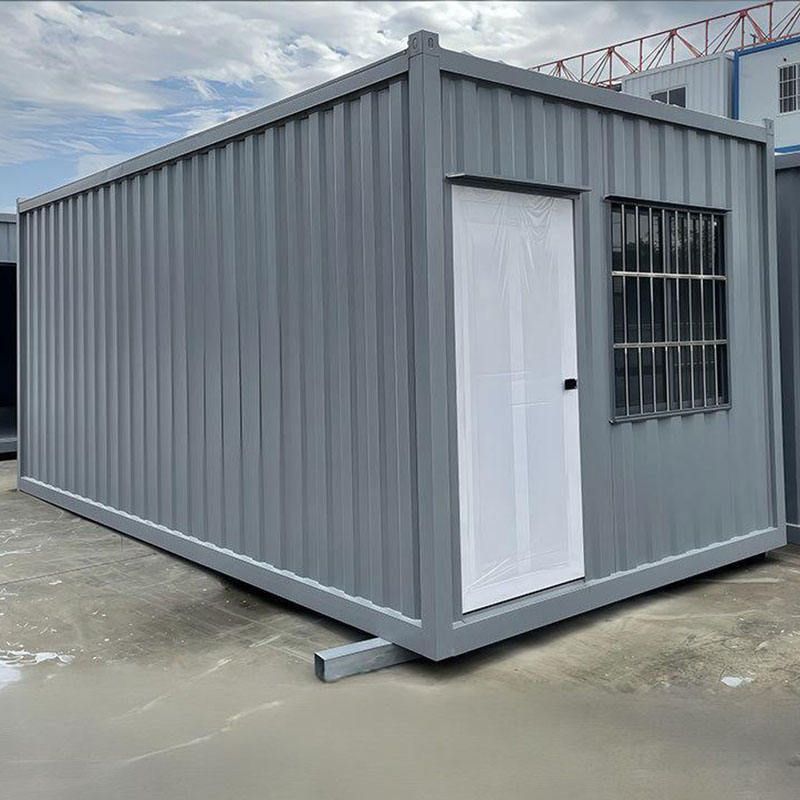
Manufacturers and Product Types
There are several mobile toilet manufacturers in Jiuquan. Jiuquan Junshun Integrated Housing Co., Ltd. offers professional one-stop solutions for mobile toilets, including custom mobile toilet services, and also provides a variety of products such as light-steel villas and container houses. In Jiuquan, there are mobile toilet brands like Sailina, Baiyihengjiu, Yibingsi, Jintongchuang, Changjiu Environmental Protection, and Hongmen. These toilets are made of materials such as steel structures and stainless steel and are mainly used as mobile toilets in places like parks. Jiuquan Guting Metal Products Factory is also a manufacturer, offering factory-direct products such as container public toilets and integrated mobile washrooms, available in various specifications and materials.
Characteristics of Jiuquan Smart Mobile Toilets
- Design: They are constructed using modular boxes. Each functional unit is prefabricated in the factory and can be quickly assembled on-site. The box material is a corrosion-resistant composite board with an insulating coating on the outer layer, suitable for Jiuquan's large temperature differences between day and night. The overall structure is sealed to prevent odor leakage and is movable, allowing for adjustments in placement according to needs.
- Smart Functions: They rely on an embedded sensor network. Sensors for pedestrian traffic, liquid levels, and the environment continuously collect data and transmit it to a local controller. The local controller has built-in preset algorithms that make judgments based on the data, such as automatic sewage discharge prompts when the liquid level in the septic tank reaches a threshold, and triggering an internal spray disinfection program when the usage interval exceeds the set time. Operation instructions are completed in a closed loop within the device.
- Power Supply System: They adopt a combination of solar power and energy storage batteries. Solar panels are installed on the top to convert light energy into electrical energy and store it in battery packs for off-grid power supply, suitable for remote or temporary locations. In case of continuous cloudy days, the batteries can maintain basic functions for about five to seven days.
- Waste Treatment: There are two parallel technical paths: biodegradation and physical separation. Neither produces chemical pollutants. After treatment, the volume of the residue is reduced, lowering the burden of waste removal. The wastewater can be used for non-contact flushing cycles after simple filtration.
- Maintenance Management: They rely on a status warning mechanism. When sensor data is abnormal or the performance of device components declines, the controller generates fault codes. Maintenance personnel can locate the problem points based on these codes, shortening equipment downtime and reducing the labor input for regular inspections.
- User Experience: They focus on the stable realization of basic functions. Automatic door locks, lighting systems, and ventilation equipment adjust automatically according to different situations. The interactive interface uses icons and short text prompts to avoid complex operations.
- Environmental Adaptability: The bottom of the box is equipped with a sand-proof air intake grille to prevent fine sand from entering mechanical components. The piping system has anti-freeze protection measures to ensure normal water flow in low-temperature environments. The exterior color scheme often uses light colors to reflect strong solar radiation.
- Deployment Planning: It is adjusted according to real-time demand data. Planning is carried out by analyzing the usage frequency, failure rate, and maintenance records of toilets at different locations.



