
Jinhua Simple Mobile Toilet
The Jinhua simple mobile toilet is an environmentally friendly mobile sanitation facility applicable to various scenarios. It can be customized and offers both rental and purchase service models.
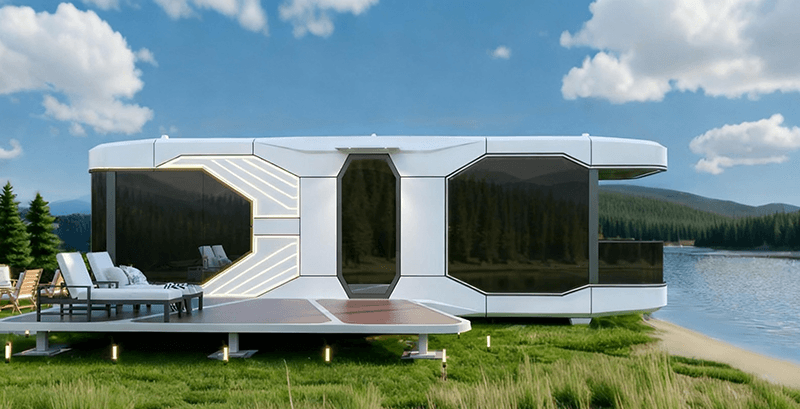
Product Supply and Production: Jinhua provides environmentally friendly mobile toilets, covering types such as outdoor simple construction site restrooms and outdoor environmentally friendly washrooms. Zhejiang Jinhua Yongkang Xincheng Steel Structure Engineering Co., Ltd. is the main manufacturer, integrating production, sales, and operation. It has a professional production team and a production base in Yongkang City. The company mainly deals in mobile toilet products and offers after-sales services including lifelong product maintenance. After purchasing the product, users will receive it within 7 - 15 working days, and the freight is negotiated between the buyer and the seller.
Product Type Features: The fiberglass-reinforced plastic mobile toilet can serve as an emergency toilet, suitable for scenarios such as temporary large gatherings, temporary construction, natural disasters, or major accidents. It is an integrated mobile toilet with a structure made of epoxy resin and fiberglass materials, which is sturdy and easy to hoist, shovel, and manually handle and install. This toilet can collect urine and feces separately, facilitating cleaning and management, and has no impact on the environment.
Rental Service Details:
- Application Scenarios: It has gradually expanded from festival activities to diverse fields such as construction sites and emergency shelters, mainly serving the sanitation needs of crowd-gathering events.
- Facility Composition: Through modular design, it enables rapid deployment. The internal structure includes basic units such as toilets, waste storage tanks, and ventilation devices, with some models equipped with solar lighting systems. The waste storage tanks feature anti-leakage designs and biodegradation treatment technologies, and are also equipped with barrier-free facilities. The main structure is easy to quickly load, unload, and transport. The internal sanitation system is independent of the municipal sewer network, and the ventilation and deodorization devices form an independent air treatment unit.
- Rental Process: It involves steps such as demand assessment, site planning, transportation and installation, and subsequent maintenance. Demand assessment needs to consider factors such as the scale of the event, duration, and crowd characteristics; site planning should take into account factors such as terrain flatness and water supply and drainage conditions; the service provider offers supporting services such as regular cleaning, consumable replenishment, and fault repairs, with the maintenance frequency adjusted dynamically according to the usage intensity.
- Cost Structure: It consists of fixed and variable parts. The fixed costs mainly include the depreciation of the unit itself and transportation expenses, while the variable costs are related to the usage intensity, including maintenance frequency, replenishment of water and electricity consumables, and the number of sewage disposal times. The rental pricing is calculated comprehensively based on the duration, number of units, and service level.



