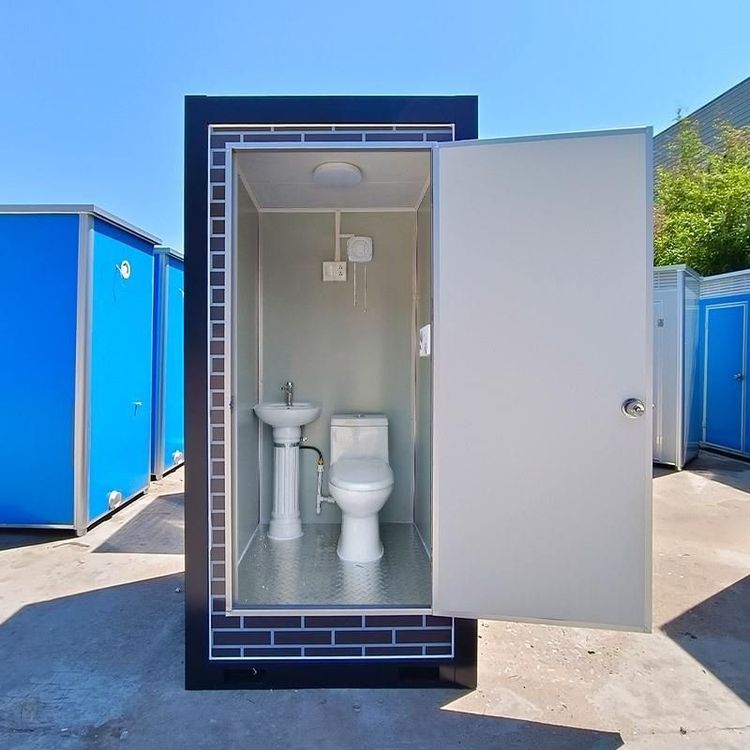
Jingmen Waterless Mobile Toilet
Currently, it is not possible to confirm whether there are completely waterless mobile toilets in Jingmen, but some mobile toilets in Jingmen may have water-saving or low-water-usage characteristics. The following analysis is conducted from the aspects of design principles, common types, and applicable scenarios:
Design Principles and Water-Saving Possibilities
The design of mobile toilets in Jingmen includes integrated sewage discharge systems and water circulation devices. The integrated sewage discharge system can efficiently collect and treat excreta, reducing water waste in the sewage discharge process. The water circulation device can purify the used water for reuse, providing a technological basis for the water-saving operation of mobile toilets. Some mobile toilets that adopt advanced water-saving technologies may significantly reduce the use of fresh water and even approach a waterless state by optimizing flushing methods or utilizing recycled water.
Common Types and Water Usage
There are various types of mobile toilets in Jingmen, with the sewage storage type being relatively common. These toilets rely on built-in septic tanks to collect excreta and do not require a real-time water connection for flushing. In wild or temporary event scenarios, sewage storage mobile toilets can achieve water-saving or low-water-usage operation by reducing the flushing frequency or adopting dry collection methods. Although they cannot be completely equivalent to waterless toilets, under specific conditions, their water usage can be controlled at an extremely low level, approaching the effect of waterless usage.
Applicable Scenarios and Matching with Waterless Requirements
Mobile toilets in Jingmen are widely used in scenarios such as field operations, temporary events, and scenic spots. In wild areas or regions with scarce water resources, completely waterless mobile toilets have greater advantages, as they can avoid environmental pollution or usage issues caused by insufficient water sources. Some mobile toilets designed for such scenarios may achieve truly waterless operation by adopting biodegradation technologies, vacuum suction systems, or waterless flushing devices, but specific product information needs to be further verified.
Conclusion and Recommendations
Based on the available information, mobile toilets in Jingmen have the potential for water-saving or waterless usage in terms of technological design and applicable scenarios. However, completely waterless products need to be confirmed in combination with specific models and technical parameters. If you need further information about waterless mobile toilets in Jingmen, it is recommended to contact local mobile toilet suppliers or consult relevant product manuals to obtain accurate technical parameters and applicable scenario descriptions.