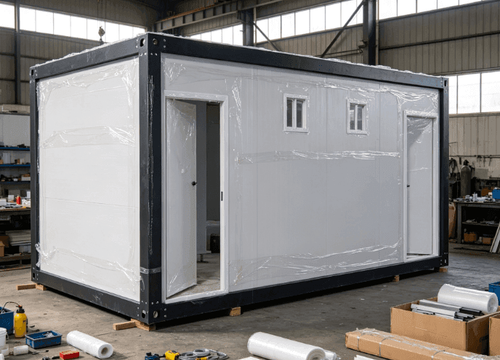
Jingmen Water Circulation Mobile Toilet
The Jingmen water circulation mobile toilet is a mobile sanitation facility based on modular design, capable of independent operation and equipped with water resource recycling capabilities. Its core design principles and functional features can be analyzed from the following aspects:

1. Modular Design and Rapid Assembly
This toilet adopts a modular design concept, dividing the functional units of traditional fixed toilets (such as the sewage system, water circulation device, ventilation module, and structural framework) into independent components that are prefabricated in the factory. Each module can be quickly assembled through standardized interfaces without complex on-site construction, significantly shortening the deployment cycle. This design provides flexibility and mobility, allowing the toilet to be quickly relocated to different scenarios (such as temporary events, disaster relief, remote areas, etc.) as needed, breaking free from the dependence on fixed locations that traditional toilets have.
2. Independent Sewage Disposal and Water Circulation System
Unlike traditional toilets that rely on underground sewage networks, the water circulation mobile toilet achieves autonomous treatment through an integrated sewage disposal system: fecal waste and other waste can be stored in supporting storage tanks or undergo preliminary purification (such as sedimentation, filtration, and disinfection) through small-scale treatment units, reducing dependence on external sewage disposal facilities. Meanwhile, the water circulation device recycles and treats sewage generated from handwashing and toilet flushing through multi-stage filtration and purification technologies, converting it into reusable gray water for toilet flushing or greening irrigation, significantly reducing water consumption. For example, the water consumption per use can be controlled to less than one-third of that of traditional toilets, making it suitable for water-scarce or areas without municipal water supply.
3. Energy Self-Sufficiency and Environmental Adaptability
Some models integrate a solar power supply system, converting solar energy into electricity through photovoltaic panels to power lighting, ventilation equipment, and the water circulation device. This design frees it from dependence on the municipal power grid, making it particularly suitable for wild or remote areas without power infrastructure. Additionally, the modular structure uses lightweight and corrosion-resistant materials, reducing material waste during construction and allowing for disassembly and reuse, further lowering the environmental impact over its entire lifecycle.
4. Application Scenarios and Technical Advantages
The independence of the water circulation mobile toilet gives it significant advantages in infrastructure-free environments: for example, it can avoid damaging natural landscapes in tourist attractions; it can quickly respond to crowd demands in temporary events (such as music festivals and exhibitions); and it can quickly restore basic sanitation conditions in disaster relief situations. Its technical paths (such as modularization, water circulation, and solar energy) complement fixed toilets, providing flexible solutions for diversified sanitation needs.