Jingmen Mobile Convenient Toilet
Jingmen mobile convenient toilets mainly come in three types: prefabricated, epidemic prevention-specific, and solar-powered, meeting the needs of different scenarios.

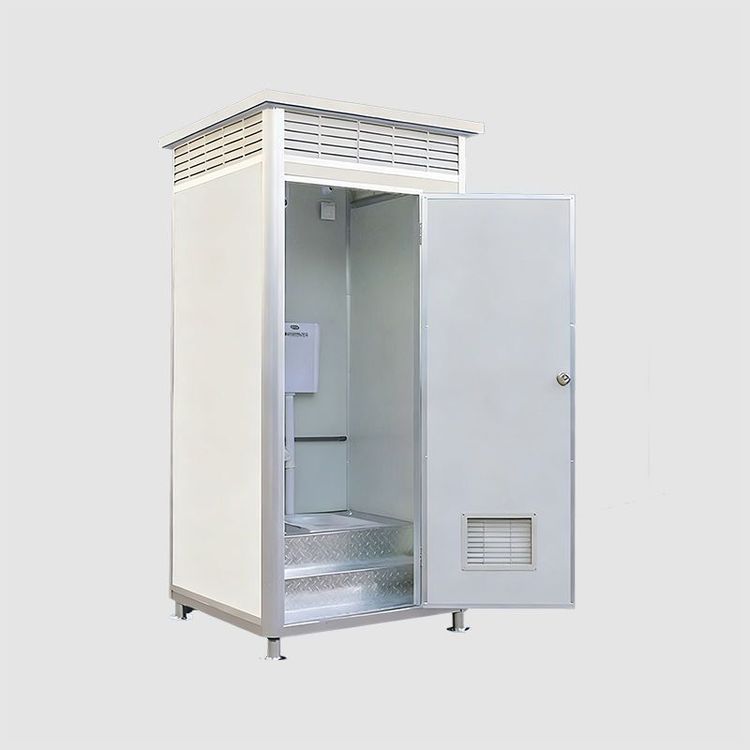
Prefabricated mobile toilets: Priced at 1,200 yuan per unit, with a delivery time of 5 days and a minimum order quantity of 1 unit, sold directly by the manufacturer. The product materials can be customized as needed, with a full range of specifications, multiple models and color options available, and the external dimensions are made according to the drawings. The configuration is rich, including squat toilets, hand-washing basins, door locks, light bulbs, exhaust fans, etc., and the floor is non-slip. They have a wide range of applicable fields, and the supply covers multiple cities in Hubei Province as well as Dongbao District, Duodao District, Jingshan City, Shayang County, and Zhongxiang City in Jingmen City.
Epidemic prevention-specific mobile toilets: Equipped with professional epidemic prevention design, they have an independent disinfection system, using ultraviolet germicidal lamps and automatic spraying devices for automatic disinfection after each use. Some are installed with sealed drainage pipes to prevent sewage backflow. The internal space is partitioned, with a physical separation between the toilet area and the hand-washing area. They have the characteristic of flexible deployment, able to quickly respond to the needs of temporary scenarios such as large-scale exhibitions, construction sites, and nucleic acid testing sites, with a small footprint and easy installation. At the same time, they strictly follow the standards of health and epidemic prevention departments, are made of environmentally friendly materials, are odorless and easy to clean. Some high-end products are equipped with functions such as smart sensor doors and foot-pedal flushing. The rental cost varies according to the usage duration and quantity, with a daily average cost lower than that of traditional facilities.
Solar-powered mobile toilets: They use a combination of 'photovoltaic panels + controllers + deep-cycle batteries' to achieve energy conversion. The photovoltaic panels convert sunlight into direct current, which is regulated by the controller. Part of it directly drives low-power devices, and the other part is stored in the battery, realizing 'simultaneous power generation, usage, and storage'. The sewage discharge system generally adopts 'micro-flush' or 'vacuum negative pressure' technology. The micro-flush system uses about 0.3 to 0.5 liters of water per flush, and the vacuum negative pressure system uses the air pressure difference in the pipes to suck the excrement into the sewage collection tank. An intelligent control module is installed inside to monitor the battery voltage, photovoltaic panel current, and water tank level in real-time, and can maintain basic usage for at least 72 hours during continuous rainy days. For site selection, the photovoltaic panels need to face south or southwest, and there should be no tall buildings, trees, or billboards blocking them around.