
Jinan Mobile Environmental Toilet Inspection
The inspection of mobile environmental toilets in Jinan mainly covers three core dimensions: structural safety, hygiene indicators, and facility functionality, while also utilizing smart public toilet technology to assist in evaluating operational status.
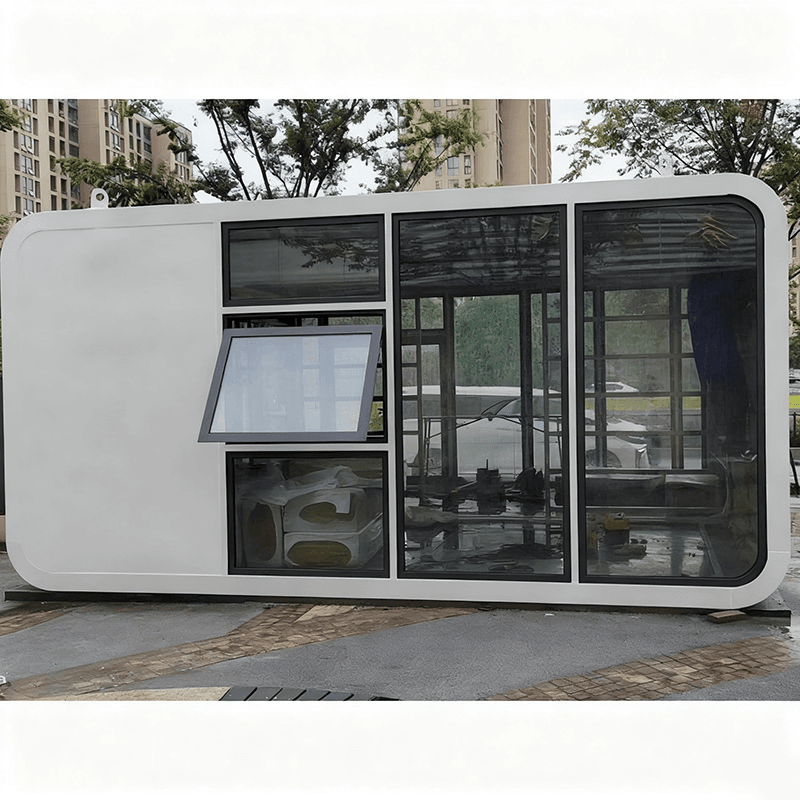
1. Structural Safety Inspection
Structural safety is the fundamental guarantee for mobile environmental toilets. The inspection includes the stability of the box frame, assessing its ability to withstand daily use and extreme weather conditions (such as strong winds and earthquakes); the slip resistance of the floor must comply with national standards to prevent users from slipping; the reliability of doors, windows, and locks must be tested through simulations to ensure user privacy and property security. For example, the welds on the frame must be free of cracks, and the number of lock opening and closing cycles must meet the design lifespan requirements.
2. Hygiene Indicator Inspection
Hygiene indicators directly relate to user health, and the inspection is divided into three parts:
- Air Quality: Professional equipment is used to monitor the concentration of odors such as ammonia and hydrogen sulfide. Excessive levels may cause respiratory discomfort.
- Microbiological Indicators: Samples are taken from high-frequency contact areas such as toilets and washbasins to analyze the total bacterial count and coliform bacteria, which must comply with the "Hygiene Indicators and Limit Requirements for Public Places."
- Quantitative Cleanliness: Tools such as fluorescent detection agents are used to display residual stains under ultraviolet light, assessing whether the cleaning effectiveness meets standards.
3. Facility Functionality Inspection
Functionality inspections cover systems such as flushing, lighting, and ventilation:
- Flushing System: Test the stability of water pressure (e.g., no blockage after three consecutive flushes) and water-saving efficiency (single flush volume ≤ 4L).
- Sewage Pipes: Simulate usage scenarios by injecting high-pressure water to check for smooth flow.
- Auxiliary Facilities: Lighting brightness must be ≥ 200 lux, ventilation exchange rate ≥ 6 times per hour, and handrails for the disabled must comply with the "Design Code for Accessibility."
- New Technologies: Solar power systems must be tested for charging efficiency, and smart sensors (e.g., automatic flushing and lighting) must be tested for response speed.
Smart Public Toilet Technology-Assisted Inspection
The smart public toilets in Jinan Wanlin use sensors to monitor environmental parameters such as ammonia, hydrogen sulfide, and PM2.5 in real-time, uploading the data to a management platform and triggering alerts for abnormalities. Its IoT capabilities enable automatic temperature and humidity control, equipment self-diagnosis, and other functions, providing dynamic data support for inspections. For example, if the ventilation system fails to activate but odor levels exceed standards, the fault point can be quickly located.



