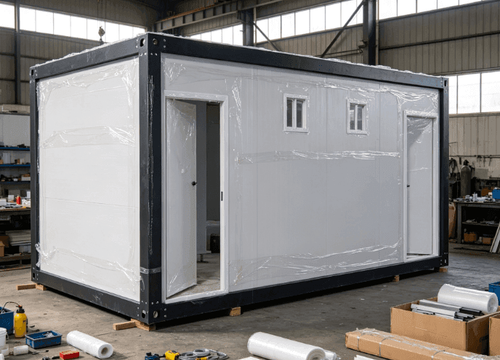
Jieshi Second-hand Portable Toilet
Currently, there is no specific information directly about second-hand portable toilets in the Jieshi area, but references can be provided from the general knowledge of portable toilets and key considerations for second-hand transactions.

Portable toilets are public sanitation facilities that can be moved and flexibly arranged. They typically consist of components such as an outer shell, a toilet bowl, and a sewage disposal system. Based on the sewage disposal method, they can be classified into types such as direct-discharge, packaged, and circulating water-flush toilets. Their core advantages lie in requiring no fixed foundation and enabling rapid deployment, making them suitable for scenarios like temporary events, construction sites, and tourist attractions. When trading second-hand portable toilets, the following key points should be noted:
I. Sources and Channels of Second-hand Portable Toilets
- Surplus or Demolished Equipment from Projects: After the completion of some construction sites and municipal projects, undamaged portable toilets may be disposed of as second-hand equipment. Such equipment is usually well-maintained, but the service life needs to be verified.
- Outdated Equipment from Rental Companies: Portable toilet rental companies regularly update their equipment, and the outdated toilets may enter the second-hand market. It is necessary to check their structural integrity and the wear and tear of core components (such as water tanks and sewage pipes).
- Resale by Individuals or Enterprises: Some users may resell portable toilets due to changes in needs (such as event cancellations or site renovations). It is essential to confirm whether the equipment has been used in special scenarios (such as chemical or medical fields) to avoid the risk of residual contamination.
II. Key Points for Purchasing Second-hand Portable Toilets
- Structural Stability: Check whether the outer shell material (such as fiberglass-reinforced plastic or metal) is deformed or cracked, and whether the welding points are rusted, to ensure that the equipment can withstand vibrations during transportation and use.
- Functional Integrity: Test whether the flushing system (if it is a water-flush toilet) and the sewage disposal system (such as the packaged bag replacement device) are functioning properly, and check whether auxiliary functions such as ventilation and lighting are available.
- Hygiene and Safety: Confirm that there are no odors or stains inside, and check whether safety designs such as non-slip floors and handrails are intact to avoid accidents during use.
- Compliance: Verify whether the equipment complies with local environmental protection standards (such as whether the sewage disposal method is allowed) to avoid being unable to use it due to non-compliance with policies.
III. Transaction Considerations
- Request Usage Records: Ask the seller for the equipment's service life and maintenance records, and give priority to toilets with regular maintenance records.
- Inspect the Goods on Site or Confirm via Video: If on-site inspection is not possible, it is necessary to check the equipment details in detail through video to avoid being misled by photos.
- Clarify After-sales Responsibilities: Negotiate responsibilities for transportation, installation, and short-term maintenance to avoid disputes due to equipment failures after the transaction.