Jiaxing Mobile Toilet Installation Method
The installation method of mobile toilets in Jiaxing follows a modular design principle, mainly divided into three core steps: positioning and foundation treatment, main structure assembly, and functional inspection and debugging. Specific operations need to be adjusted according to the toilet type and site conditions.

1. Positioning and Foundation Treatment
Before installation, determine the specific location based on site planning, prioritizing areas with solid ground and smooth drainage. If the ground is uneven or has soft soil, hardening treatment (such as concrete pouring) or steel plate laying should be carried out in advance to enhance load-bearing capacity. This step requires a focus on evaluating site environmental constraints, including load-bearing capacity, the distance to water and electricity access points, and sewage discharge plans. For example, if connection to the municipal sewage network or the installation of a dedicated septic tank is required, pipeline routing should be planned in advance and interfaces reserved. Such supporting facilities will extend the overall installation time.
2. Main Structure Assembly
Choose differentiated assembly methods according to the toilet type:
- Split-type Toilets:
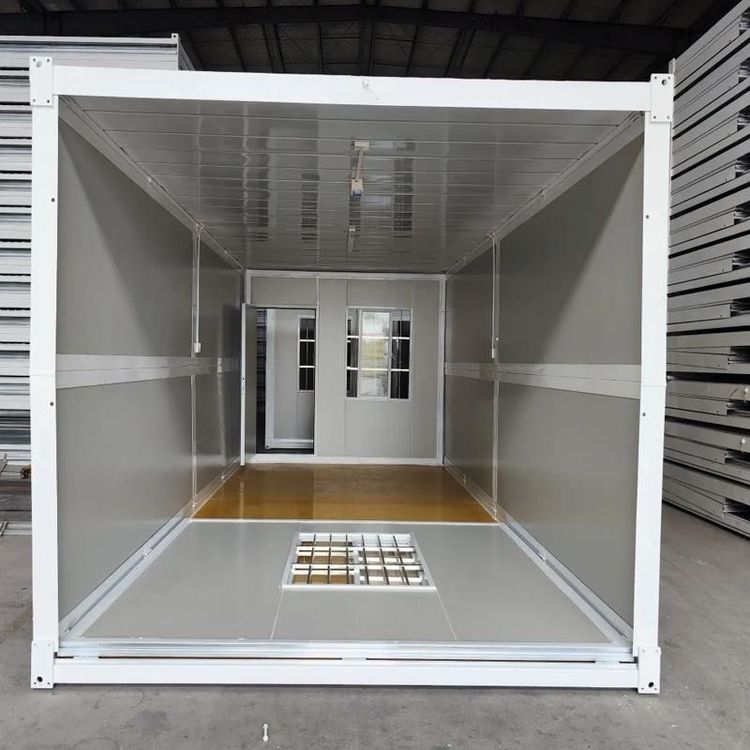
- Chassis and Frame Positioning: Use a forklift or manual labor to place the prefabricated steel structure chassis steadily and adjust it to a level state using a level gauge.
- Wall and Roof Panel Installation: Insert the sandwich panel wallboards into the chassis slots and secure them with bolts or clips; then install the roof panels and complete the sealing treatment to prevent rainwater leakage.
- Internal Facility Connection: Install partitions, toilets, flushing systems, sinks (if any), and other facilities, and connect water and electricity pipelines. The modular quick-connect design can shorten connection time, but it is necessary to ensure interface sealing.
- Integrated Toilets (such as box-type):
The factory has completed internal decoration and equipment integration. On-site, it only needs to be hoisted into place and connected to water, electricity, and sewage pipelines. The installation time for such toilets can be shortened to 2-4 hours, but higher requirements are placed on transportation and installation accuracy.
3. Functional Inspection and Debugging
After assembly is completed, a comprehensive test is required:
- Flushing Test: Check the pressure of the flushing system and the drainage speed to ensure there is no blockage or leakage.
- Circuit Inspection: Verify the power supply stability of lighting, ventilation equipment, and sockets, and排查 (troubleshoot) short-circuit risks.
- Sealing Inspection: Focus on checking wall joints, pipeline interfaces, and door and window seals to prevent odor diffusion.
Technical Parameter Adaptation and Type Selection
Before installation, calculate the number of toilet stalls and the rental period based on the foot traffic and usage duration, and analyze the characteristics of the user group (such as accessibility needs and child-friendly design). For example, accessible toilets need to integrate technical modules such as internal handrails and wheelchair turning space; water-flush standard toilets need to match the water tank capacity with the number of uses and be equipped with anti-freezing and anti-overflow designs.
Precautions
The installation process should strictly refer to standards such as the "Hygiene Specifications for Mobile Toilets" (GB/T 21239-2023). It is recommended that professional construction teams carry out the operations to improve efficiency. A skilled team can dismantle a standard split-type toilet in only 1-3 hours, but the construction of supporting facilities may extend the cycle.