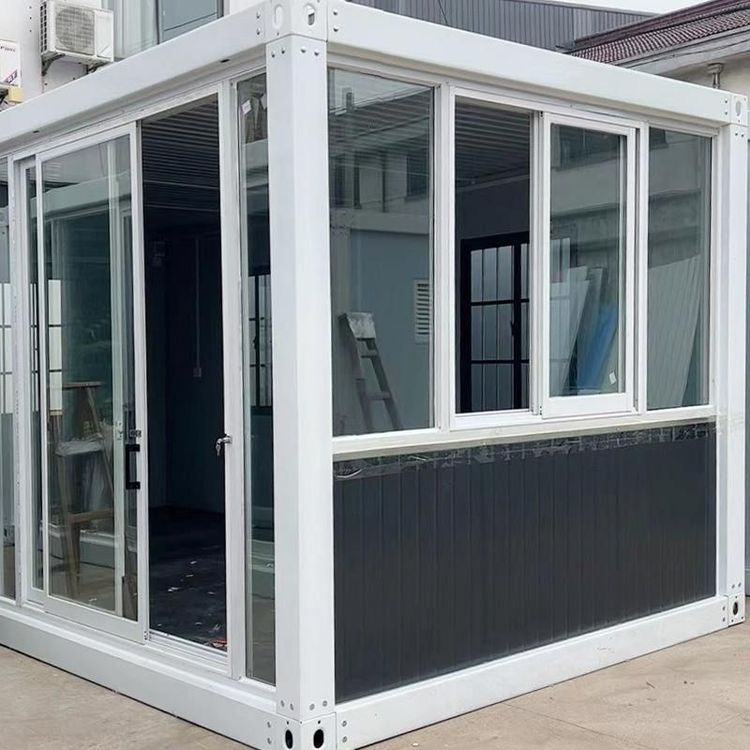
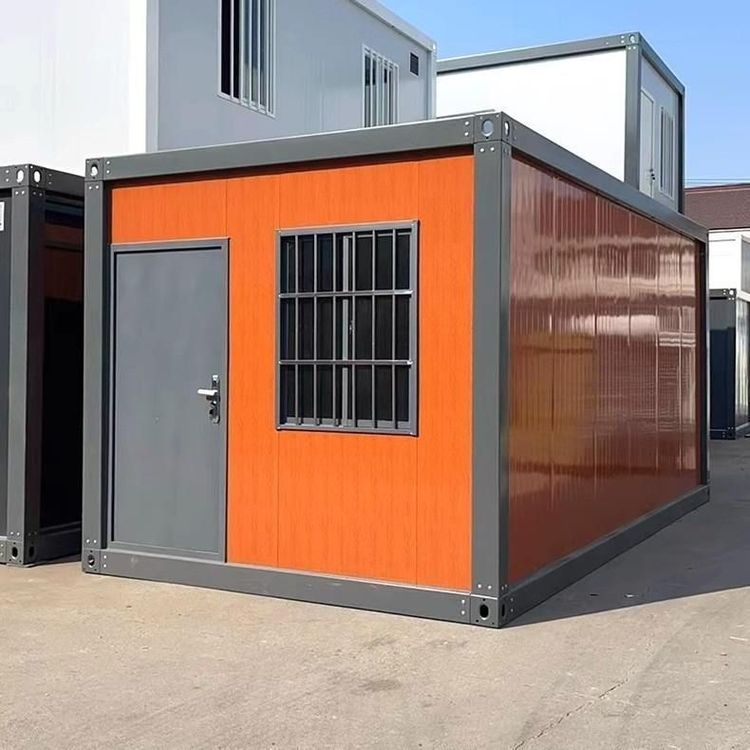
Jiaxiaoyou Container House
Jiaxiaoyou container houses are modular buildings based on containers, featuring flexible combination, rapid construction, and mobility. They are widely used in construction site dormitories, temporary offices, commercial shops, homestays, and other fields, but attention should be paid to fire safety and compliance with regulations.

I. Core Features and Advantages
Modular Design
Standardized container units are used to quickly combine into buildings with different functions through splicing and stacking, without the need for complex civil engineering. For example, construction site dormitories can be formed by splicing multiple 20-foot containers to meet the needs of batch accommodation.Rapid Deployment and Relocation
Prefabricated in factories, on-site assembly takes only 7-15 days, and the entire structure can be relocated by professional trailers, avoiding the generation of construction waste. For example, temporary office spaces can be quickly relocated according to project progress, reducing the cost of repeated construction.Significant Cost-Effectiveness
Compared to traditional brick-and-mortar houses or commercial shop rentals, the initial investment in container houses is reduced by more than 50%. For example, the total price of a 100㎡ container office is about several ten thousand yuan, while the monthly rent for an office of the same area in a high-rise building may reach several ten thousand yuan.Customizable Flexibility
Supports personalized customization of exterior painting, interior layout, functional zoning, etc., adapting to various styles such as industrial and pastoral. For example, a Danish man transformed a residence using 9 containers, achieving natural lighting through large window designs and enhancing the industrial texture by retaining the metal corrugated interior walls.
II. Typical Application Scenarios
Temporary Residence
Construction site worker dormitories, field operation housing, tourist attraction homestays, etc. For example, a family in Jiangsu chose a container house as their rural residence due to the ban on new house construction in rural areas, equipped with insulation layers and air conditioners, providing a living comfort close to that of traditional houses.Commercial Entrepreneurship
Low-cost entrepreneurial spaces such as container shops, cafes, and pop-up stores. For example, the initial investment for a 15㎡ traditional shop in a core business district requires several hundred thousand yuan, while the total price of a container shop is only 30,000-50,000 yuan, and it can be relocated according to customer flow, reducing rental risks.Efficient Office Work
Modular container offices and mobile board houses meet the needs of temporary or long-term office work. For example, a company in Suzhou adopted a double-story container house as a rural commercial combined office point, with shipping and installation completed within 48 hours.
III. Safety and Compliance Points
Fire Safety
A-grade fire-resistant materials such as rock wool boards and fireproof cotton should be used for filling, avoiding flammable sandwich panels such as polystyrene and polyurethane. For example, a container fire in Linping District, Hangzhou, caused by an electrical circuit fault igniting weeds, resulted in property losses for the homeowner, highlighting the importance of material compliance.Safety Distance
A minimum distance of 6 meters should be maintained between container houses to prevent the spread of fire. For example, a container fire in Binhai New Area, Tianjin, resulted in 2 deaths due to the rapid combustion of flammable materials, emphasizing the dual guarantee of spacing and material selection.Compliance Approval
Some regions have strict regulations on the use and construction location of container houses, and it is necessary to consult the local planning department in advance. For example, rural areas may restrict the use of container houses as permanent residences, requiring declaration as temporary buildings.