
Back to blog
Article
Is the Second Floor of a Container House Good?
Admin September 17, 2026
Whether the second floor of a container house is good depends on specific needs and scenarios. It offers significant advantages under certain conditions but also has considerations to keep in mind.
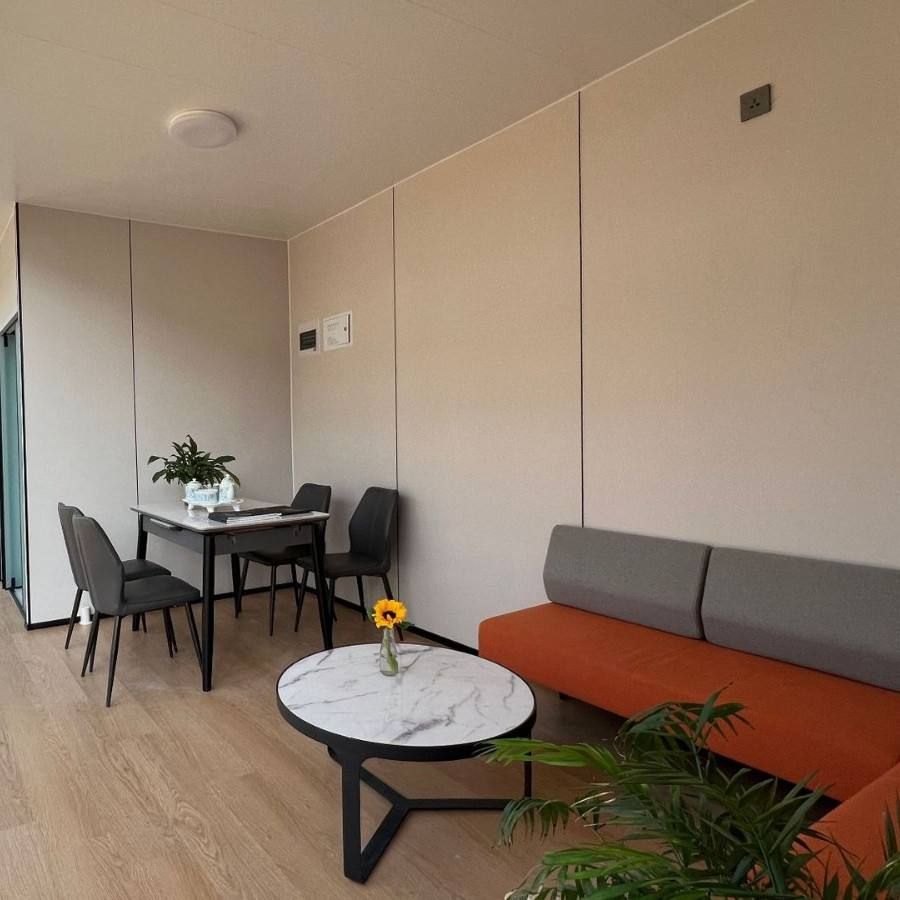
Advantages in Construction Site Temporary Building Scenarios
- Efficient Space Utilization: Space expansion is achieved through vertical stacking of modules. Each floor has an area of approximately 22 square meters and a total load capacity of 0.37 tons, which can support basic office and living facilities. The double-decker design allows for quick construction and flexible space combination, making it suitable for long-term or periodic projects.
- Functional Adaptability: The interior space can be divided into bedrooms, meeting rooms, or storage areas according to needs. The ventilation function and the thermal insulation of composite sandwich panels can improve the stuffy conditions of traditional temporary buildings and enhance living comfort.
- Economy and Relocatability: The modular nature supports quick disassembly and assembly. After the project is completed, it can be relocated to a new site for reuse, reducing long-term costs. Additionally, custom design services based on drawings are supported, allowing adjustments to color, specifications, or interior layout according to project requirements.
- Service Life: The structural lifespan can reach 10-15 years, making it suitable for long-term use scenarios and reducing the hassle of frequent replacements.
Considerations in Construction Site Temporary Building Scenarios
- Foundation Requirements: During installation, ensure the ground is level to prevent structural deformation due to foundation settlement, which could affect safety.
- Load Capacity Limits: The number of stacked floors must comply with the design load capacity (0.37 tons per floor). Overloading is prohibited as it may cause structural damage.
- Regular Maintenance: Regularly inspect welding points and panel connections to prevent loosening caused by external impacts or long-term vibrations, ensuring structural stability.
- Transportation Fixation: During transportation, the position of the container must be fixed to prevent sliding and damage, which could affect subsequent use.
- Adaptation to Extreme Climates: If used in extremely cold or high-wind areas, communicate with the supplier in advance for reinforcement solutions to ensure structural stability.
Advantages and Disadvantages in the Transportation Field
- Advantages: It can load more cargo with the same ship cabin and transportation resources, improving transportation efficiency. Scientific layout and protective measures ensure cargo safety. Compared to ordinary containers, it has higher loading efficiency, better utilizes transportation resources, and reduces transportation costs.
- Disadvantages: Adding an extra floor inside requires more complex loading and stacking methods, increasing the difficulty of loading. The structure is more complex, with higher technical difficulties, requiring more professional maintenance and upkeep.
Related


