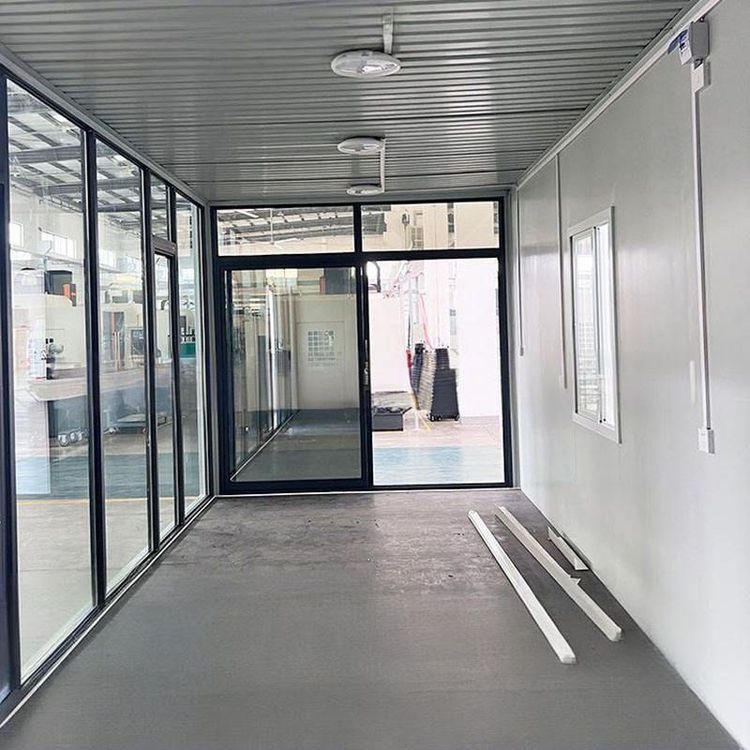
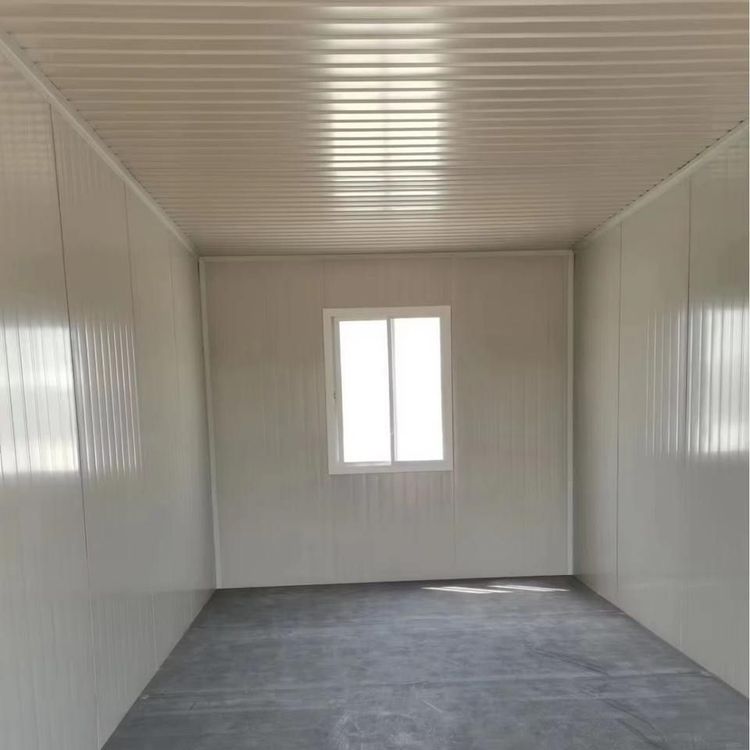
Is Spraying Foam on Container Houses Good?
Spraying foam (usually referring to polyurethane foam) on container houses is a good treatment process with multiple advantages.

1. Efficient Thermal Insulation Polyurethane foam has an extremely low thermal conductivity, offering far superior insulation performance compared to traditional materials. Its characteristic of in-situ spraying and foaming allows it to perfectly fill the gaps and corners of the corrugated wall panels of container houses, forming a continuous, seamless insulation layer that completely eliminates thermal bridging. This structure significantly enhances the energy efficiency of the house, achieving a warm winter and cool summer effect while substantially reducing energy consumption costs for air conditioning and heating, making it particularly suitable for container houses with limited space.
2. Excellent Sound Insulation and Noise Reduction The metal structure of container houses is sensitive to sound, allowing external noise to easily penetrate indoors. The porous structure of polyurethane foam effectively absorbs and blocks sound transmission, especially showing significant attenuation effects on mid- to high-frequency noise. After spraying, the quietness and comfort inside the house are greatly improved, providing a more serene environment for living or working.
3. Enhanced Structural Strength After foaming and curing, polyurethane foam forms a strong bond with the metal wall panels of the container, creating a 'stressed skin' effect. This process is equivalent to covering the 'skeleton' of the container with a sturdy 'skin', significantly improving the overall rigidity and deformation resistance of the box body, enabling it to better withstand wind loads, snow loads, and even minor impacts, thereby extending the service life of the house.
4. Moisture and Water Resistance and Airtightness The polyurethane foam commonly used in container houses has a closed-cell structure, with independent internal pores that effectively block the penetration of water vapor and liquid water, providing moisture and water resistance. Its good airtightness prevents warm, humid air from entering the interior of the walls, avoiding condensation on cold metal surfaces, thereby reducing internal corrosion and mold growth, and protecting the container structure and interior decoration materials.
Precautions
- Select appropriate insulation materials based on environmental temperature, humidity, and fire protection requirements. For example, in high-temperature and high-humidity areas, formulations with stronger weather resistance should be chosen.
- Ensure airtightness during construction to avoid thermal bridging effects caused by local missed spraying or improper joint treatment, which could affect overall performance.
- Regularly inspect the insulation layer for damage and promptly repair it to maintain insulation, sound insulation, and moisture-proof effects, thereby extending the service life of the house.