
Is Prefabricated Housing Reliable and Safe?
The safety of prefabricated housing varies and needs to be comprehensively evaluated based on specific types, construction standards, and maintenance conditions, rather than being generalized.
Traditional Prefabricated Panel Houses Have Significant Safety Hazards
Due to design and technological limitations, traditional prefabricated panel houses have multiple safety risks. Firstly, extremely weak earthquake resistance: Their structures mostly use simply spliced prefabricated concrete panels, lacking integrity, and are prone to direct collapse during earthquakes. For example, in the 2008 Wenchuan earthquake, a large number of prefabricated panel houses suffered from structural loosening due to fragile connection points and wall cracks, resulting in a high collapse rate and causing severe casualties. Secondly, material and workmanship defects: Some prefabricated panel houses have instances of shoddy workmanship, with brittle concrete that is prone to cracking, and insufficient strength at connection points (such as bolts and welds), which can easily loosen under foundation settlement or external impacts. Thirdly, lifespan and maintenance issues: The designed lifespan of old prefabricated panel houses is not fixed at 30 years, but if they lack long-term maintenance, minor cracks may develop into structural damage, and water seepage problems can accelerate material aging, ultimately threatening living safety.
Modern Prefabricated Houses Improve Safety Through Technological Advancements
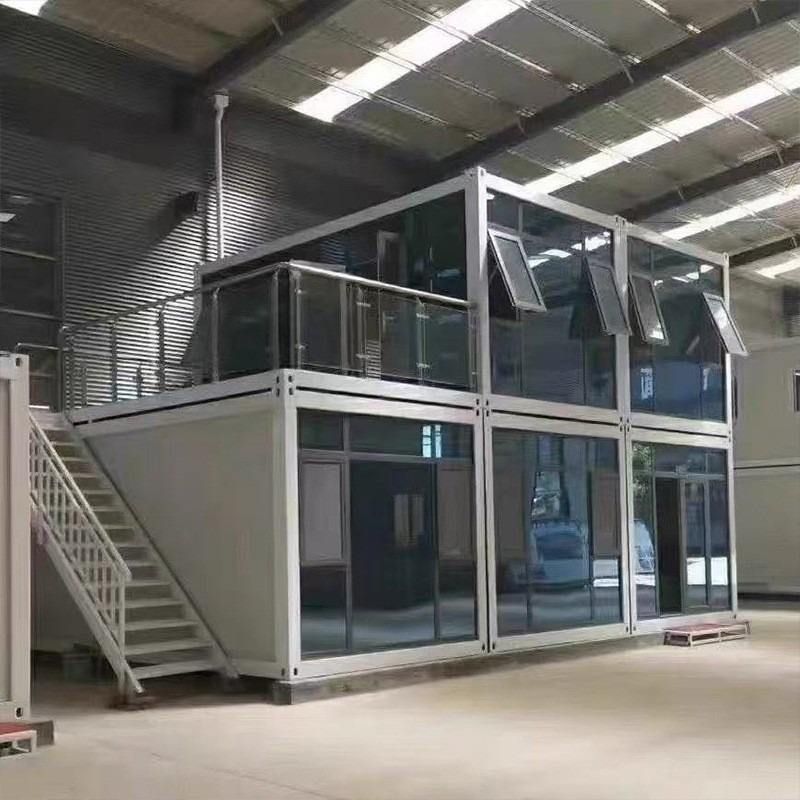
Modern prefabricated houses adopt advanced design concepts and industrialized production models, significantly enhancing safety. Firstly, structural optimization: The main bodies mostly use reinforced concrete frames or steel structures, with strong integrity, greatly improving earthquake and wind resistance, and some products can meet the requirements of 8-degree earthquake resistance. Secondly, controllable quality: Factory-prefabricated components are formed through precise calculations and molds, with key indicators such as concrete strength and steel reinforcement meeting standards, avoiding human errors in on-site construction. Thirdly, extended lifespan: Some modern prefabricated houses have a designed lifespan of up to 70 years, suitable for various scenarios such as residential buildings and office buildings, and can be flexibly expanded or renovated through modular design.
Key Issues Still Need Attention
Despite technological advancements, modern prefabricated houses still need to pay attention to foundation treatment, height restrictions, and joint waterproofing. If the foundation is not compacted or has uneven settlement, it may lead to structural cracking; for super high-rise buildings, strict load calculations are required to avoid deformation caused by wind vibration or earthquakes; if the waterproofing at joints is not properly handled, water seepage can easily corrode steel reinforcement, affecting durability. In addition, old prefabricated panel houses need to be professionally evaluated for safety levels. Minor cracks can be repaired with grouting, and water seepage can be treated with waterproof coatings, but severely damaged structures (such as tilting load-bearing walls and fractured beams and columns) must be demolished and rebuilt.


