
Back to blog
Article
Is It Good to Install Underfloor Heating in Container Houses?
Admin September 16, 2026
Installing underfloor heating in container houses has its advantages, but there are also aspects that require attention. Overall, it is necessary to comprehensively evaluate whether to install it based on the actual situation.
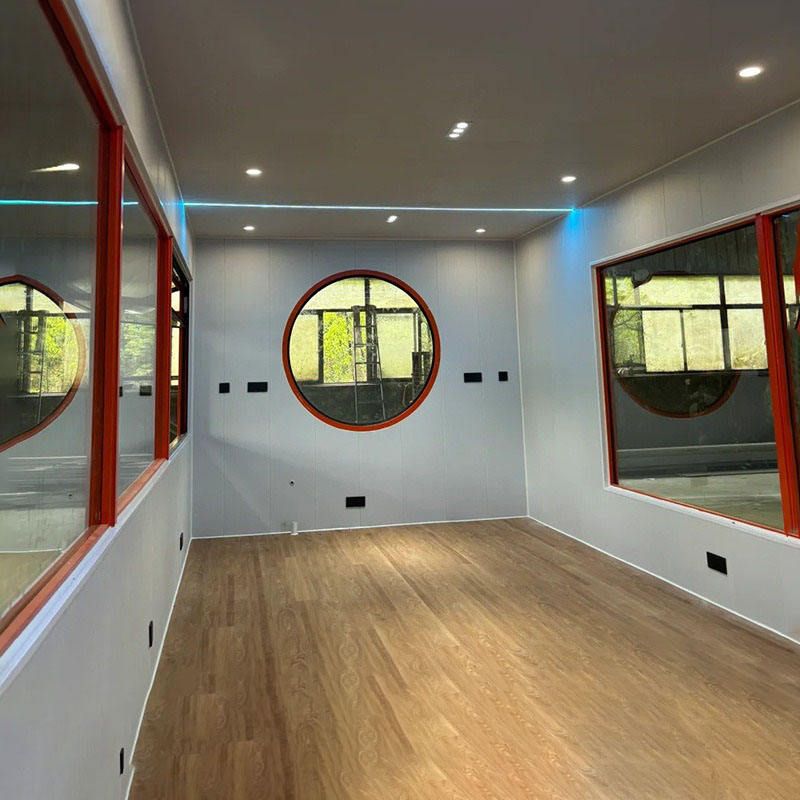
Advantages:
- Space-saving: The underfloor heating system dissipates heat through pipes or heating elements buried under the floor, eliminating the need for traditional radiators or air-conditioner outdoor units. This can free up the limited vertical space inside container houses, making it especially suitable for compact living spaces.
- High comfort level: Underfloor heating mainly relies on radiant heat transfer, with heat evenly rising from the floor, which meets the human body's physiological need of a cool head and warm feet. It is particularly suitable for the elderly, children, or people who are used to walking barefoot.
- Energy-saving and environmentally friendly: The underfloor heating system can be paired with high-efficiency gas boilers or electric boilers, which have relatively high thermal efficiency. Moreover, the heat is concentrated in the area where people are active, reducing ineffective heat loss. Compared with traditional heating methods, it is more energy-efficient.
- Adaptability to cold environments: In northern or extremely cold regions in winter, underfloor heating can significantly improve the thermal insulation performance of container houses. For example, in low-temperature areas like Harbin, underfloor heating can maintain a stable indoor temperature and prevent heat loss caused by the fast heat conduction of the container's metal material.
Aspects requiring attention:
- Pre-use inspection: It is necessary to check whether the underfloor heating pipes or circuits are intact to avoid water leakage or electric leakage caused by damage during the transportation or installation of the container house.
- Ventilation and humidity control: Container houses have relatively strong airtightness. When the underfloor heating is in operation, regular window opening for ventilation is required to prevent an excessively high concentration of carbon dioxide indoors. At the same time, humidity control is necessary to avoid the accumulation of condensed water due to temperature differences, which could corrode the metal structure or damage the underfloor heating equipment.
- Cleaning and maintenance: The underfloor heating pipes need to be cleaned regularly with professional equipment to prevent scale blockage from affecting the heat dissipation efficiency. The circuit system should be checked for insulation performance to avoid safety hazards caused by aging.
- Emergency handling during power outages: In case of a power outage, the underfloor heating power supply or gas valve should be turned off immediately to prevent equipment from idling and overheating or pipes from freezing and cracking (especially in extremely cold regions).
- Restrictions on wooden floor installation: If wooden floors are installed in container houses, underfloor heating-specific floors that are heat-resistant and have good thermal conductivity should be selected to prevent ordinary wooden floors from deforming and cracking due to long-term high temperatures. At the same time, the insulation layer design should be optimized to prevent excessive heat loss and increased energy consumption.
Related
You may also like
06Nov
Portable Toilet Specifications Model Sizes & Dimensions: A Complete Guide
Read More
06Nov
The Ultimate Guide to Container House Conversion
Read More
06Nov
Portable Toilet Eco-Friendly Custom: A Practical Buyer's Guide
Read More
06Nov