Back to blog
Article
Is It Easy to Build Prefabricated Structural Houses?
Admin September 19, 2026
Prefabricated structural houses are relatively easy to build, but they also have certain limitations.

Construction Advantages
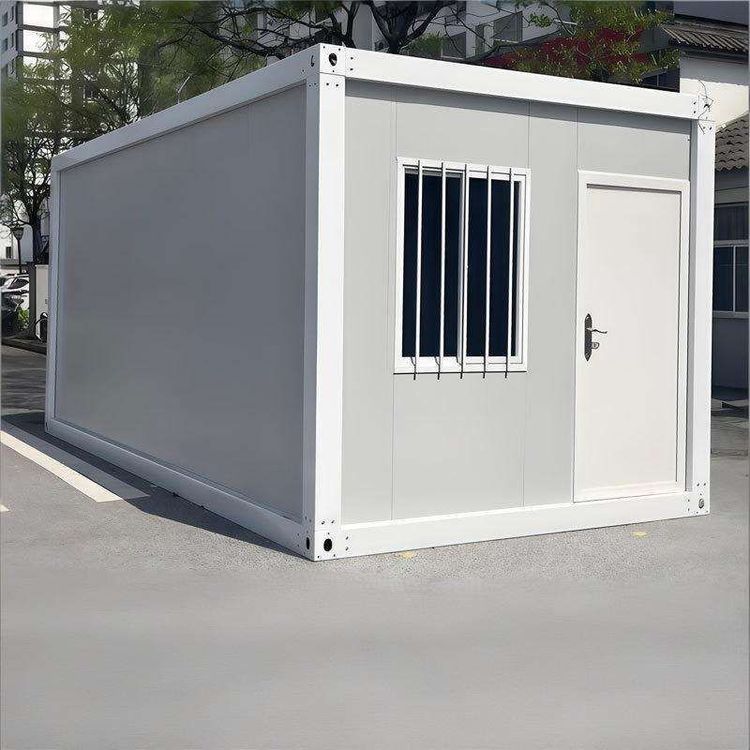
- Fast Construction Speed: Prefabricated structural houses have a significant advantage in terms of construction speed. Taking rural areas in Henan as an example, the main assembly of a prefabricated house can be completed in as little as two hours, and it is generally ready for occupancy within two to three days. This is because the components of the prefabricated house are manufactured in advance in a factory and only need to be assembled on-site after transportation, greatly shortening the construction period.
- Lower Cost: The factory-based production model makes prefabricated structural houses outstanding in terms of cost. On the one hand, standardized factory production can reduce material waste by about 30 percent; on the other hand, the construction period can be shortened by 50 to 70 percent. Mass production reduces material costs by 20 to 40 percent and labor costs by about 60 percent. In rural areas of Henan, the cost per square meter of a prefabricated house is only a little over 300 yuan, which is half the cost of a traditional brick house.
- Convenient Construction: The construction process of prefabricated structural houses is relatively convenient. In the standardized factory production environment, various components required for house construction, such as walls, roofs, and beams and columns, are prefabricated in advance through precise design and strict specifications. After each component is prefabricated in the factory, it is transported to the construction site for quick and convenient assembly, reducing the complexity and uncertainty of on-site construction.
Shortcomings
- Poor Earthquake Resistance: Prefabricated structural houses have obvious shortcomings in terms of earthquake resistance. Due to their structural characteristics, they are prone to damage under external forces such as earthquakes, which to some extent limits their application in earthquake-prone areas.
- Inadequate Sound Insulation and Heat Insulation: The sound insulation and heat insulation effects of such houses are poor. In summer, the indoor temperature is high, like a steamer; in winter, it is cold, like an ice cellar. Moreover, the sound insulation effect is 20 decibels worse than that of traditional houses, affecting living comfort.
- Poor Overall Performance: There are gaps between the panels. If the construction is not handled properly, problems such as floor cracking and water leakage may occur when the house experiences uneven settlement, affecting the service life and safety of the house.
- Service Life Affected by Multiple Factors: Theoretically, the service life of new prefabricated houses can be extended to 70 years after adopting the reinforced concrete monolithic pouring process. However, the actual service life is affected by multiple factors such as construction quality and has certain uncertainties.