
Back to blog
Article
Is a Container House Worth Buying?
Admin September 17, 2026
Whether a container house is worth buying depends on specific needs and scenarios. It has both advantages and disadvantages, and a comprehensive assessment is required before making a decision.
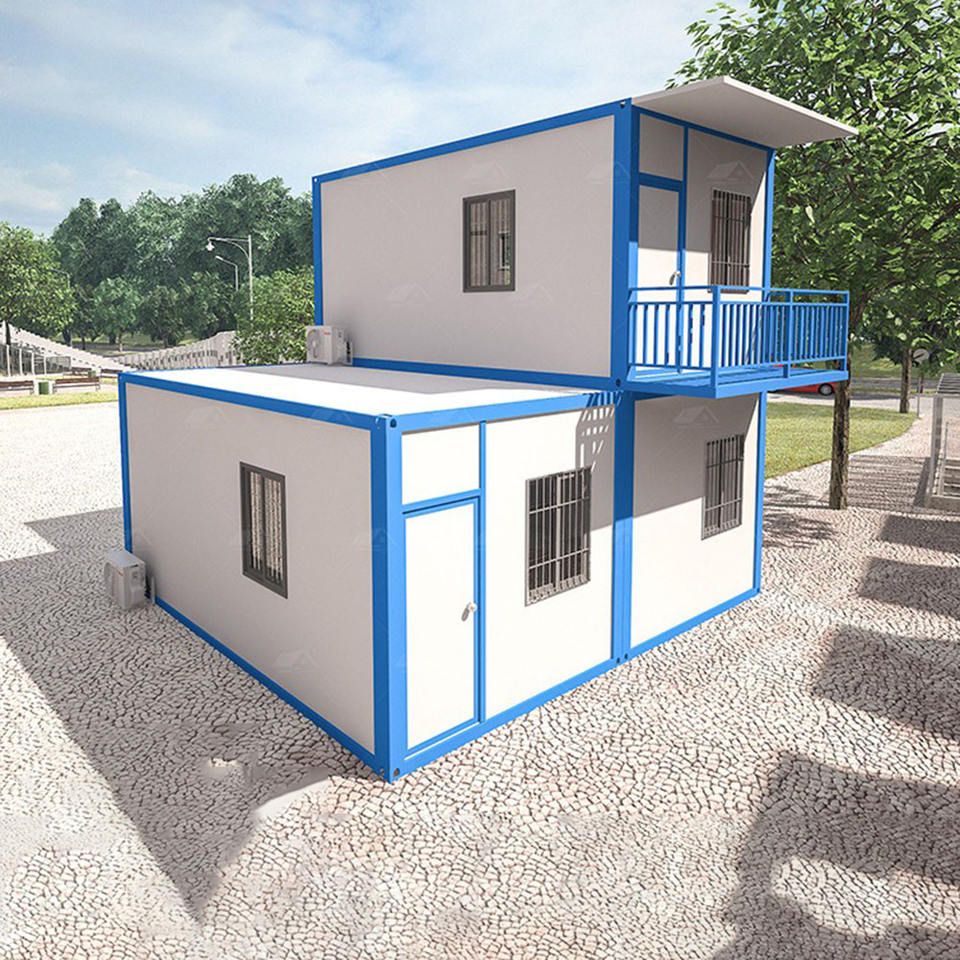
Advantages
- Significant cost advantages: The purchase cost is relatively low, and there is an abundant supply of second-hand containers in the market. For example, with a budget of 20,000 yuan, one can buy a high-end version that includes a shower room, air-conditioning interfaces, and other facilities. It is even possible to create a three-bedroom, one-living-room layout by connecting 2-3 containers. Construction costs are greatly reduced as there is no need for complex procedures such as land preparation, foundation construction, and wall building as with traditional houses. Only the transportation of containers to the designated location is required to complete the basic construction. Maintenance costs are also low. The structure is made of high-strength steel, has a long design life, and only requires simple daily maintenance.
- Outstanding flexibility and sustainability: Standardized and modular design supports rapid construction, making it suitable for emergency housing needs (such as post-disaster reconstruction) or temporary buildings (such as construction site dormitories). The ease of relocation is its core advantage, especially for people who frequently change their living locations (such as nomads and temporary project teams). Using discarded containers to transform into residential buildings aligns with the concept of sustainable development, reducing the generation of construction waste and energy consumption.
- Strong functional expandability: By connecting multiple containers, the living space can be expanded to meet the needs for multiple rooms. The internal layout can be customized according to requirements, such as adding partitions and installing smart home devices.
Disadvantages
- Limited space and comfort: The standard size of a single container (such as 3 meters × 6 meters) is only 18 square meters, resulting in cramped space. The internal layout needs to be carefully designed to optimize usage efficiency. The thermal insulation performance is poor, making it prone to being stuffy in summer and cold in winter. Additional thermal insulation materials (such as rock wool boards) or air-conditioning equipment are required to improve comfort.
- Insufficient appearance and security: The appearance is relatively simple and lacks the diversity and aesthetics of traditional houses, which may affect the living experience. If placed in remote areas, a self-installed surveillance system is needed to enhance anti-theft performance.
- Additional investment for long-term use: Although connecting multiple containers can expand the space, it increases the structural complexity and cost. Long-term residence requires continuous investment in maintenance costs (such as thermal insulation layer renewal and equipment repairs).
Recommended applicable scenarios
- Short-term or temporary needs: Such as construction site dormitories, post-disaster transitional housing, and exhibition venues, where its advantages of rapid construction and low cost can be fully utilized.
- Specific population needs: Such as office workers who frequently relocate, young people pursuing personalized living, or start-up companies in need of low-cost entrepreneurial space.
- Practice of environmental protection concepts: Suitable for users who focus on sustainable development, reducing resource waste by transforming discarded containers.



