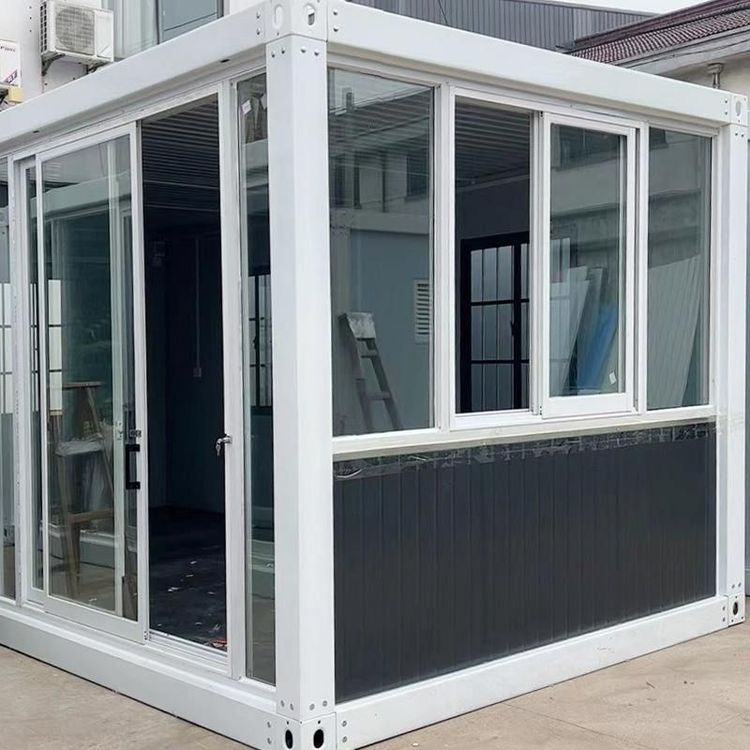
Is the Container House Compliant Now?
Whether a container house is compliant needs to be comprehensively judged based on specific circumstances and laws and regulations. Its legality depends on factors such as its purpose, approval procedures, land nature, and usage period. The specific situations can be divided into the following categories:

Compliant Situations
Temporary buildings that meet regulations
In scenarios such as construction sites, if container houses are only used to meet the temporary needs of construction personnel (e.g., for office work or accommodation), and they have obtained approval procedures such as temporary land use permits and construction project planning permits, while the ground is not hardened, there is no access to water and electricity, and the land nature is not changed (e.g., only for storing agricultural materials), they are generally not considered illegal constructions. For example, a container house in a farmland for temporarily storing agricultural tools is usually compliant if it does not result in permanent occupation.Permanent buildings with legal procedures
If container houses are used for permanent residence or commercial purposes (e.g., staff dormitories, shops), they need to obtain certificates such as construction land planning permits, construction project planning permits, and construction permits in accordance with formal construction procedures, and comply with technical specifications such as building storey height (not exceeding 6 storeys) and total height (≤ 24 meters). For example, a company in Hangzhou legally used containers to build staff dormitories through the approval of prefabricated buildings.
Illegal Situations
Unauthorized construction without approval
In urban planning areas, constructing container houses without obtaining a construction project planning permit or not constructing in accordance with the permit is an illegal act. For example, a restaurant owner who places a container behind the restaurant as staff dormitories without approval is considered to have built an illegal structure.Violation of land use regulations
Unauthorized construction of container houses on agricultural land (e.g., basic farmland, ecological protection areas) for non-agricultural construction violates land management laws and regulations. For example, operating a coffee bar on leased forest land without going through forestry fire protection approval will face penalties.Exceeding the temporary usage period
The usage period of temporary building container houses is generally two years. After expiration, extension procedures need to be handled or the houses need to be demolished. If they continue to be used without approval, they are regarded as illegal buildings.Changing the usage nature or function
If container houses undergo house-like renovations (e.g., having access to water and electricity, having doors and windows installed, and having air conditioners installed) or are changed to commercial purposes (e.g., homestays, shops) without going through land use approval, planning filing, fire protection approval, and other procedures, they are illegal buildings. For example, transforming a caretaker's house into a homestay or living there for a long time without hardening the ground may both result in penalties.
Suggestions for Compliant Use
- Temporary storage on farmland/roofs: Do not harden the ground, have no access to water and electricity, and only store agricultural materials and tools. It is advisable to choose a single 20-foot standard container.
- Commercial purposes: It is necessary to go through land use approval, planning filing, and fire protection approval, avoid farmland protection areas, and the structure should comply with the Technical Regulations for Container Modular Combined Houses.
- Residential use: Apply as a formal building, obtain a construction permit, and strictly comply with storey height and total height restrictions.