
Back to blog
Article
Installation of Internet-Famous Container Houses
Admin September 15, 2026
The installation of internet-famous container houses requires comprehensive consideration of purchasing, ground treatment, lifting and positioning, and strict adherence to technical specifications to ensure safety and stability.
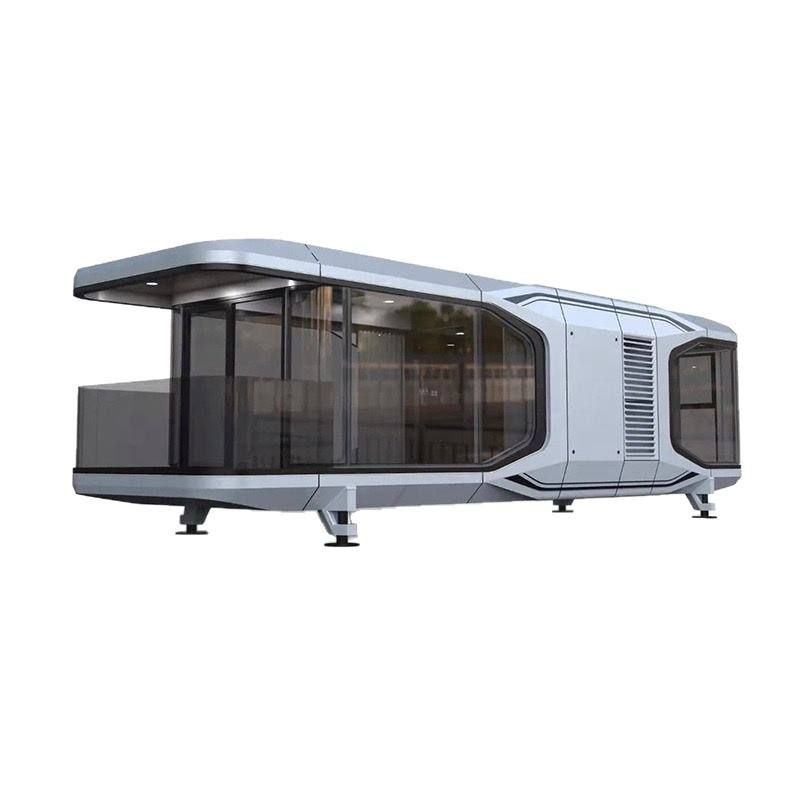
1. Purchasing Stage
- Structural Types: Internet-famous container houses mainly come in two types: welded integral containers and bolt-connected modular containers. Welded integral containers are formed by factory welding, with a direct load path and strong resistance to deformation, suitable for frequent lifting and relocation. Modular containers are connected using standard panels with bolts, having multiple connection nodes in the load path. When purchasing, it is necessary to check the steel wall thickness of the columns and bottom beams, with common specifications ranging from 1.5mm to 3mm. Thicker walls provide greater load-bearing redundancy but also increase the self-weight.
- Coating Process: The quality of the coating directly affects the rusting speed of the container body. Hot-dip galvanizing offers a longer anti-corrosion lifespan than cold-dip galvanizing, especially in areas with significant temperature variations between day and night and humidity changes. Therefore, hot-dip galvanized containers should be prioritized.
2. Ground Treatment
- Foundation Requirements: The core task of ground treatment is to provide a uniform load-bearing foundation for the container house. This involves removing loose soil and debris from the ground and compacting the original soil layer. For long-term fixed use, a concrete strip foundation should be poured, with a recommended width of 30cm to 50cm and a depth determined by the local frost depth. The top surface of the foundation should be kept level, with a height difference not exceeding 5mm.
- Short-Term Use: For short-term use scenarios, pre-fabricated concrete pads or steel plates can be used. The spacing between pads should not exceed 2m, and a crushed stone leveling layer should be laid beneath each pad to ensure that the load-bearing points are on the same horizontal plane.
3. Lifting and Positioning
- Lifting Requirements: During lifting, sufficient load-bearing steel wire ropes should be used, and all lifting points should be synchronized to avoid unilateral loading that could cause container distortion. After the container is positioned, the fit between the bottom beam and the foundation pad should be immediately checked. If there is local suspension, thin steel sheets should be used to fill the gaps, and a level should be used to check the longitudinal and transverse levels of the bottom beam separately, with the level error controlled within 2mm per meter.



