
Intelligent Mobile Toilet
Intelligent mobile toilets are facilities that can be moved as a whole and placed in fixed or temporary locations to provide toilet services for the public and customers.
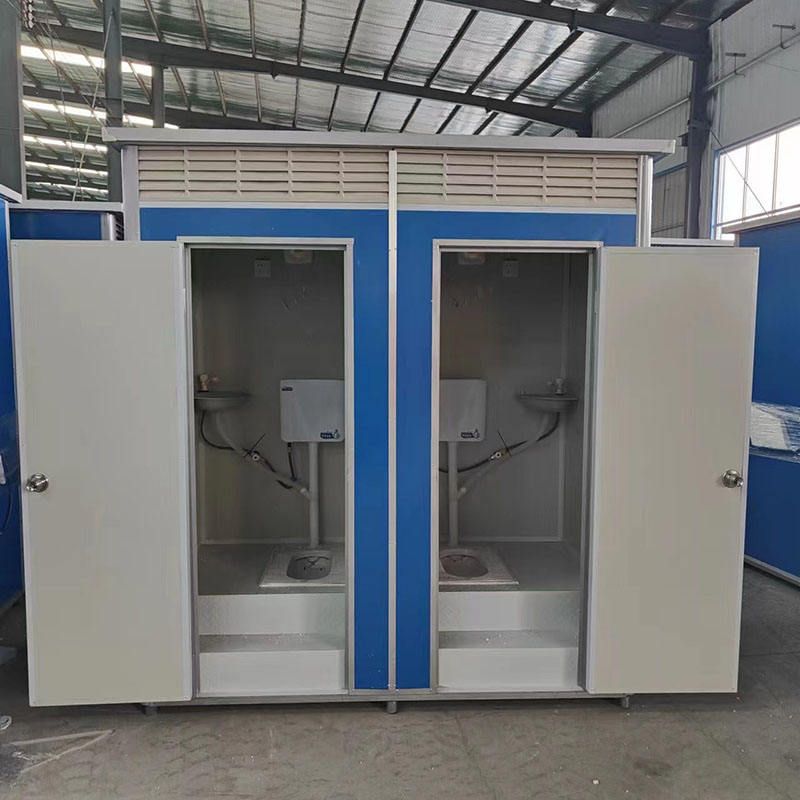
Key Features The core advantage of intelligent mobile toilets lies in their mobility, enabling rapid deployment to any required location using transportation tools and allowing for repeated use. Their design balances functionality and flexibility. For example, towed mobile environmentally friendly smart public toilets employ microbial degradation systems, with each squatting position being a foam position, and are equipped with management and equipment rooms. Compact environmentally friendly mobile public toilets integrate toilet systems, handwashing stations, smart mirrors, breathing lights, and other configurations, and can be directly put into use after factory production. Smart public toilets with built-in fecal collection tanks feature a U-shaped apple pod design, with fluorocarbon paint aluminum panels on the exterior and intelligent systems such as automatic lighting and sensor-activated handwashing inside.
Structural Composition Mobile toilets typically consist of the following parts:
- Fecal Treatment System: This includes fecal sewage storage tanks or disposal units, with some using water flushing, waterless flushing suction, recirculating water flushing, or dry packing treatment methods.
- Basic Structure: The floor, walls, and roof form a closed space to ensure safety and hygiene during use.
- Sanitary Facilities: Sanitary ware (such as squatting pans and sitting toilets), handwashing equipment (handwashing stations), water tanks, etc., meet basic needs.
- Mobile Devices: Depending on the design, they can be classified into lifting and handling types, powered towing types, etc., supporting rapid transportation and installation.
Classification Methods
- By Structural Form: Divided into single-unit structures (independent units) and composite structures (multi-unit combinations).
- By Mobility Method: Includes lifting and handling types (requiring lifting equipment) and powered towing types (tractor-movable).
- By Sewage Treatment Method: Covers water flushing and waterless flushing suction types (relying on septic tanks or pumping), recirculating water flushing types (water-saving purification), and dry packing types (waterless treatment).
Application Scenarios Intelligent mobile toilets are widely used in temporary events (such as exhibitions and music festivals), disaster relief, tourist attractions, construction sites, and other scenarios. Their modular design allows for rapid response to changing demands, while intelligent systems enhance the user experience, such as through automatic sensing and environmental monitoring functions.



