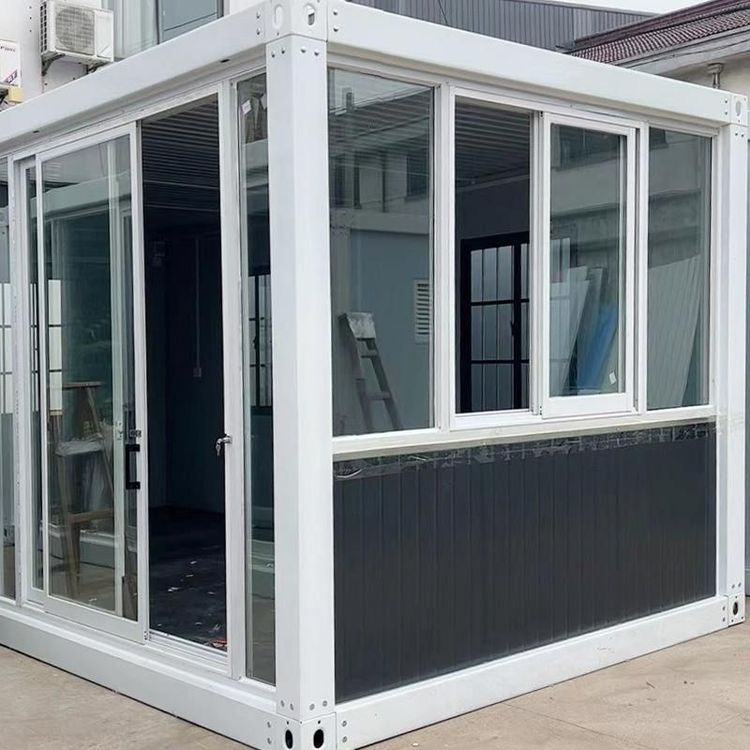
Intelligent Mobile QR Code Environmental Toilet
The intelligent mobile QR code environmental toilet is an innovative toilet facility that integrates intelligent technology with environmental protection concepts, offering both convenient management and eco-friendly features.

I. Core Functions and Technical Configurations
Some environmental mobile toilets use a bottom-level PLC data acquisition system to monitor equipment operation status in real-time, paired with a 40-inch LED toilet stall monitor that visually displays stall occupancy, reducing user waiting times. The 4G remote monitoring module allows managers to remotely control lighting and flushing systems via a mobile app, such as automatically turning off lights when unoccupied to save energy or adjusting flush intensity based on usage frequency. Additionally, non-free public toilets adopt a QR code payment model, where users pay 2 yuan to use an automatically high-cleaning toilet, ensuring operational costs while enhancing hygiene standards through technological means.
II. Upgraded Functions of Intelligent Eco-Friendly Toilets
Eco-friendly toilets further expand the boundaries of intelligent technology application. Their microcomputer control systems automatically sense personnel entry and exit, triggering lighting, ventilation, and waste separation systems to achieve energy-saving effects like “lights on when people arrive, lights off when they leave.” The environmental monitoring module collects real-time data on temperature, humidity, and air quality within the restroom and sends abnormal alerts to managers via the app, such as automatically activating an intelligent deodorization device when ammonia levels exceed standards. The facial recognition paper dispenser limits paper usage through biometric technology to prevent waste while collecting foot traffic data for operational optimization.
III. Balancing Environmental Protection and User Experience
The environmental features of these toilets are evident in multiple stages: the waste separation system treats solid and liquid waste separately, reducing sewage treatment pressure; intelligent deodorization technology replaces traditional chemical agents, lowering secondary pollution risks; and the QR code payment model uses economic incentives to guide users toward resource conservation. For users, the app’s real-time monitoring function allows checking stall availability in advance to avoid queues, while the automatic cleaning system ensures hygienic conditions after each use, enhancing comfort.
IV. Application Scenarios and Adaptability
Intelligent mobile QR code environmental toilets are particularly suitable for crowded areas like tourist attractions and temporary event venues. Their modular design facilitates rapid deployment and relocation, while the 4G remote monitoring function enables management in remote areas. Through technological empowerment, these toilets break the stereotype of traditional public toilets being “dirty, disordered, and poorly maintained,” becoming a typical example of public service upgrades in smart city construction.