
Indoor Mobile Toilet
Mobile toilets can be installed indoors, but they must meet regulatory requirements and take into account actual needs and site conditions.
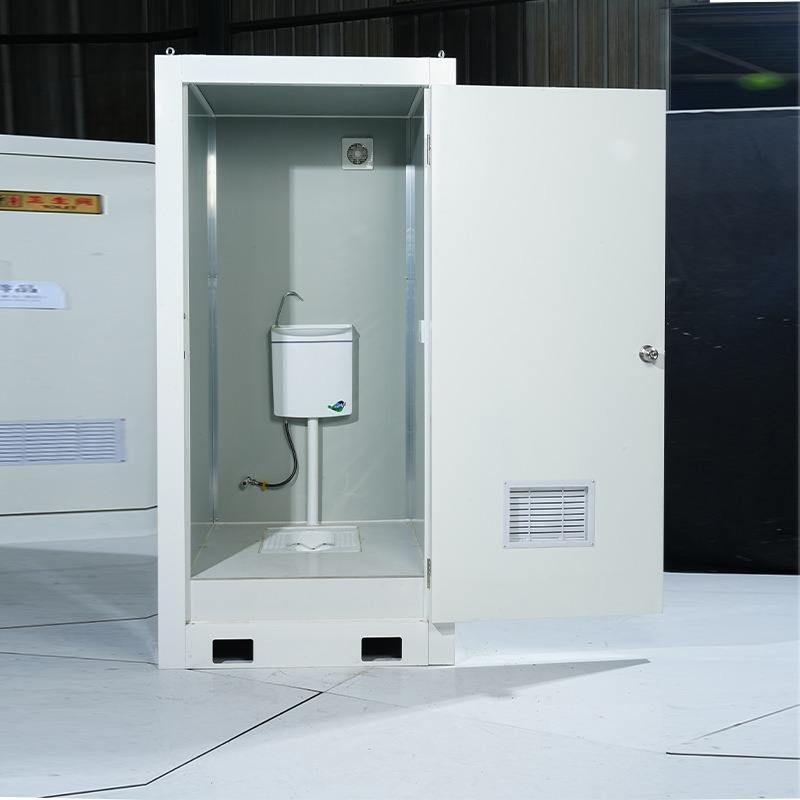
Applicable Scenarios and Uses
Mobile toilets are characterized by their overall mobility and flexible installation, making them suitable for places with fixed or temporary restroom needs. In indoor settings, if there is a restroom demand and installing a fixed toilet is difficult, such as during the renovation of old buildings or when temporary events are held, mobile toilets can theoretically be installed to provide restroom services for the public and customers. However, their installation should be based on actual needs and not be done blindly to ensure that they can effectively solve the restroom problems of indoor personnel.
Material and Type Selection
There are various materials available for indoor mobile restrooms, including common options such as steel structures, color-steel, metal, and plastic. Different materials have different characteristics. Steel structures are sturdy and durable, capable of withstanding significant pressure. Color-steel materials are lightweight and have certain thermal insulation properties. Metal materials have an aesthetically pleasing appearance and are easy to clean. Plastic materials are cost-effective and lightweight, facilitating easy movement. In terms of types, there are mobile toilets, container toilets, and eco-friendly toilets. Mobile toilets offer high flexibility and can be moved to different locations as needed. Container toilets have relatively larger spaces and can accommodate more facilities. Eco-friendly toilets focus on energy conservation, emission reduction, and resource recycling, such as using microbial degradation technology to treat feces. When selecting, it is necessary to comprehensively consider factors such as the specific indoor environment, the number of users, and the budget.
Regulatory Requirements
If the installation of a mobile toilet indoors involves construction or other activities, relevant approval procedures must be completed. Taking rooftop terraces as an example, they belong to the public spaces of residential communities, and any unauthorized construction is strictly prohibited. Similarly, installing a mobile toilet indoors without obtaining construction planning approval is also considered illegal construction and may涉嫌 (this Chinese word means 'be suspected of' and there's no exact single-word equivalent in English, here we can just say 'may') violate relevant provisions of Article 40, Paragraph 1 of the Urban and Rural Planning Law of the People's Republic of China, facing penalties for illegal construction. Therefore, before installation, it is necessary to consult with relevant departments and complete the approval procedures to ensure legal compliance.



