Independent Squatting Position Mobile Toilet
An independent squatting position mobile toilet is a facility that can be moved as a whole, providing toilet services to the public and customers. It can be set up at locations or venues with fixed or temporary needs.

I. Common Types and Characteristics
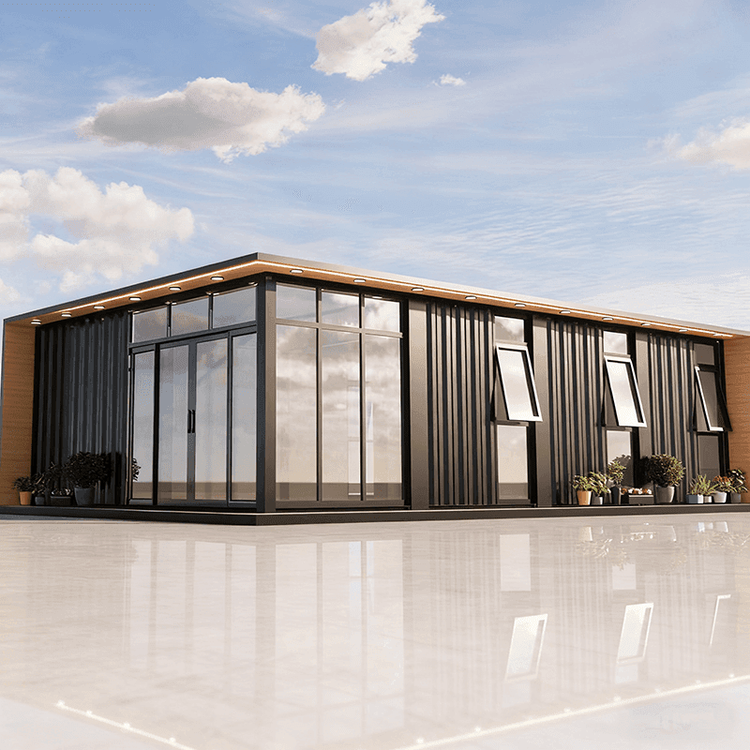
- Mobile toilet with six independent squatting compartments: It features a sloped roof design and is equipped with six independent compartments and a hand-washing area, which is an external public facility. This design ensures the privacy of users during toilet use and facilitates hand-washing and cleaning after use, meeting basic hygiene needs.
- Retro-style mobile public toilet: Its size and number of squatting positions can be customized according to requirements. Generally, it has six squatting positions and a public hand-washing area. The exterior wall is made of metal engraved panels, which have the characteristics of thermal insulation, heat preservation, and corrosion resistance, enabling it to effectively cope with different climatic conditions and usage scenarios. The entire frame is welded from steel structures, making it sturdy and durable and ensuring the stability of the mobile toilet during use and movement.
II. Composition Structure A mobile toilet generally consists of multiple parts. The fecal sewage storage tank (or fecal sewage treatment device) is used to collect and treat fecal sewage, ensuring the hygiene of the toilet. The floor provides a stable standing and moving space for users. Sanitary ware is the key equipment for toilet use. The walls serve to divide the space and protect privacy. The washing equipment facilitates user cleaning. The water tank supplies water for operations such as flushing. The roof provides shelter from wind and rain. The mobile device enables the entire toilet to be moved, meeting the usage needs at different locations.
III. Classification Methods
- By structural form: It can be divided into single-structure mobile toilets and composite-structure mobile toilets. The single-structure type is relatively simple and independent, while the composite-structure type may be more complex and diverse in terms of function or space combination.
- By moving method: It is classified into hoisting and handling mobile toilets, and powered and towed mobile toilets. Different moving methods are suitable for different scenarios and transportation conditions.
- By sewage treatment method: It includes water-flush and waterless-flush suction mobile toilets, circulating water-flush mobile toilets, and dry-packing mobile toilets. Different sewage treatment methods have their own characteristics in terms of environmental protection, ease of use, and cost.