
Huzhou Simple Mobile Toilet Installation
The installation of simple mobile toilets in Huzhou should follow a scientific process, covering needs assessment, equipment selection, installation implementation, and post-installation maintenance. The specific steps are as follows:
I. Needs Assessment and Site Survey
Before installation, a comprehensive analysis of the site is required, including ground bearing capacity (to ensure no settlement occurs after equipment placement), proximity to drainage interfaces (to determine if temporary pipeline access is needed), the possibility of power connection (to supply electricity for lighting and ventilation systems), and pedestrian flow lines (to optimize toilet layout for improved usage efficiency). For example, in areas covered by Huzhou's municipal pipeline network, water-flush toilets can be directly connected to temporary pipelines; in sites without drainage conditions, vacuum suction or recirculating water flushing technologies should be selected to avoid issues with waste disposal.
II. Equipment Selection and Customized Design
Select waste disposal technologies based on the assessment results:
- Water-flush: Suitable for areas with a well-developed pipeline network, enabling rapid waste disposal through temporary pipeline connections;
- Waterless biodegradable: Utilizes microorganisms to decompose waste, requiring no drainage, ideal for water-scarce sites;
- Vacuum suction: Collects waste through a negative pressure system, reducing odor dispersion, suitable for high-traffic areas.
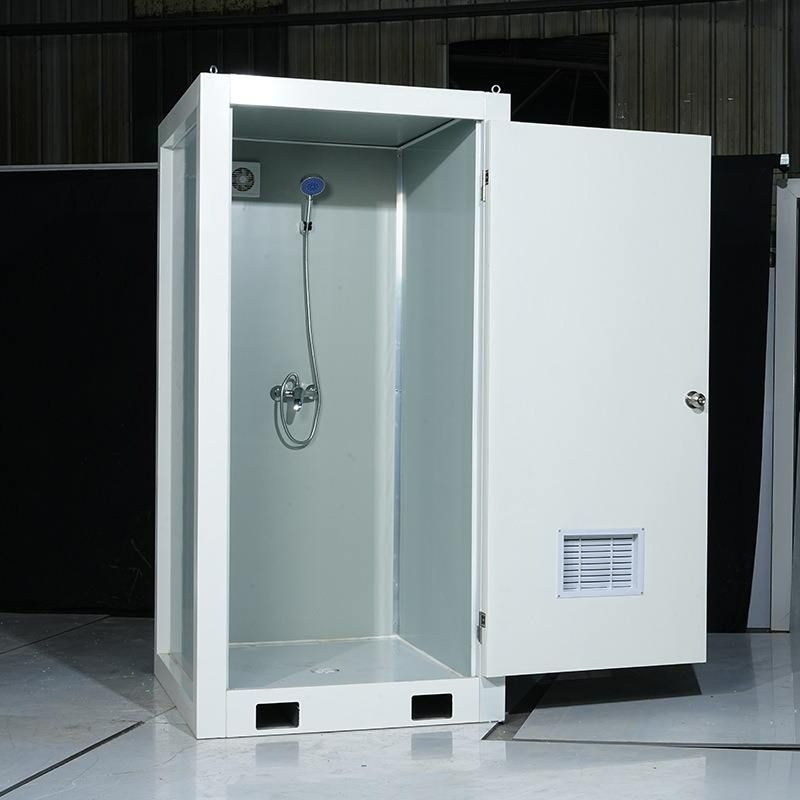
Additionally, determine the number of toilet stalls (e.g., single stalls or double units to accommodate 2-4 people simultaneously), accessibility features (such as handrails and low-positioned sinks), material durability (high-strength fiberglass or eco-friendly resin), and fire resistance ratings. Some suppliers offer customized services, adjusting specifications according to site dimensions (e.g., standard models measuring 2.4 meters in length × 1.5 meters in width), and supporting personalized designs for colors and logos. The interiors are equipped with non-slip floors, lighting, and exhaust systems.
III. Installation Implementation Process
- Foundation Treatment: Use concrete prefabricated panels or steel structural platforms to level and reinforce the ground, ensuring long-term stability of the equipment and preventing structural damage due to uneven ground.
- Pipeline Connection: Connect water, electricity, and drainage pipelines using dedicated quick-connect technology, and conduct sealing tests (such as pressure testing) to prevent leaks or blockages that could affect usage.
- Structural Assembly: For box-type mobile toilets, complete functional connections and commissioning on-site. The internal piping and ventilation systems are usually prefabricated before leaving the factory, requiring only assembly of the box units and testing of operational status on-site.
IV. Service Model and Maintenance Support
Installation is typically bundled with leasing services, covering equipment usage rights, daily maintenance, cleaning, consumable replenishment, and full-cycle services including removal, disposal, and site restoration after the lease ends. Daily maintenance includes regular cleaning and replacement of parts (such as seals and exhaust fans) to ensure normal equipment operation. Leasing prices are calculated on a periodic basis, with short-term events (within one month) costing approximately 50 yuan per unit per day, and long-term collaborations offering discounts to reduce usage costs.


