Hulunbeier Mobile Toilet Rental
The Hulunbeier mobile toilet rental service is designed to meet the characteristics of the high-latitude grassland climate in the region, featuring cold-resistant and wind-resistant properties, as well as eco-friendly and energy-efficient features, suitable for temporary or long-term sanitation needs in various scenarios.

Equipment Selection and Technical Routes
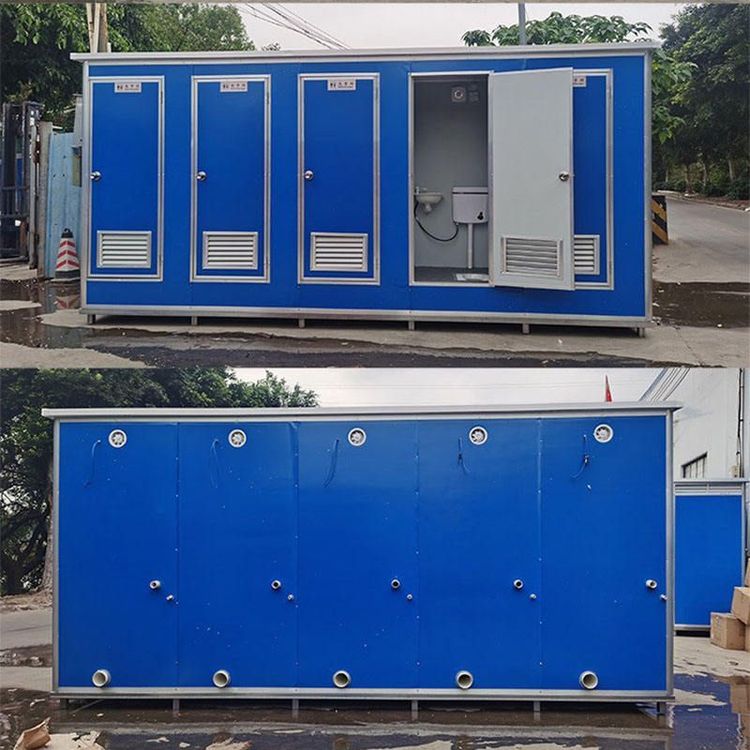
Hulunbeier mobile toilets mainly come in two technical routes: dry toilets and circulating water-flush toilets. Dry toilets utilize biological degradation principles, accelerating the decomposition of waste through the addition of microbial agents, eliminating the need for a water supply system, and are suitable for wilderness or areas with limited water access. Circulating water-flush toilets are equipped with a water circulation and filtration system, allowing a single water storage to support multiple flushes, but require regular maintenance of the filtration components, making them suitable for scenarios with higher hygiene standards. Both types of equipment feature cold-resistant and wind-resistant structures, with freeze-proof treatment for the drainage system in low-temperature environments, ensuring normal operation in grassland climates ranging from -30℃ to -40℃.
Transportation, Installation, and Adaptive Design
The equipment adopts a foldable box structure, allowing multiple units to be transported in a single trip. Once unfolded, it is equipped with an independent ventilation system and lighting. Installation requires adjustments based on ground conditions: soft grasslands require the laying of load-bearing base plates to distribute pressure, while frozen soil areas use anchoring techniques to prevent equipment displacement. Energy supply is primarily solar-powered, with energy storage battery packs capable of sustaining lighting and ventilation equipment for 72 consecutive hours; in case of continuous rainy weather, a small generator can be switched to for power supply, ensuring all-weather operation of the equipment.
Maintenance Management and Environmental Requirements
The cleaning cycle is divided into three levels based on usage frequency, with peak periods requiring daily waste collection and disinfection. Disinfectants are preferably biological enzyme agents to avoid damage to the grassland soil microbial environment from chemical disinfectants. Solid waste is sealed and transported to designated disposal points, while liquid waste is naturally decomposed through degradation bags; some areas are equipped with mobile treatment vehicles for on-site separation and preliminary treatment, reducing secondary pollution during transportation. After equipment removal, the service provider restores the site vegetation to ensure no long-term ecological impact.
Scenario Configuration and Rental Models
Short-term festivals and events typically adopt basic functional units to meet basic sanitation needs; long-term construction projects can add shower modules or barrier-free facilities, with modular design allowing flexible adjustment of equipment combinations. Rental pricing is flexible, with daily rates as well as monthly packages for large events, including regular deep cleaning services. Prices vary based on equipment type and minimum order quantity, for example, the unit price for a basic dry toilet starts at around 200 yuan for a minimum order of 1 set, while the unit price for a circulating water-flush toilet can be as low as 100 yuan for a minimum order of 10 sets.
Ecological Benefits and Recycling
The centralized treatment model of mobile toilets effectively reduces human activity-induced pollution of grassland water sources, particularly significant in areas near rivers and lakes. Equipment recycling requires a three-stage cleaning process, including high-pressure washing, atomized disinfection, and ultraviolet irradiation, followed by drying and folding for transportation, preventing microbial growth and ensuring safe recycling.