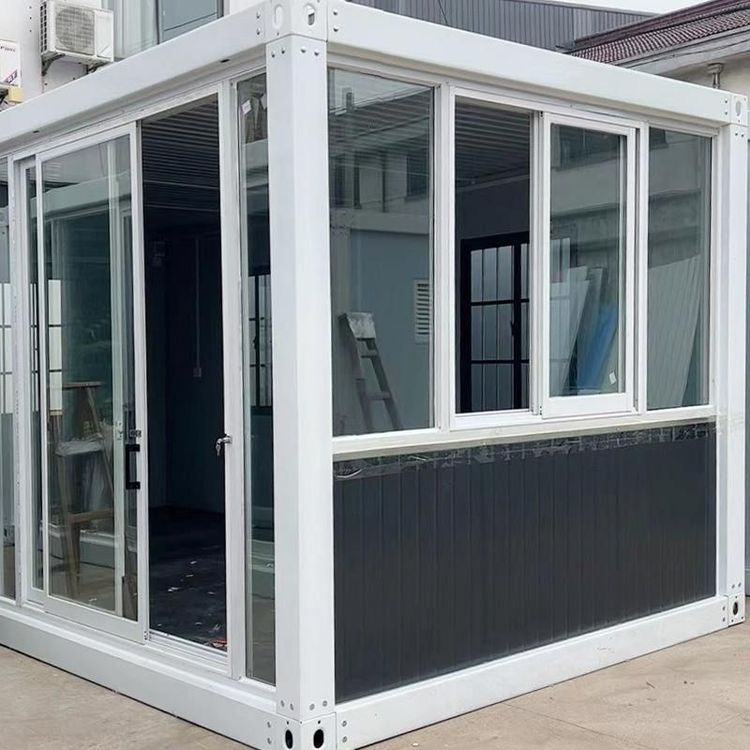
Huizhou Mobile Toilet Customization Process
The customization process for mobile toilets in Huizhou typically includes four key steps: requirement communication, plan design, factory prefabrication, and transportation and installation.

Requirement Communication: This is the starting point of the customization process. It is necessary to clarify the usage scenarios of the mobile toilets, such as outdoor large-scale events, construction sites, temporary facilities in scenic spots, or supplementary facilities for school dormitories. Based on the number of users, frequency of use, site area, and power and water supply conditions, the manufacturer will recommend an appropriate number of toilet stalls, sewage disposal methods (direct discharge, packaging, foam sealing, or circulating water treatment), and internal layout. Additionally, details such as size layout, door and window positions and opening methods, internal circuit configurations (e.g., sockets, lighting, air conditioning provisions), and exterior color and logo design need to be determined to ensure that the toilet functions align closely with the scenario requirements.
Plan Design: Based on user requirements and site conditions, the manufacturer will provide a detailed design plan, including floor plans, sketches, and key information annotations (e.g., dimensions, materials, pipe routing). The design plan should balance aesthetics and practicality, such as reasonably planning the layout of the restrooms, selecting durable materials, and considering fire safety factors, such as setting up evacuation routes, ventilation systems, and equipping with fire extinguishers and smoke alarms to enhance safety performance.
Factory Prefabrication: After the plan is confirmed, the production phase begins, typically lasting 7 to 15 days, depending on the complexity of the plan. The production adopts a modular process, where the toilet body, chassis, and roof are processed separately and then assembled to ensure dimensional accuracy and structural strength. The material selection focuses on waterproofing, corrosion resistance, and durability, with common materials for the main body including metal carved panels, stainless steel, fiberglass, or composite panels. Internal fittings (e.g., squat toilets, washbasins, lighting systems) can be selected according to the budget, and some manufacturers also offer additional features such as solar power supply and intelligent flushing.
Transportation and Installation: After prefabrication is complete, the product is transported to the site in whole or modular form, and after the foundation is leveled, it is hoisted or assembled, and connected to water and electricity for use. The installation process must strictly follow the plan, from foundation treatment to equipment debugging, to ensure that the final product meets safety standards and quality requirements.