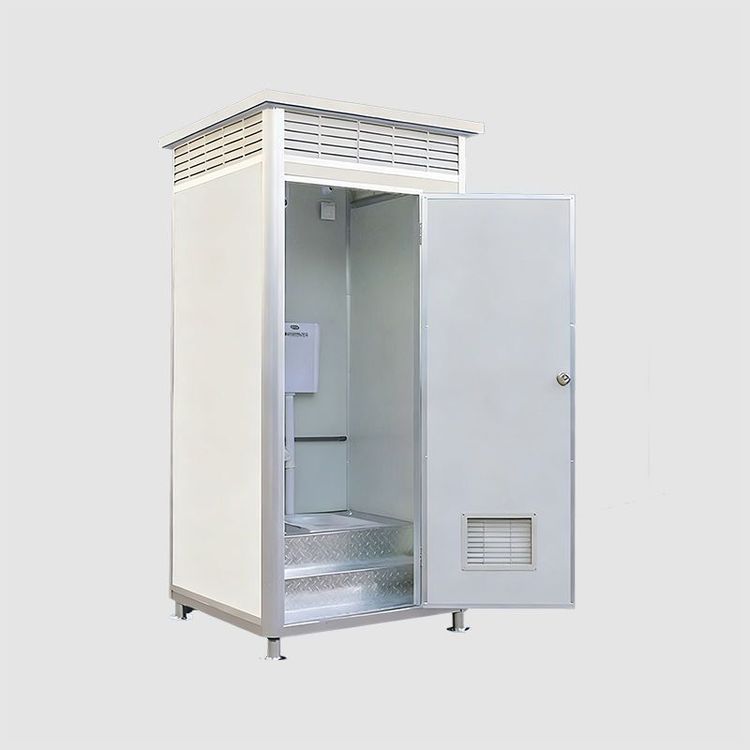
Hubei Outdoor Mobile Toilet Solution
The Hubei outdoor mobile toilet solution can be selected from three types—packaged, foam-based, and microbial—based on actual needs. The specific solutions are as follows:

Packaged Mobile Toilets
The core value lies in "zero water flushing and zero sewage discharge," using biodegradable packaging bags to instantly seal waste without relying on municipal sewer networks or water supply systems. This makes them suitable for scenarios without water supply and drainage or with strict environmental requirements. Application scenarios include living areas at construction sites, temporary municipal sanitation support points, large-scale outdoor performances or sports events, mountainous areas or water source protection zones in tourist attractions, and emergency rescue sites requiring rapid deployment. When selecting manufacturers, it is essential to focus on examining the maturity of the technical approach, the advancement of production equipment, the verifiability of past cases, and the responsiveness of after-sales service mechanisms. Priority should be given to original manufacturers with independent R&D capabilities and real project experience.
Foam-Based Mobile Toilets
The core mechanism involves using foam generated by mixing foaming liquid with air as a substitute for water for flushing. The foam isolates air and suppresses odor diffusion through its "sealing and lubricating" functions, while forming a lubricating film on the inner walls of pipes to reduce blockage risks. The system composition includes a foaming liquid storage and supply module (corrosion-resistant polyethylene tank with a liquid level sensor), a pneumatic foaming module (air compressor, air circuit regulator, and foaming head), and a control and monitoring module (automatically adjusting foaming intervals and single foaming amounts based on usage frequency). Customized adjustments should consider Hubei's regional characteristics: foam stability should be enhanced during the rainy season, antifreeze components should be added with insulation design in winter, and modular assembly should be adopted for toilets in mountainous tourist attractions to adapt to complex terrains.
Microbial Mobile Toilets
The core of microbial decomposition requires calculating the ratio and concentration of bacterial strains based on the environmental organic load. For example, heat-resistant strains are needed for outdoor activities in summer, while low-temperature-adaptive strains are required for construction sites in winter. Carrier design should select porous ceramics, activated carbon, or synthetic fiber fillers, with surface roughness and porosity matching the target bacterial strains. Laboratory tests should simulate the erosive effects of local water quality on the materials. Gas-liquid balance control employs a "segmented aerobic system" to maintain the dominance of aerobic bacteria through timed oxygen supply, set intermittent aeration programs based on usage frequency, and add trace nutrients to the bacterial agents to adjust the carbon-to-nitrogen ratio and suppress odor generation.