
Huangshi Prefabricated Mobile Toilet
The Huangshi prefabricated mobile toilet is a portable public restroom featuring modular design, an environmentally friendly recycling system, and easy, rapid installation and maintenance. It boasts characteristics such as lightweight yet high-strength materials, efficient assembly, and self-contained sewage recycling.
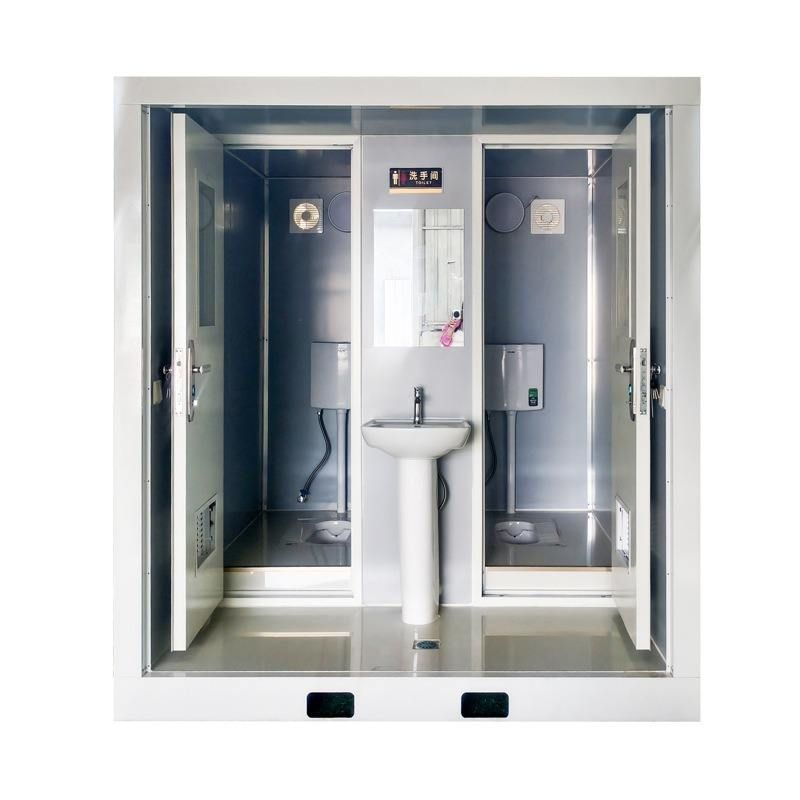
Material Composition and Functional Design
The walls are constructed using a 'metal frame + polyurethane sandwich panel' structure. The metal frame, typically made of galvanized steel, provides mechanical support, while the polyurethane sandwich panel, with a density only one-tenth that of traditional concrete, offers thermal insulation, soundproofing, and waterproofing capabilities, with a compressive strength that meets daily usage requirements. The floor is laid with anti-slip fiberglass-reinforced plastic, featuring a micro-porous surface that quickly drains standing water and inhibits bacterial growth. The roof adopts a curved design, paired with polyethylene waterproofing membrane, guiding rainwater naturally to both sides and reducing corrosion of seals by accumulated water.
Modular Assembly Logic
Following the principle of 'reverse disassembly,' the toilet is divided into six basic modules: a base, four wall panels, and a roof cover. The module interfaces are equipped with stainless steel male-female locks and rubber seals. During installation, the base is first leveled, followed by sequential insertion of the wall panels, and finally, the roof cover is secured using a wedge structure to press down on the tops of the wall panels. The entire process requires no welding or bolts, relying solely on gravity and lock engagement for fixation, with assembly time for a single unit controlled within 30 minutes. Critical tolerance control mandates that the gap between wall panels and the base be less than 2 millimeters to ensure effective odor and insect isolation by the seals.
Environmentally Friendly Recycling System
A combined 'foam sealing + microbial degradation' approach is employed: a foaming device mixes a small amount of water with a surfactant to generate high-density foam, covering the toilet surface, reducing flush water by over 85%, and sealing in odors. After entering the fecal storage tank, pre-embedded anaerobic bacteria (such as methanogens and acid-producing bacteria) decompose organic matter under oxygen-free conditions, producing biogas liquid and sludge. The biogas liquid can be used as liquid fertilizer, while the sludge, after high-temperature composting (60°C for 72 hours) to kill pathogens, is transformed into organic soil conditioner. This system requires no external sewage pipes and only needs bacterial agent replacement every three months.
Rental Model and Maintenance Logic
Unlike traditional fixed toilets, the rental model for these portable toilets centers on 'modular replacement.' When components such as door locks or foam generators fail, the corresponding module can be directly replaced without overall disassembly, significantly reducing maintenance costs and time.
Production and Manufacturing Technology
Production involves the integration of polymer material science, fluid mechanics, and modular structural mechanics. Taking Changzhou Runlong Environmental Protection Technology Co., Ltd. as an example, the process includes material forming (high-density polyethylene or fiberglass-reinforced plastic is formed through rotational molding/hand lay-up, with curing agent proportions adjusted according to climate), sewage treatment system integration (sewage pipes are designed with a 45-degree bevel connection, the water tank uses a siphon structure to maintain water level differences, and fluid simulation tests are conducted before factory shipment), and structural modular assembly (modules are connected via pre-embedded bolts or clips, considering transportation routes and installation environments, such as limiting side wall height to 2.4 meters in mountainous areas and using stainless steel connectors in coastal regions).



