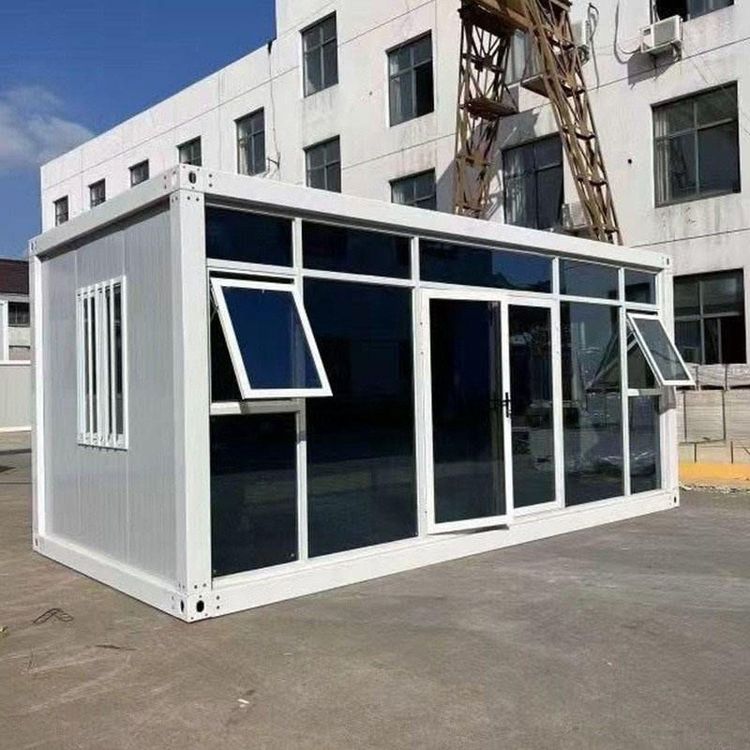
Mobile Toilet Installation in Huangjinbu Town
For the installation of mobile toilets in Huangjinbu Town, you can refer to the general installation process for portable toilets in the Jiangxi region. The specific steps are as follows:

Preliminary Preparation
Select an area that is flat, has convenient drainage, and is far from water source pollution to ensure harmony with the surrounding environment. Before installation, confirm the site conditions and check if the ground is solid. For soft ground (such as muddy or sandy areas), lay wooden planks or gravel in advance to enhance load-bearing capacity. At the same time, clear obstacles from the site to ensure smooth access for the mobile toilet. If the installation site is a public place or scenic spot, apply for a temporary facility permit from relevant departments in advance to avoid being ordered to rectify due to illegal installation. Additionally, check the equipment parts list to confirm that the main frame, toilet bowl, fecal storage tank, connectors, sealing strips, etc., are all present to avoid installation interruptions due to missing parts.
Foundation Fixing
Place the mobile toilet steadily in the selected position. Use expansion screws to fix the main frame to the ground or use counterweights (such as concrete blocks) to press down on the bottom to prevent displacement due to strong winds or human collisions. For simple-structured toilets (such as bamboo-wood frame structures), assemble the frame first and ensure it is vertically stable. Lay a waterproof membrane on the ground to prevent water seepage.
Core Component Installation
When installing the toilet bowl, ensure that the sewage outlet is tightly connected to the fecal storage tank. Use sealing rings or silicone sealant to seal the gaps to prevent fecal leakage. For water-flush toilets, connect the water pipe and water tank and test the water pressure for stability. For dry toilets, fix the position of the fecal storage tank and reserve a cleaning passage. If the toilet is equipped with a septic tank, connect the exhaust pipe according to regulations to avoid the accumulation of biogas.
Auxiliary Facility Assembly
Install doors and windows and adjust the switches to ensure tight closure and reduce odor diffusion. Add convenience accessories such as handrails and hooks, and lay anti-slip mats on the ground to reduce the risk of slipping. If the toilet is equipped with lighting or an exhaust fan, connect the circuit and test the power supply to ensure safe use at night.
Sealing and Debugging
Check the sealing of all connections (such as sewage pipes and water tank interfaces), and seal the gaps between the main body and the ground with silicone strips to prevent odor leakage. Test the flushing function, observe whether the water flow is smooth and whether the sewage is completely discharged. Check if the fecal storage tank is leaking, clean up the installation residues, and place toilet paper, deodorants, and other items.
Safety Inspection
Confirm that there are no loose parts in the overall structure, mark emergency contact information (such as maintenance phone numbers), and complete the final acceptance. For long-term use or government procurement projects, it is recommended to choose a regular leasing company or supplier to ensure after-sales support and installation specifications.