Back to blog
Article
How to Unload Container Houses
Admin September 15, 2026
The unloading of container houses mainly employs vertical loading and unloading methods (lifting) and horizontal loading and unloading methods (roll-on/roll-off), with specific operations depending on the type of equipment and the conditions of the scene.

Vertical Loading and Unloading Method (Lifting)
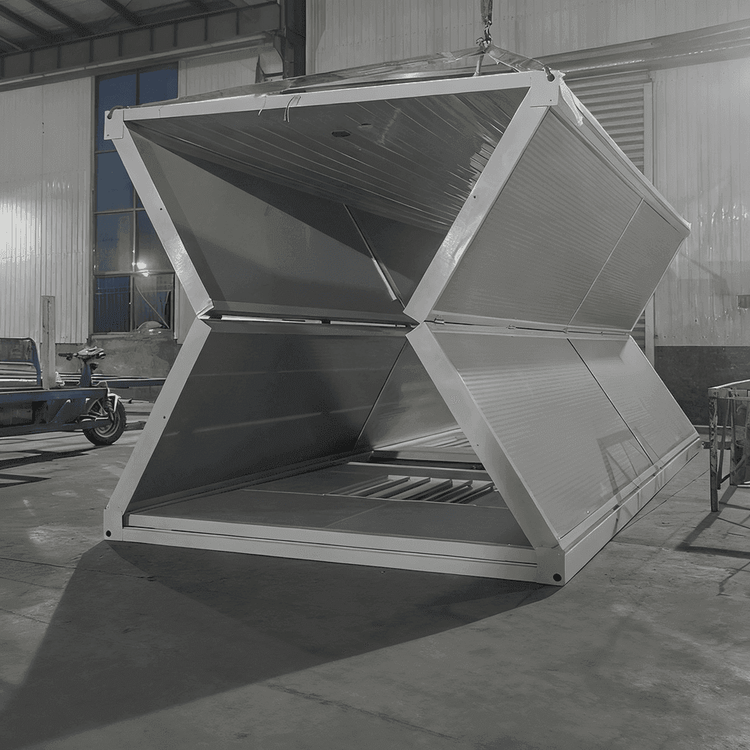
The vertical loading and unloading method relies on lifting machinery to complete the lifting and transportation of container houses, commonly seen at specialized container terminals or freight yards, with the specific process as follows:
- Equipment Selection:
- Quayside Container Crane: Used for container loading and unloading between ships and terminals, enabling rapid vertical lifting.
- Freight Yard Machinery: Includes straddle carriers (agile in navigating freight yards), rubber-tired gantry cranes (highly mobile), rail-mounted gantry cranes (highly stable, operating along tracks), and chassis trucks (linking transportation links). For example, in a factory's container freight area, a container gantry crane can directly lift a container house, facilitating rapid transfer between trucks and storage yards.
- Operation Points:
- It is necessary to check the rated load capacity of the lifting machinery to ensure that the weight of the container house is within the equipment's capability.
- The lifting device must be firmly connected to the lifting holes or corner fittings on the top of the container house to prevent slippage.
- Maintain a constant speed during lifting to avoid violent shaking; when lowering, align with the target position to prevent collisions.
Horizontal Loading and Unloading Method (Roll-on/Roll-off)
The horizontal loading and unloading method achieves the rolling transportation of container houses through equipment such as tractors and forklifts, suitable for scenarios like ports and stations, with the specific process as follows:
- Equipment Configuration:
- Tractors and Trailers: Place the container house on a chassis truck (trailer), with the tractor towing the trailer through a ramp into the ship's hold or freight yard. For example, airport container trailers can quickly complete loading and unloading by reasonably planning parking positions and matching equipment horsepower.
- Forklifts: Used for auxiliary loading and unloading, such as transferring container houses from trailers to storage yards or adjusting stacking positions.
- Operation Points:
- Ensure the ground is firm and flat to prevent vehicles from sinking into soft ground; on sloped roads, adjust the lifting sequence according to the tractor's orientation (lift the rear end first when the tractor is facing uphill, and lift the front end first when facing downhill).
- Consider the nature of the cargo, such as controlling the unloading speed and truck bed angle for fragile items; suspend operations in adverse weather conditions (e.g., heavy rain, strong winds).
- Maintain the balance of the container house during horizontal movement to prevent tilting or sliding.
Special Scenarios and Equipment Adaptation
- Factory Freight Areas: Container gantry cranes can stack containers in multiple layers, saving space; they are easy to operate, shortening vehicle turnover times.
- Inland Dry Ports: Container gantry cranes enable rapid loading and unloading, supporting the distribution of foreign trade containers and reducing the distance cargo travels to and from ports.
- Airport Scenarios: Self-loading and unloading trailer groups can complete loading and unloading in a short time without the need for cranes or forklifts, improving efficiency.
Related