
How to Move Container Houses
Moving container houses requires professional equipment and techniques to lift the entire house and move it along tracks to a new location. The core steps include foundation separation, installation of a walking system, power traction, and positioning connection. Here are the specific operations:
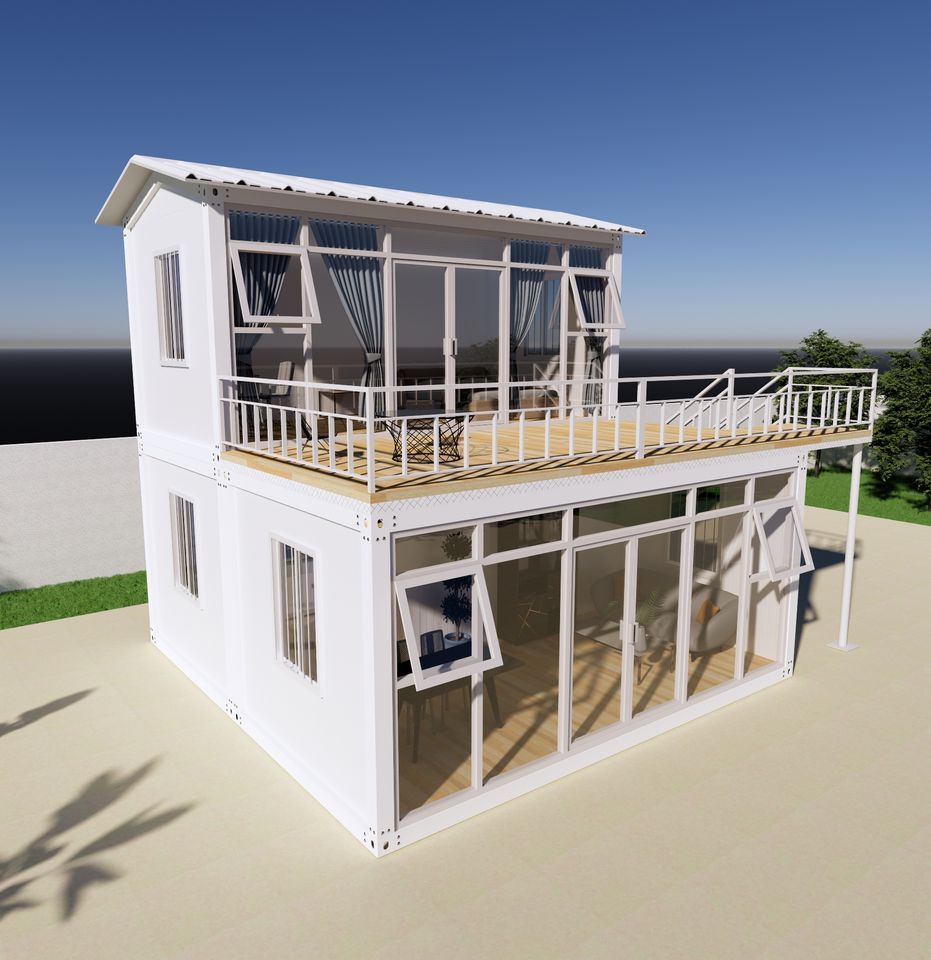
1. Foundation Separation and Structural Reinforcement
First, the connection between the container house and the original foundation must be severed. This is typically done by using cutting equipment to excavate along the inner side of the house's exterior walls, exposing and horizontally cutting the reinforced concrete foundation beams. During this process, the cutting depth must be precisely controlled to avoid damaging the walls or insufficient lifting. Simultaneously, the house should be structurally reinforced by pouring reinforced concrete 'underpinning beams' at the bottom to form a sturdy load-bearing platform, transferring the weight of the entire house onto these beams to ensure structural stability during the move.
2. Installation of the Walking System
A walking system composed of tracks and rollers is installed beneath the underpinning beams. The tracks are usually laid using reinforced concrete or steel rails, designed as straight or curved lines according to the moving route. Rollers can be steel shafts or polytetrafluoroethylene sliders, evenly spaced between the underpinning beams and the tracks to form a 'pulley-like' support structure, allowing the house to slide along the tracks. In some cases, specialized casters that fit the container's corner fittings are directly installed at the bottom of the underpinning beams, enabling movement via traction equipment.
3. Power Traction and Synchronous Control
Hydraulic jacks or traction equipment (such as forklifts or tow trucks) are used to apply controlled thrust or pull to the house. During traction, a synchronous hydraulic control system is employed to adjust the lifting force of multiple jacks in real-time, ensuring uniform force distribution on the house and preventing structural damage due to uneven settlement. The moving speed is usually slow, with daily movement distances of only a few meters, to ensure safety and stability.
4. Positioning Connection and Subsequent Reinforcement
Upon reaching the new location, the house is slightly lifted using jacks, the rollers and tracks are removed, and it is then slowly lowered to align precisely with the new foundation. The house is firmly connected to the new foundation through methods such as rebar planting and grouting, and waterproofing is applied at the joints. Finally, the temporary support structures are removed, and subsequent reinforcement work is completed to ensure the house remains stable in its new position over the long term.



