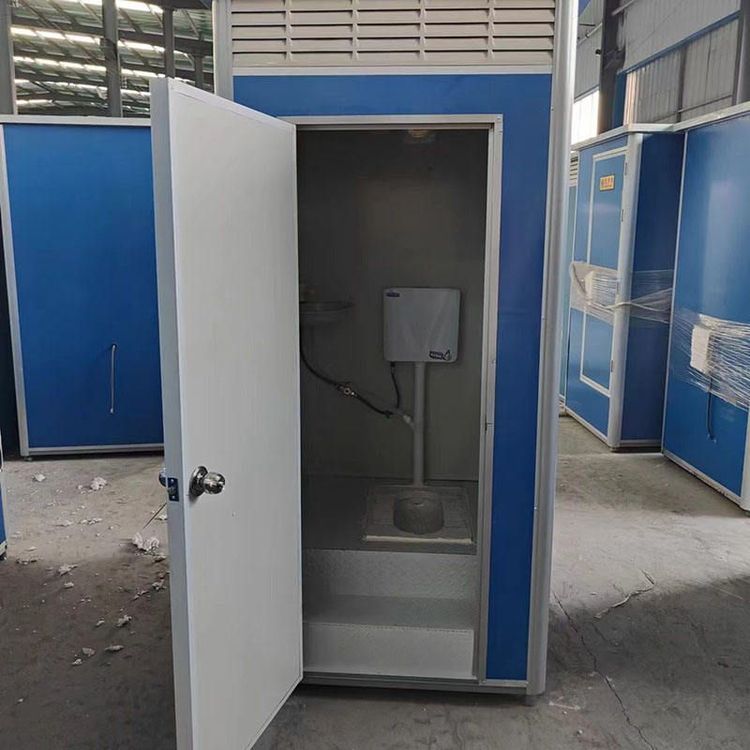
How to Promote Mobile Toilets
Promoting mobile toilets requires a comprehensive approach that encompasses understanding customer needs, product adaptation, highlighting advantages, providing supporting services, and leveraging word-of-mouth marketing.

First, identify customer needs and provide tailored solutions.
In-depth communication with customers is the core prerequisite for promotion. It is essential to gain a detailed understanding of their usage scenarios (such as outdoor music festivals, construction sites, temporary exhibitions, etc.), the number of users, duration of use, and characteristics of the site environment. For example, construction sites require consideration of toilet durability and anti-slip design, while outdoor events necessitate attention to portability and rapid deployment capabilities. Additionally, inquire about any special functional requirements the customer may have, such as barrier-free facilities (for disabled individuals), water-saving designs (suitable for water-scarce areas), or baby care stations. Arrange for professionals to conduct on-site inspections of the site conditions, assess ground flatness, the possibility of water and electricity access, and the width of transportation channels, ultimately designing a solution that meets actual needs and enhances customer trust.
Second, offer a diverse range of product types and flexible leasing options.
Recommend mobile toilet types that are suitable for different scenarios: Packaged toilets are ideal for remote areas without water and electricity, flush toilets are suitable for places with high hygiene requirements, biodegradable toilets decompose waste through microorganisms, are odorless, and environmentally friendly, while vehicle-mounted toilets are suitable for highly mobile scenarios (such as disaster relief sites). Simultaneously, provide flexible leasing options on a daily, weekly, or monthly basis to reduce the customer's one-time purchase cost. For instance, recommend daily leasing for short-term events and offer discounted monthly leasing packages for long-term construction site projects to enhance the appeal of the solution.
Third, emphasize the core advantages and environmental characteristics of the product.
Highlight the flexibility (rapid deployment and relocation), convenience (no need for connection to sewers), and environmental performance of mobile toilets. For example, biodegradable toilets utilize microbial decomposition technology, requiring no flushing and producing no odors, in line with national environmental policies; water-saving toilets use a recirculating water system, consuming only one-fifth of the water used by traditional toilets per flush, making them suitable for water-scarce areas. Strengthen customer perception of product value through data comparisons and case studies (such as a 30% increase in tourist satisfaction after use in a certain scenic spot).
Fourth, provide supporting services and value-added experiences.
Supporting services are key to enhancing competitiveness. This includes free transportation, installation, and dismantling services to reduce additional costs for customers; arranging for on-site personnel to guide usage and ensure proper operation; regular maintenance and cleaning (such as daily disinfection and replacement of consumables) to maintain hygiene standards; and setting up green plant decorations around the toilets, providing deodorizing fragrances, or replenishing toilet paper to enhance the user experience. For example, a music festival significantly reduced the accident rate by adding night lighting and anti-slip mats, earning high praise from customers.
Fifth, leverage industry resources and word-of-mouth marketing.
Obtain potential customer information through industry exhibitions, product promotion meetings, or tender procurement announcements, and actively showcase product advantages. At the same time, focus on resolving customer feedback issues (such as maintenance response speed and cleaning frequency) to accumulate a good reputation. For example, a construction company secured long-term cooperation opportunities for other projects of the enterprise after promptly resolving a toilet blockage issue. By having existing customers recommend new customers, a virtuous cycle is formed, expanding market share.