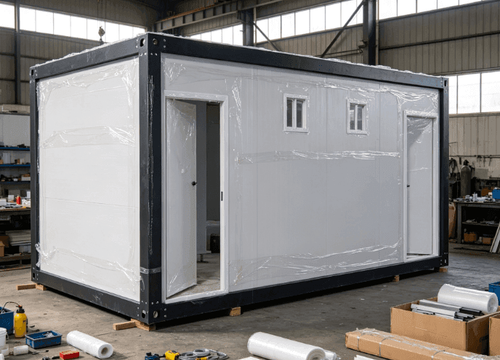
How to Photograph Mobile Toilets
Photographing mobile toilets can incorporate multi-angle shots and scenario-based compositions, emphasizing functionality and design details. Here are specific photography techniques:

1. Basic Composition and Scene Selection
Before shooting, clarify the purpose: if for product display, highlight structural details; if for promotion, create a scenario atmosphere. For example, when photographing a five-stall mobile toilet, start with a wide-angle lens to capture the overall appearance from the front or at a 45° angle, showcasing its modular design and spatial layout, with a background of an open space or construction site to emphasize practicality. For smart mobile toilets, simulate usage scenarios, such as opening the door to display the interior space or capturing users in action to enhance immersion.
2. Detail Close-ups and Functional Presentation
- Stall/Toilet Close-ups: Use a macro lens to focus on details like stall material, anti-slip design, or smart toilet features such as sensor panels and flush buttons. Highlight surface textures with backlighting or enhance the质感 (texture/quality) of metal components with side lighting.
- Internal Structure Display: For a five-stall toilet, disassemble a single module and use a top-down shot to showcase internal piping layout or drainage systems, accompanied by text explaining features like easy cleaning and corrosion resistance.
- Smart Function Demonstration: Drawing on smart toilet photography techniques, use a pull-back shot to record the automatic lid opening as a user approaches, or a 45° rotating shot to display touch panel responsiveness, emphasizing technological sophistication.
3. Dynamic Shots and Creative Perspectives
- Orbiting Shot: Circle slowly around the mobile toilet to fully present its appearance and surrounding environment, suitable for establishing an overall impression at the beginning of a promotional video.
- Obstruction Transition: When shooting the interior, first focus on obstructions like door frames or curtains, then pan the camera right to gradually reveal the interior space, creating suspense.
- Low-Angle Shot: Place the camera at ground level to shoot upward at the toilet's base structure or drainage outlet, emphasizing stability and leak-proof design.
4. Lighting and Post-Processing
- Natural Light Utilization: For outdoor shooting, choose soft morning or evening light to avoid harsh reflections or heavy shadows from strong light; indoor shooting requires supplemental lighting to ensure key areas like stall signs and control panels are clearly visible.
- Post-Production Color Grading: Adjust tones based on usage: enhance contrast for product shots to highlight metal or plastic textures; reduce saturation for promotional images to create a clean, modern atmosphere.
By applying these techniques, you can systematically present the functionality, design, and usage scenarios of mobile toilets, meeting diverse photography needs.