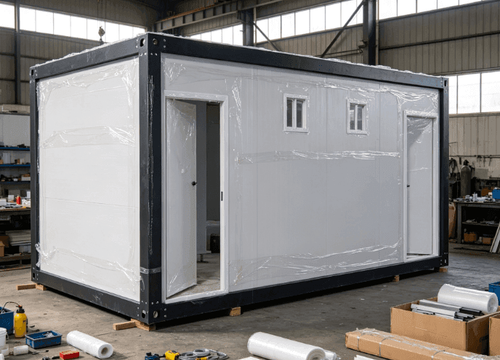
How to Open Mobile Public Toilets
The way to open mobile public toilets varies depending on their type and design. Common methods include conventional operations, intelligent modular operations, special design responses, and emergency plans, as detailed below:

Conventional Operations
Most mobile public toilets use traditional mechanical door designs, with opening methods similar to those of ordinary doors. Users can first observe the door's opening direction (e.g., pushing inward or pulling outward) and then complete the operation by gently pushing or pulling. Some toilet doors are designed to be pressed down in the middle or turned by a handle; users need to press the middle of the door panel or rotate the handle to open them. Such designs are common in basic mobile toilets, offering simple and intuitive operation, but users should avoid applying excessive force to prevent damage to the door or collision with surrounding facilities.
Intelligent Modular Operations
In pilot projects in places like New York, some mobile public toilets are equipped with intelligent management systems. Users can open the doors via SMS, scanning QR codes, dedicated applications, or proximity cards (such as access cards). For example, after scanning the QR code on the door, the system sends a temporary password to the user's mobile phone, and entering the password grants access; proximity cards need to be brought close to the reader for identity verification. Such designs enhance convenience and security but require sufficient device battery and stable network signals; otherwise, door-opening efficiency may be affected.
Special Design Responses
If the toilet door is locked (e.g., due to internal occupants not exiting promptly), there are usually small windows or indicator signs outside the door. Users can confirm the internal situation by gently knocking on the door panel, making sounds, or observing through the window, and then wait for the internal occupants to respond before opening the door. Some designs also install emergency call buttons outside the door, which can be pressed to directly contact management personnel for assistance. Such designs aim to balance privacy protection and emergency needs, preventing users from being trapped due to accidental locking.
Emergency Plans
When conventional methods are ineffective (e.g., door lock failure, electronic system breakdown), the following measures can be taken:
- Mechanical Unlocking: If the door retains a traditional keyhole, tools such as wrenches or screwdrivers can be used to insert into the keyhole and rotate to attempt unlocking, but care should be taken to avoid damaging the lock cylinder.
- Contact for Assistance: Immediately contact toilet maintenance personnel or on-site management personnel for help through internal communication systems or by calling service hotlines.
- Alternative Access: Some mobile public toilets are designed with alternative exits or emergency doors; users can observe surrounding signs to find alternative entry points.
Mobile public toilets in different scenarios may adopt differentiated designs. It is recommended to prioritize following on-site signs, operation guides, or staff instructions to ensure safe and efficient use.