
How Do Mobile Toilets Move?
Mobile toilets are primarily moved by installing universal wheels or using transportation tools to achieve overall relocation. The core of their design is to meet the flexible usage needs of temporary or fixed locations, with specific moving methods falling into the following two categories:
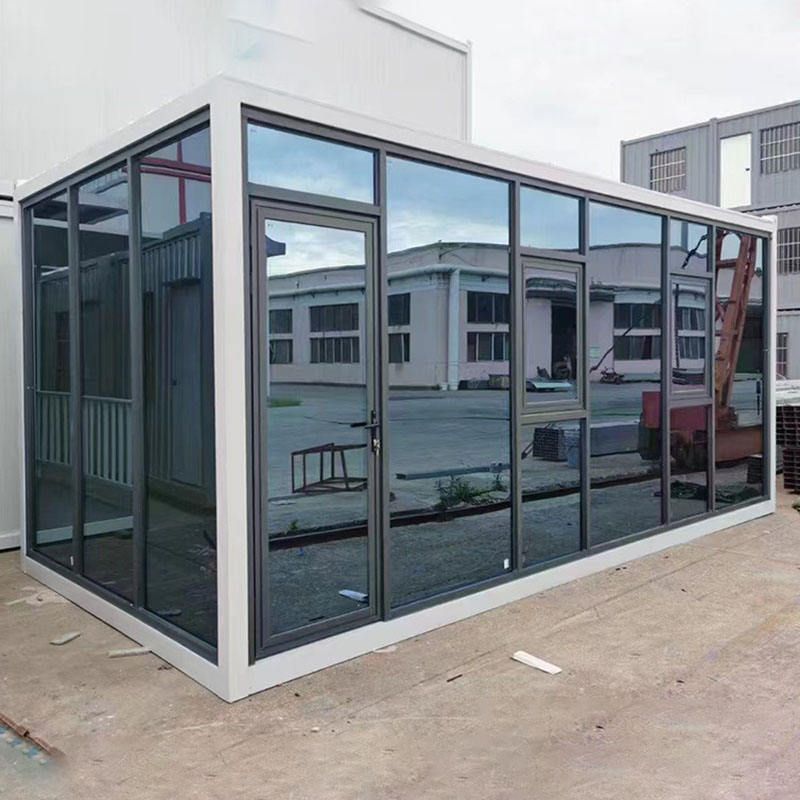
1. Autonomous Movement via Universal Wheels
Some mobile toilets adopt a design with universal wheels installed at the bottom, enabling short-distance movement through human effort or small equipment. For example, in one case, a movable restroom made using a water tank and a pallet had high-load-bearing universal wheels fixed at each of the four corners of the pallet. This design achieves movement through the following principles:
- Structural Stability: The universal wheels must be evenly distributed at the bottom of the toilet to ensure balanced weight distribution and prevent tipping during movement.
- Steering Flexibility: Universal wheels can rotate 360 degrees, allowing the toilet to move in any direction and adapt to narrow spaces or complex terrains.
- Load-Bearing Capacity: Depending on the toilet's self-weight and usage requirements, universal wheels must be made of high-strength materials (such as steel or thickened rubber) to bear the weight of occupants and internal facilities.
Such mobile toilets are typically suitable for temporary events, construction sites, or emergency scenarios, with the advantage of not relying on external transportation tools and enabling quick position adjustments. However, due to the load-bearing and frictional limitations of universal wheels, the moving distance is generally short, and operation on flat ground is required.
2. Long-Distance Movement via Transportation Tools
For mobile toilets that need to be used across regions, overall hoisting or towing methods are usually employed:
- Hoisting Transportation: The toilet body is designed with dedicated hoisting points, allowing it to be hoisted by a crane onto a transportation vehicle (such as a truck or flatbed truck) for long-distance transportation. This method is suitable for large mobile toilets or scenarios requiring rapid deployment.
- Towing Method: Some mobile toilets have an integrated pallet structure at the bottom, which can be directly connected to a towing vehicle for towing. For example, mobile toilets used in certain scenic spots are equipped with detachable pallets, which are towed by a towing vehicle during transportation and fixed for use upon arrival at the destination.
Such methods require consideration of the load-bearing capacity of the transportation tool and road conditions, and are typically used for deployment across cities or in remote areas, such as large music festivals or disaster relief scenarios.
Summary
The moving method of a mobile toilet depends on its design type and usage scenario: universal wheels are suitable for short-distance, flexible adjustment scenarios, while transportation tools meet the needs of long-distance, large-scale deployment. Regardless of the method used, the core goal is to ensure the stability and usability of the toilet while considering transportation efficiency.



