
How to Move Container Houses
The method of moving container houses mainly depends on the moving distance, site conditions, and house specifications. Common methods include using specialized transportation tools, installing mobile casters, or utilizing lifting equipment.
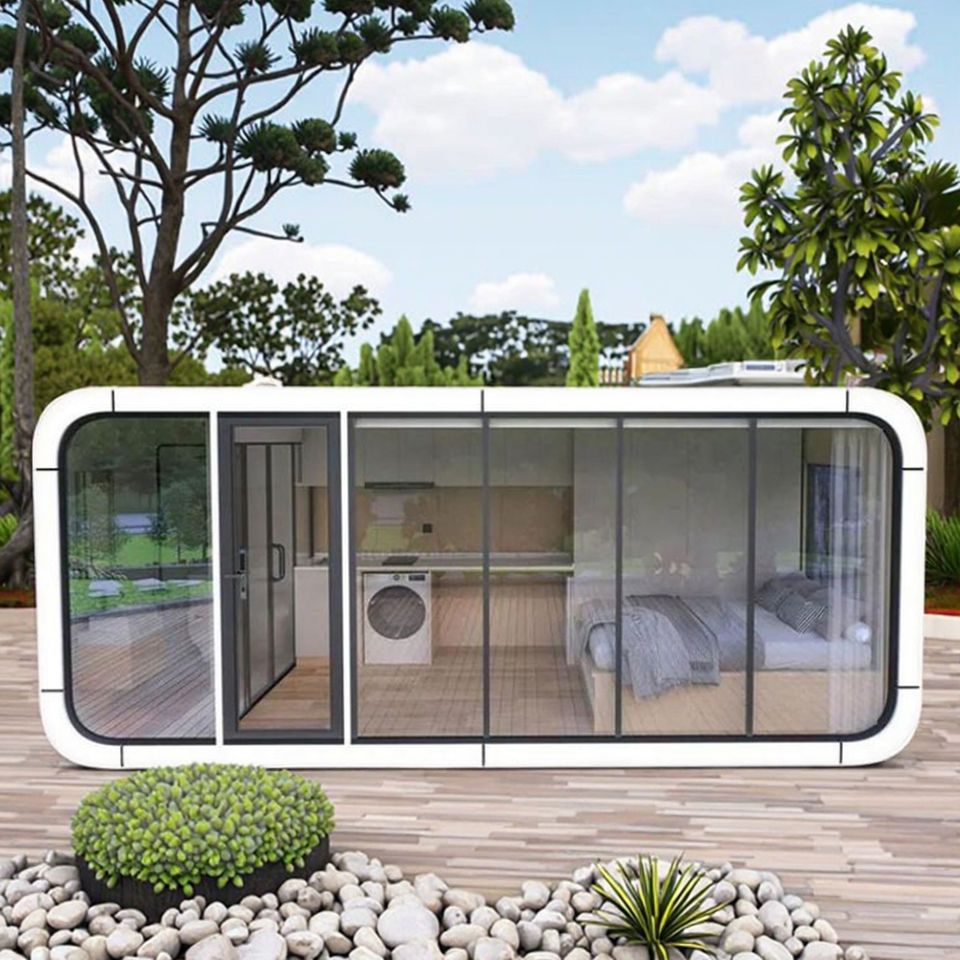
Short-Distance Movement: Install Specialized Container Casters
For short-distance movement needs within factories, yards, or sites, specialized mobile casters for containers are the most convenient solution. These casters are specifically designed for standard containers and can be directly installed on the container's bottom corner fittings without welding or modifying the container body. Their features include:
- High-Strength Load-Bearing: Made of thickened steel, they can stably support the weight of containers in various conditions, whether new or old.
- Flexible Steering: Equipped with universal wheels, they support forward and backward movement, slight left and right adjustments, and in-place steering, adapting to operations in narrow spaces.
- Safe Locking: They come with a precise braking mechanism that can be locked with a single click after moving into place, preventing the container from slipping.
- Floor Protection: Using high-wear-resistant polyurethane wheels, they operate quietly and do not damage floor materials such as concrete or epoxy flooring.
For example, when adjusting the position of empty containers within a factory, four casters can support and move an entire set of empty containers, allowing ordinary workers to operate them and significantly reducing reliance on heavy machinery such as forklifts and cranes.
Long-Distance Movement: Rely on Professional Transportation Tools
If container houses need to be moved across regions, the transportation method should be selected based on the distance and container specifications:
- Short-Haul Transportation (within 300 kilometers): Tilt trucks are preferred. Their cargo compartments can tilt at a certain angle, allowing the container to slide onto the ground without additional loading and unloading equipment. However, it is necessary to ensure that the ground is dry, flat, and has sufficient space.
- Long-Haul Transportation (over 300 kilometers): Flatbed trucks or semi-trailers with chassis are more cost-effective. The former requires forklifts or cranes for loading and unloading, while the latter come with container locking boxes that secure the container through corner fittings, ensuring transportation safety.
- Over-Height Container Transportation: For containers that exceed standard height limits, low-bed trailers are required. Their stepped design can transport high containers while maintaining stability.
Special Scenario Movement: Assisted by Lifting Equipment
In scenarios without road access or requiring rapid deployment (such as wilderness outposts or emergency housing), cranes are key tools. By lifting, the entire container house can be moved to the target location and used directly upon landing. This method requires a high degree of site flatness but can maximize the integrity of the house.



