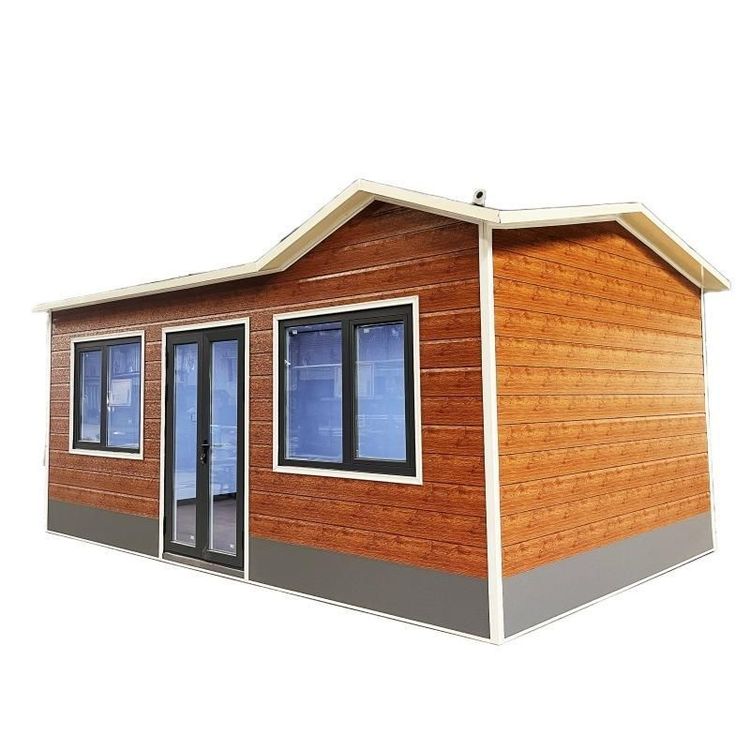
How to Move Container Houses
Moving container houses mainly relies on professional caster devices or overall moving technology, and the specific method varies according to the type and requirements of the house.

I. Moving Methods for Small Container Houses
For houses transformed from standard containers, traction caster devices that fit the container corner fittings can be used. These casters are directly clamped at the bottom corner fittings of the container, eliminating the need for welding modifications to the container body and enabling easy installation. The device is equipped with traction lifting rings that can be connected to forklifts or tractors. Horizontal movement is achieved through hydraulic systems or mechanical traction. This method is suitable for short-distance moving in narrow spaces such as workshops and construction sites, for example, workstation adjustments or temporary alignment, effectively solving the problem of large machinery being unable to enter the site.
II. Moving Methods for Large Building-like Container Houses
For container houses with an overall structure similar to buildings, building overall moving technology needs to be adopted, and its core steps are as follows:
- Foundation Separation: Use cutting equipment (such as wire saws or disc saws) to excavate along the inner side of the house's exterior walls and horizontally cut off the reinforced concrete foundation beams, separating the house from the original foundation. At the same time, all water, electricity, gas, and communication pipelines need to be disconnected in advance.
- Structural Reinforcement: Pour reinforced concrete underpinning beams around the walls and columns to form a load-bearing platform, transferring the weight of the house to this structure to ensure structural stability during the moving process.
- Walking System Installation: Lay steel rails or steel plates with roller tracks between the old and new sites. Set up rollers or polytetrafluoroethylene sliders at regular intervals under the underpinning beams to form a sliding support system.
- Power Traction: Use a synchronous hydraulic control system to evenly apply force through multiple hydraulic jacks, pushing the house slowly along the tracks. The speed is usually controlled within a few meters per day to avoid structural damage.
- Precise Positioning: After the house reaches the new location, use jacks to lift it up and remove the tracks, then slowly lower it onto the new foundation. Achieve structural connection through methods such as rebar planting and grouting, and finally restore the pipeline system.
III. Moving Technology for Special Scenarios
For extremely large or complex-structured container houses (such as multi-story buildings), step-by-step pushing moving technology can be adopted. For example, in the Xiamen Houxi Station moving project, hundreds of walking devices were installed at the bottom of the house, and combined with a PLC computer monitoring system, millimeter-level deviation control was achieved, enabling complex trajectories such as rotation and arc-shaped movement.
You may also like

Portable Toilet Rental For Sale: Top Options & Considerations
Read More
How to Choose the Right Portable Toilet Movable Eco-Friendly
Read More
How to Choose the Right Portable Toilet Eco-Friendly Design
Read More