How to Make Prefabricated Permanent Houses
The production and installation of prefabricated permanent houses are completed through three steps: factory-prefabricated modules, customized production and transportation, and overseas on-site assembly. The core lies in standardized and modular production along with rapid on-site assembly, offering advantages such as efficiency, environmental friendliness, and recyclability. The specific process is as follows:

1. Factory-Prefabricated Modules: Full-Process Standardized Production
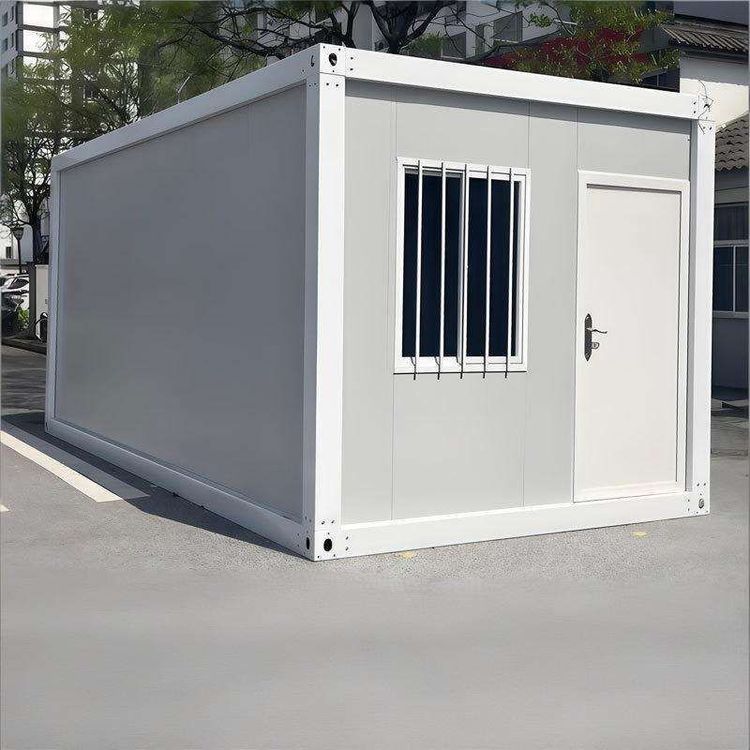
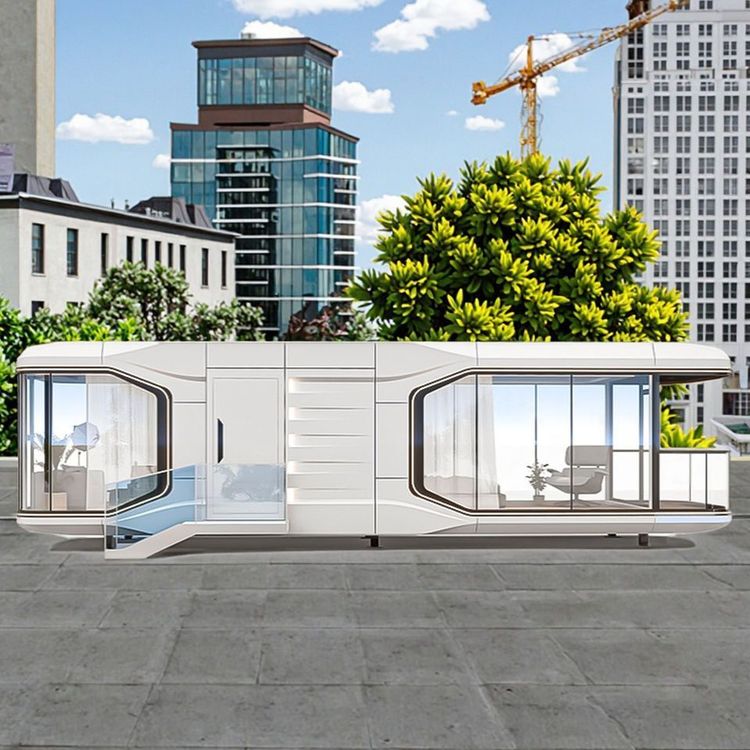
Prefabricated houses are based on modular decomposition, breaking down the entire building into independent standard units (such as bedrooms, kitchens and bathrooms, corridors, etc.), with each module being an independent box structure. All processes are completed within the factory, including steel structure welding, wall laying, pre-embedding of water and electricity pipelines, installation of doors and windows, and full-house finishing. When leaving the factory, the modules already possess the attributes of 'finished products' and do not require secondary construction on-site. The production process employs mechanized operations, avoiding manual errors through millimeter-level precision control, and undergoes safety certification in accordance with standards from multiple countries such as the EU, Australia, and the Middle East to ensure quality compliance. For example, the three-dimensional factory in Shenzhen Zhongjian Hailong Industrial Park can achieve integrated production of structures, electromechanical systems, and interior decoration, with an annual delivery capacity of 20,000 to 30,000 modules, significantly improving efficiency.
2. Customized Production and Transportation: Adapting to Global Demands
According to the requirements of overseas customers, the factory can customize the layout, style, and functional modules, and uniformly code and classify all modules for acceptance. To adapt to the ocean shipping environment, the modules need to undergo waterproofing, corrosion resistance, and shock resistance treatments, with dimensions strictly matching international standard containers. After being transferred to the port by specialized flatbed trucks, they can be efficiently loaded onto cargo ships and shipped globally. The transportation cycle varies depending on the destination: approximately 1 week for Southeast Asia, over 20 days for the Middle East, and about 1 month for Europe and the United States, with full logistics traceability throughout. This model greatly reduces transportation costs and avoids space wastage.
3. Overseas On-Site Assembly: Efficient On-Site Construction
After arriving at the overseas construction site, the modules are assembled through crane lifting and interface connection, a process similar to 'assembling Lego blocks', requiring only alignment, locking, and connection of water and electricity. For example, 63 sets of Chinese prefabricated elderly care apartments in the UK were assembled in just 14 days, reducing the construction period by more than 60% compared to traditional methods. Modular construction transfers 70% of the processes to the factory, reducing the construction period by more than 60%, while alleviating on-site traffic pressure and reducing site occupation.
Additional Advantages: Environmental Protection and Sustainability
This model can reduce construction waste emissions by more than 75%, material wastage by more than 25%, on-site electricity consumption by 60%, and water consumption by 66%. The modules significantly improve waterproofing, sound insulation, and earthquake resistance performance, and support disassembly, stacking, and flexible expansion, with a recycling rate exceeding 90%, aligning with the trend of green building development.