
Back to blog
Article
How to Make a Portable Toilet
Admin October 09, 2026
A portable toilet can be made using a water storage barrel. Here are the specific steps:
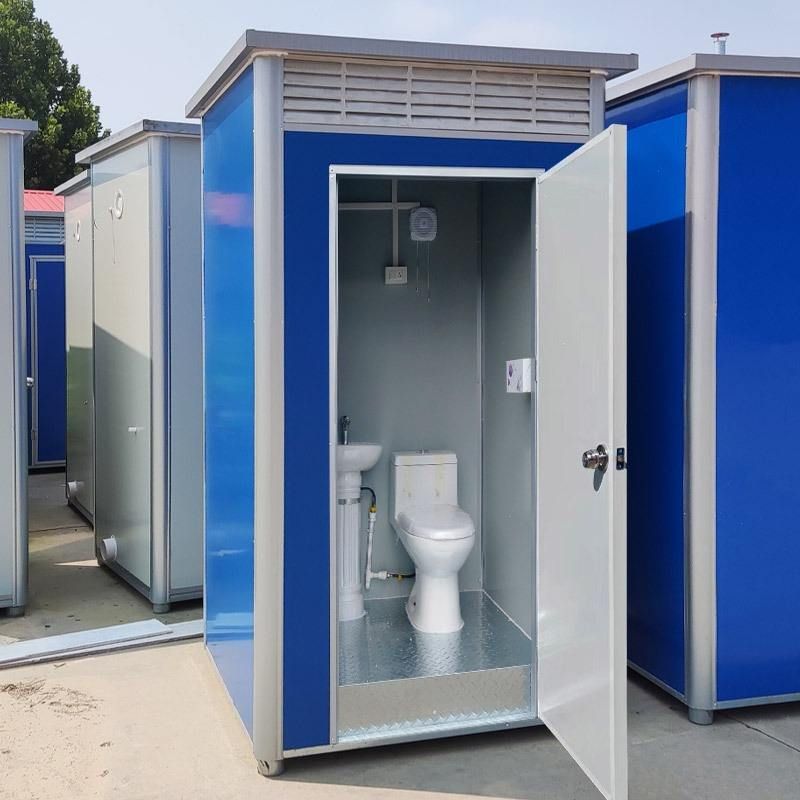
- Barrel Body Processing: Use an angle grinder to split the water storage barrel vertically in the middle, creating two semi-circular barrel bodies. This step requires ensuring that the cutting surface is flat to provide a stable foundation for subsequent structural construction.
- Mobile Device Installation: Fix universal wheels at the four corners of a wooden board to form a mobile base. The wooden board should be made of a strong load-bearing material, and the universal wheels should have a locking function to ensure safety during use.
- Height Extension: Vertically fix wooden strips to the upper edge of the barrel body using self-tapping screws to form a frame structure. The number of wooden strips should be determined according to the diameter of the barrel body, usually requiring 4-6 strips to maintain structural stability.
- Entrance Creation: Use an angle grinder to cut a rectangular entrance measuring approximately 60cm×40cm on the side of the barrel body. Ensure that the edges are neat during cutting to avoid scratches from burrs.
- Door Frame Construction: Install sponge strips on both sides of the entrance as sealing strips to form a door frame structure. The sponge strips should be elastic to ensure good sealing when the door is closed.
- Wall and Roof Installation: Insert plastic soft boards into the gaps between the wooden strips to form an elevated wall, with a recommended height of 1.8-2.0m. Invert the upper half of the water storage barrel onto the top of the wooden strips as a roof, and seal the joints with waterproof glue.
- Surface Treatment: Apply two coats of white waterproof paint to the surface of the wooden strips to enhance both aesthetics and moisture resistance. Ensure even coverage during painting to avoid missed spots.
- Door Production: Use foam strips to join two honeycomb wooden boards to form a door panel, with dimensions slightly smaller than the door frame. The door panel should be equipped with hinges for opening and closing functionality, and it is recommended to use stainless steel hinges.
- Drainage System: Cut a circular hole with a diameter of 10cm at the bottom of the barrel and install a PVC drainage pipe to form a floor drain. Cut holes on the side of the barrel body to connect direct joints, and install a three-way joint at the bottom to connect to the water storage barrel, forming a circulation system.
- Sanitary Equipment Installation: Connect the water pipe of the bathroom heater, install a three-way joint below the inlet pipe, and connect a showerhead. Fix the toilet on the drainage pipe hole and seal the edges with glass glue. The drainage pipe should extend to a sewage tank to ensure directional discharge of sewage.
- Handwashing Device: Extend a water pipe horizontally from the three-way joint of the outlet pipe to the doorway as the inlet pipe for a handwashing basin, and connect a flexible hose to the faucet. Cut a hole in the door body to install a faucet joint, ensuring good sealing of the joint.
Classification Description: Portable toilets can be classified by structural form into single-unit structures (independent units) and composite structures (modular combinations); by mobility into hoisting types (requiring lifting equipment), carrying types (manual movement), powered types (self-propelled), and towing types (vehicle-towed); and by sewage treatment into flush types, non-flush suction types, and circulating flush types.
Related



