
How to Lock a Mobile Toilet Door
The methods for locking mobile toilet doors vary depending on the type. Here are the specific operation methods for common types:
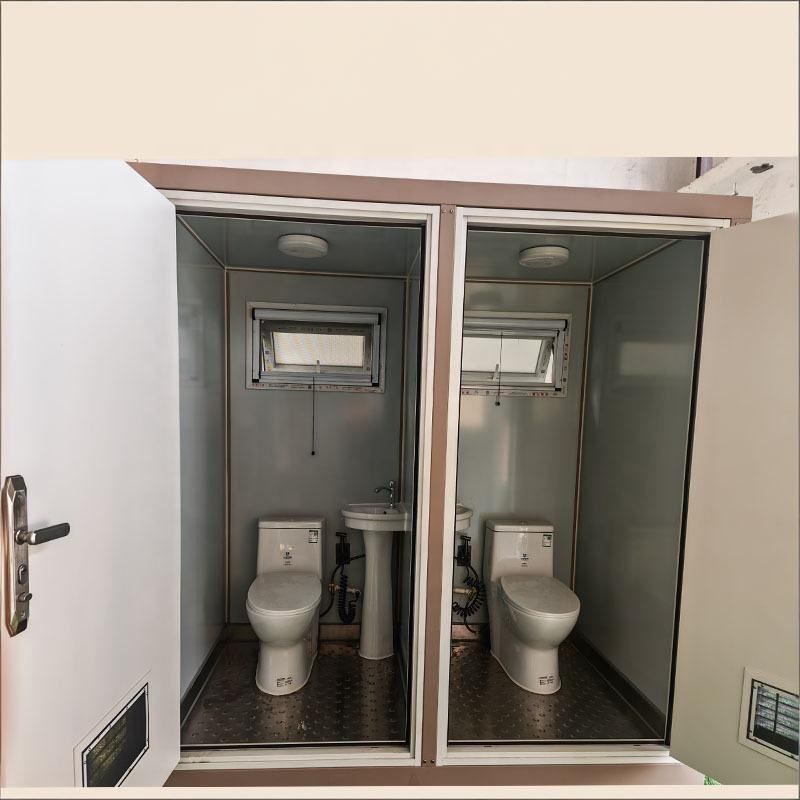
Common Public Toilet Door Locks
For most mobile toilets in public places, the door lock design is usually simple and uniform. When using it, first locate the position of the lock tongue and extend it by pressing down or lifting up. This step is crucial for activating the locking function. After that, depending on the specific structure of the lock, rotate or push/pull the lock tongue to the locked position. For example, some lock tongues need to be rotated clockwise or counterclockwise by a certain angle, while others need to be pushed or pulled in a specific direction until you hear a 'click' sound, indicating that the door has been successfully locked. During the operation, be sure to apply moderate force to avoid slipping due to excessive force, which may affect the locking effect and even damage the lock.
Bathroom Sliding Doors
If it is a single-track sliding door for a mobile toilet, the locking method is relatively unique. After pulling the sliding door to the closed position, lift the handle upwards. At this point, the door will be locked and cannot be moved freely. In addition, other auxiliary locking methods can also be used. For example, use a padlock by installing a suitable padlock device on the door and locking it; or install a latch on the upper or lower edge of the door inside the bathroom and insert the latch into the corresponding hole to lock the door; or use a snap lock to fix the door with its snap structure.
Toilets on High-Speed Trains
The locking method for mobile toilets on high-speed trains also has its characteristics. After entering the toilet, you need to manually lock it. Whether it is a squat toilet, a toilet bowl, or a barrier-free toilet, the basic locking method is the same. Locate the locking device on the door and operate it according to the instructions, usually by pressing down or rotating the lock tongue to the locked position. However, the locking method for some barrier-free toilets is slightly different. You may need to rotate a specific lock to complete the locking operation to ensure the privacy and safety of users.



