
Back to blog
Article
How to Handle Prefabricated Houses Affected by Disasters
Admin September 18, 2026
The handling of prefabricated houses affected by disasters requires a comprehensive assessment based on the extent of damage, property ownership, and local policies, primarily involving legal procedures such as housing safety appraisal, repair and reconstruction, compensation and resettlement, and property rights adjustment.
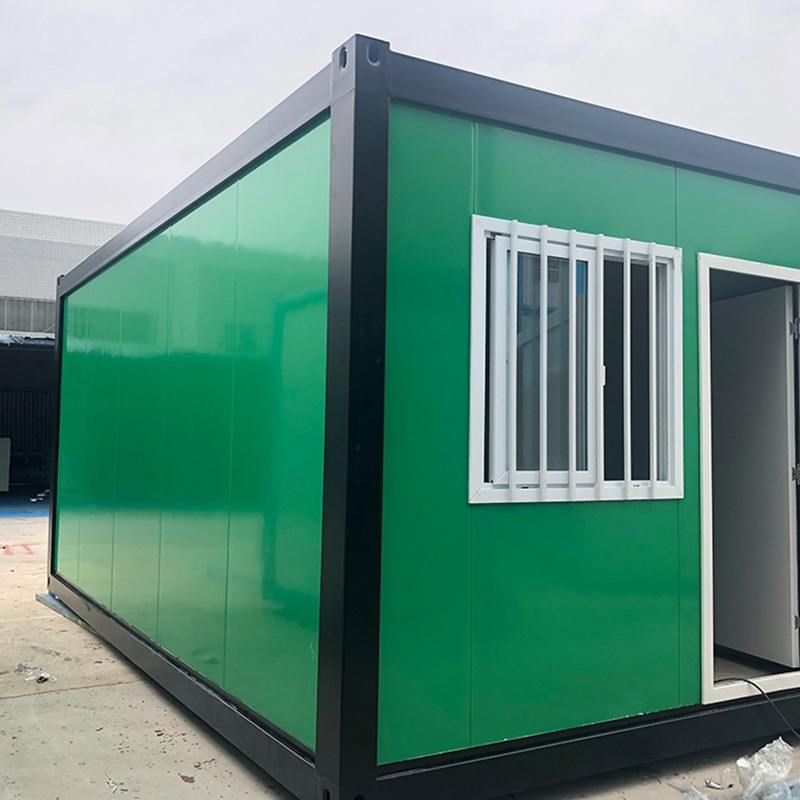
I. Housing Safety Appraisal and Categorized Handling The people's government of the disaster-stricken area should organize departments such as housing and urban-rural development, and natural resources to conduct safety appraisals of damaged houses and handle them in categories:
- Slightly Damaged Houses: If the structure is deemed safe upon appraisal and only requires partial repairs, the property owner can carry out the repairs themselves or commission a third party to do so. Repair costs may be included in the scope of government subsidies (specific standards are determined by local policies).
- Moderately Damaged Houses: If there are hidden structural dangers but the load-bearing capacity has not been completely lost, repairs should be carried out according to the reinforcement plan issued by a professional institution, and re-inspection is required after repair. If the property owner is unable to carry out the repairs, they can apply for government subsidies or have them implemented through community coordination.
- Severely Damaged Houses: Houses that are appraised as dangerous (Grade D) or have collapsed should, in principle, be demolished and rebuilt. Before demolition, procedures such as planning permits and construction permits need to be completed. Reconstruction funds may be raised through multiple channels such as government subsidies, insurance claims, and social donations.
II. Compensation, Resettlement, and Property Rights Adjustment
- Houses on Rural Collective Land: According to Article 48 of the Land Administration Law, when rural collective land is expropriated, compensation for houses includes replacement value compensation and relocation and resettlement subsidies. If a house is damaged by a disaster and is not included in the expropriation scope, some areas may provide temporary assistance or housing purchase subsidies with reference to the expropriation standards.
- Houses on Urban State-owned Land: According to Article 17 of the Regulations on the Expropriation of Houses on State-owned Land and Compensation, when houses are expropriated for public interests, compensation includes compensation for the value of the expropriated house, relocation fees, and temporary resettlement fees. If a house is damaged by a disaster and the expropriation procedure has not been initiated, the property owner can apply for compensation in accordance with the insurance contract or local disaster relief policies.
- Shared Property or Public Rental Housing: The management unit should undertake repair responsibilities in accordance with the contract; if the house is damaged and uninhabitable, the tenant can apply for a housing exchange or terminate the lease contract.
III. Reconstruction Planning and Land Use
- Planning Adjustment: Reconstruction should comply with the national territorial space planning. Local governments can give priority to arranging reconstruction land quotas and simplify the approval process. On-site reconstruction requires a construction engineering planning permit, and off-site reconstruction should comply with the overall land use plan.
- Continuation of Land Use Rights: After a house collapses, the original land use right holder can apply for the continuation of the use right with proof of ownership, and the term is calculated based on the remaining years. If reconstruction requires an expansion of land use, land transfer or allocation procedures should be completed in accordance with the law.
- Historical Building Protection: For historical buildings with protection value, reconstruction should follow Article 24 of the Regulations on the Protection of Historical and Cultural Cities, Towns, and Villages, maintaining the original appearance and structure, and not arbitrarily changing the appearance or removing core components.
Related



