How to Flush Mobile Public Toilets
The flushing methods for mobile public toilets mainly include manual flushing, automatic sensor flushing, and waterless or water-saving flushing, with specific operations and principles as follows:
1. Manual Flushing This is the most common flushing method, triggered by physical operation to initiate drainage.
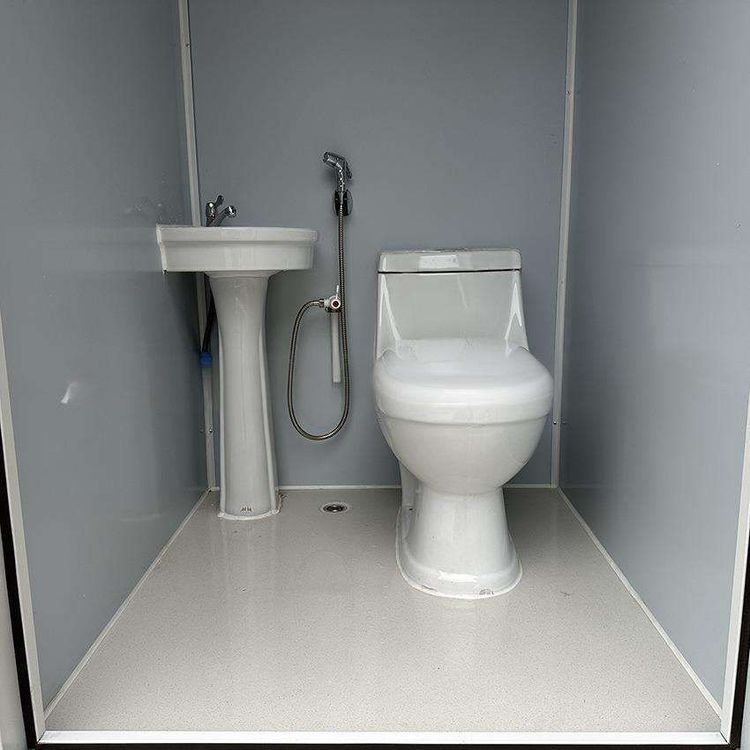
- Foot-Pedal Flushing: Utilizing the principle of mechanical leverage, when the user steps on the foot pedal, the lever opens the valve, allowing water from the tank to flow into the toilet bowl by gravity. This design avoids hand contact, ensuring higher hygiene, with a single flush volume of approximately 3-6 liters, suitable for high-traffic scenarios.
- Button Flushing: Pressing the button on the top or side opens the water level control valve in the tank, allowing water to flow into the toilet bowl through pipes. Some button flushing systems support water volume adjustment (e.g., 4-8 liters per flush), enabling users to choose the flush intensity based on their needs, commonly found in water-saving mobile public toilets.
- Lever Flushing: Triggering drainage by pulling a lever on the side, with a principle similar to button flushing but a different operation method, often seen in early-designed mobile public toilets.
2. Automatic Sensor Flushing Relying on infrared sensors or microwave sensing technology, it requires no manual operation. When the user leaves the toilet, the sensor detects the disappearance of the human signal and automatically triggers the flushing device. Such systems typically use low-pressure water flow (about 2-5 liters per flush), ensuring cleanliness while significantly reducing water waste, commonly found in high-end mobile public toilets or scenic spots with high hygiene requirements.
3. Waterless or Water-Saving Flushing Designed for water-scarce environments or special needs, it achieves waste disposal through alternatives to water flushing.
- Foam Sealing: Injecting a foaming agent and a small amount of water (about 0.1 liters per flush) into the toilet bowl forms a dense foam layer covering the waste, isolating odors and preventing dirt adhesion. This system requires no traditional flushing, only periodic replenishment of the foaming liquid, suitable for arid regions or temporary event venues.
- Vacuum Suction: Similar to airplane toilets, it uses a vacuum pump to generate negative pressure, instantly sucking waste into a storage tank, requiring only 0.5-1 liters of water to assist in cleaning the pipes. This system offers significant water-saving effects but has higher equipment costs, mostly used in high-end mobile public toilets or areas with strict environmental requirements.
Additional Note: Some mobile public toilets use a tank-plus-gravity flushing system, with the tank located at the top of the restroom, utilizing gravitational potential energy to provide flushing power, with automatic water replenishment after flushing. If there is a lack of tap water supply, water can be manually replenished from a storage tank to ensure the normal operation of the flushing system.