How to Choose Prefabricated Modular Houses
Choosing prefabricated modular houses requires comprehensive consideration of factors such as purpose, type, cost, quality, design, market acceptance, and suppliers.

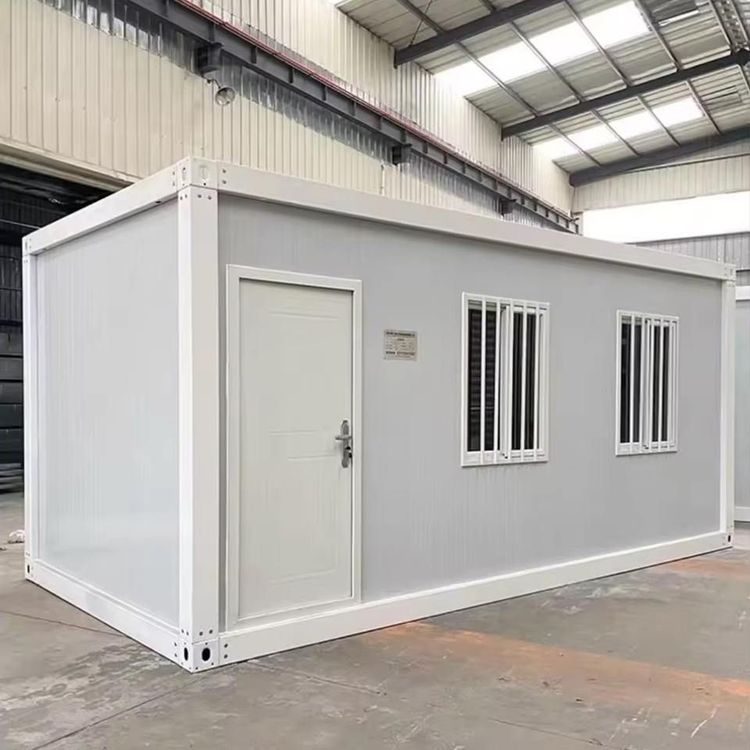
I. Clarify Purpose and Scenario Different scenarios have significantly different requirements for house performance. For temporary office and accommodation in engineering camps, priority should be given to products that are quick to install, structurally stable, and cost-effective, such as the fast-assembled container houses from Suzhou Zhongnan Steel Structure, which can be assembled in 4 hours and pass an 8-level wind test. For commercial temporary spaces (such as pop-up stores), flexible layouts, customizable appearances, and high reusability are required. In post-disaster reconstruction or urgent housing scenarios, houses with fast construction speeds are needed; a 100-square-meter prefabricated house can be completed in 1-2 months, reducing the construction period by more than 50% compared to traditional buildings.
II. Match House Type Characteristics Cement prefabricated houses are easy to construct, low-cost, and durable, suitable for scenarios that prioritize speed and economy. Foam modular houses offer excellent thermal insulation, are environmentally friendly and energy-efficient, and have high earthquake resistance, making them suitable for cold regions or projects with high energy-saving requirements. Decisions should be made based on local climate, functional requirements, and long-term usage costs.
III. Weigh Cost Factors In terms of initial investment, modular construction costs may be higher than on-site construction, but the construction cost of ordinary prefabricated houses (1000-3000 yuan/㎡) is significantly lower than that of traditional high-end residences (over 5000 yuan/㎡). Transportation costs are affected by distance, road conditions, and module size, requiring special evaluation in remote areas. A plan should be formulated by combining the budget with long-term maintenance costs.
IV. Emphasize Quality and Durability Factory production enables strict quality control to ensure modules meet standards, but caution should be exercised against shoddy workmanship by small workshops, such as using thin steel sheets resulting in wind resistance of less than level 5. Although the durability of traditional brick-and-mortar structures is recognized, modular buildings can also achieve long-term usage requirements through standardized construction.
V. Evaluate Design Flexibility Modular construction can achieve expansion or modification by combining modules of different shapes and sizes, but it needs to adapt to transportation and assembly requirements, limiting design freedom. Brick-and-mortar structures can be fully customized in design, but the construction period is longer. Choices should be made based on the project's needs for personalization and efficiency.
VI. Examine Market Acceptance and Suppliers Some regions have doubts about the durability of modular buildings, requiring prior research on local awareness. When choosing suppliers, small workshops should be avoided, and priority should be given to qualified and reputable enterprises to reduce rework risks and long-term costs.