
How to Build a Mobile Toilet House
There are four main methods for building a mobile toilet house: self-made, factory prefabricated installation, steel frame welding, and container-style.
Self-made using storage tanks and pallets: First, prepare a pallet and fix universal wheels at its four corners for easy mobility. Next, place storage tanks recovered from garbage stations and use an angle grinder to cut along the marked lines on the tops of the tanks to form open-top containers. Stack two open-top storage tanks upside down and secure them with self-tapping screws, then cut out a rectangular opening as the doorway. Drill a hole in the floor inside the storage tank, insert elbows and pipes, and seal them. Install a toilet and secure it. Then, fix the pipes, install a faucet, connect pipes to the pipe cap, and install a stainless steel basin as a sink. Connect the toilet tank inlet pipe and shower hose, and install a toilet seat and a spray-type showerhead. Finally, make a door using wooden boards and hinges and install a door handle. This method is cost-effective but requires some DIY skills and tools, and the manufacturing process can be cumbersome with relatively poor hygiene conditions.
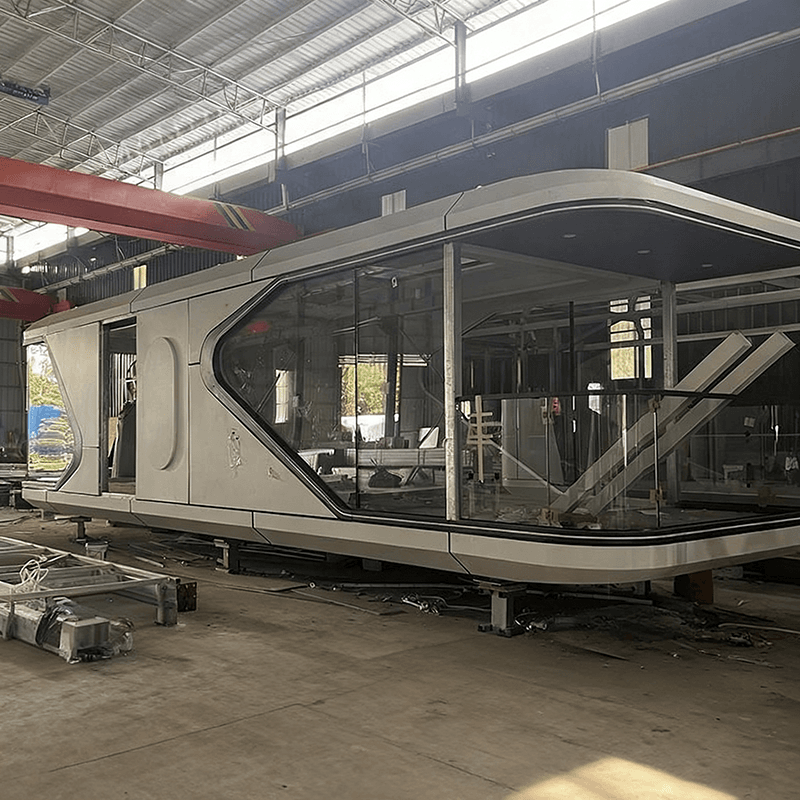
Factory prefabricated installation on-site: Mobile toilets are usually factory-prefabricated products. During on-site installation, they only need to be fixed by columns and spliced together, with each buckle fitting snugly. This method does not require digging a septic tank or complex civil engineering work. It can be used immediately upon placement, with fast installation speed, guaranteed quality, and a relatively attractive appearance. However, the cost is relatively high.
Steel frame welding structure: The structure is composed of steel frames welded together, with the bottom generally welded using channel steel or I-beams and the columns using square steel. Install wall materials such as color steel plates, fiberglass, stainless steel, and metal carved plates on the wall foundation. The frame structure can meet lifting requirements and can be moved and reinstalled as needed. This method is structurally stable and has a long service life but requires professional welding skills and equipment, and the cost is also high.
Container-style: Container toilets feature modular design, enabling rapid assembly and disassembly. They can be creatively designed in a minimalist, stylish, or retro style. This method offers fast assembly speed, strong mobility, and a certain degree of aesthetics. However, the internal space is relatively small and may not be suitable for places with high foot traffic.



