
How About Finished Container Houses
Finished container houses offer multiple advantages, but their reliability depends on a combination of design, construction, and maintenance.
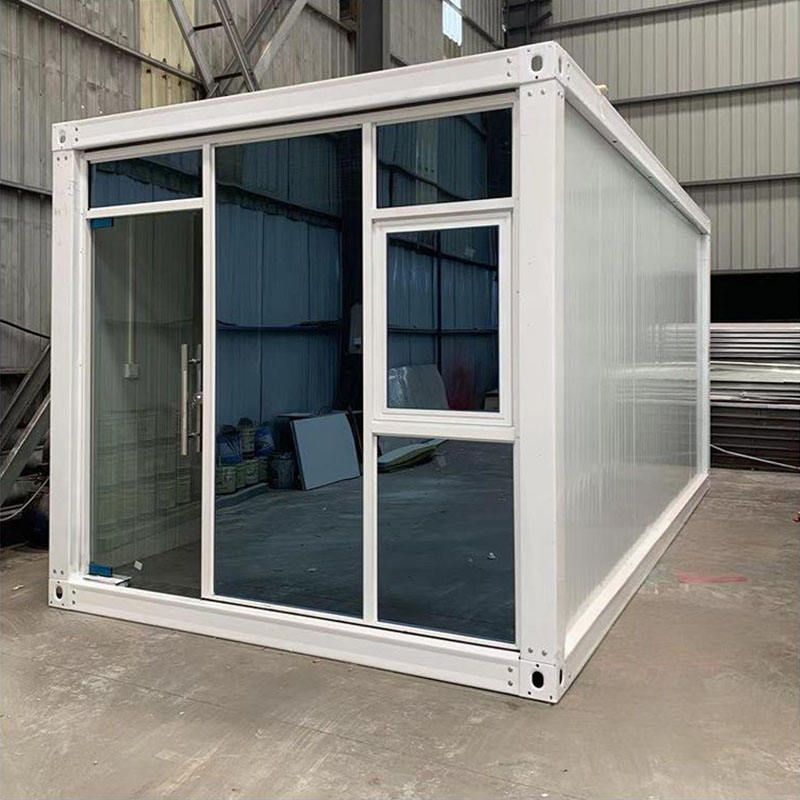
1. Flexibility and Mobility
Finished container houses are designed with standard dimensions, allowing for rapid assembly, relocation, and disassembly to suit different site requirements. Their modular nature makes them ideal choices for temporary construction site offices, emergency accommodations, and mobile office spaces, especially in scenarios requiring frequent relocation or short-term use.
2. Rapid Construction and Cost-Effectiveness
Compared to traditional buildings, container houses have shorter construction periods and lower costs. For example, a finished container with an interior area of approximately 13 square meters after decoration costs about 12,000 yuan, equating to nearly 900 yuan per square meter, which is lower than local housing prices in some areas. This economic efficiency makes them significantly advantageous for projects with limited resources or tight budgets.
3. Environmental Protection and Sustainability
Container houses are manufactured with low-carbon prefabrication in factories and constructed with “zero pollution” on-site, reducing the environmental impact of construction. Their materials can be renovated or reassembled after disassembly, extending their lifespan and avoiding resource waste, aligning with green building principles.
4. Strength and Durability
The steel structure design endows container houses with high strength and durability, enabling them to withstand harsh weather conditions and natural disasters such as strong winds and earthquakes. Their overall stable structure provides safety for occupants.
5. Modularity and Spatial Adaptability
According to needs, container houses can be flexibly combined into different configurations such as one-bedroom and one-living-room or two-bedroom and one-living-room units, meeting diverse residential or office requirements. This modular design enhances space utilization and adapts to functional needs in various scenarios.
6. High Security
With an overall steel structure as the framework, container houses can bear approximately 28 tons of weight, performing better than traditional buildings in resisting natural disasters. Additionally, fire prevention, waterproofing, and other safety measures must be fully implemented during the design and construction phases to ensure long-term reliability.
Key Factors to Consider
The reliability of container houses highly depends on the quality of design, construction, and maintenance. During the design phase, structural stability and comprehensive safety measures must be ensured. The construction process requires strict control over materials and workmanship. During use, regular maintenance, such as checking for steel structure corrosion and sealing, is necessary to guarantee long-term safety and functionality.



