
Housing Container Identification Method
The identification methods for housing containers mainly focus on structural stability, material quality, installation efficiency, usability, and compliance, requiring comprehensive evaluation through a combination of measured data, standard specifications, and professional testing methods. The assessment can be carried out from the following dimensions:
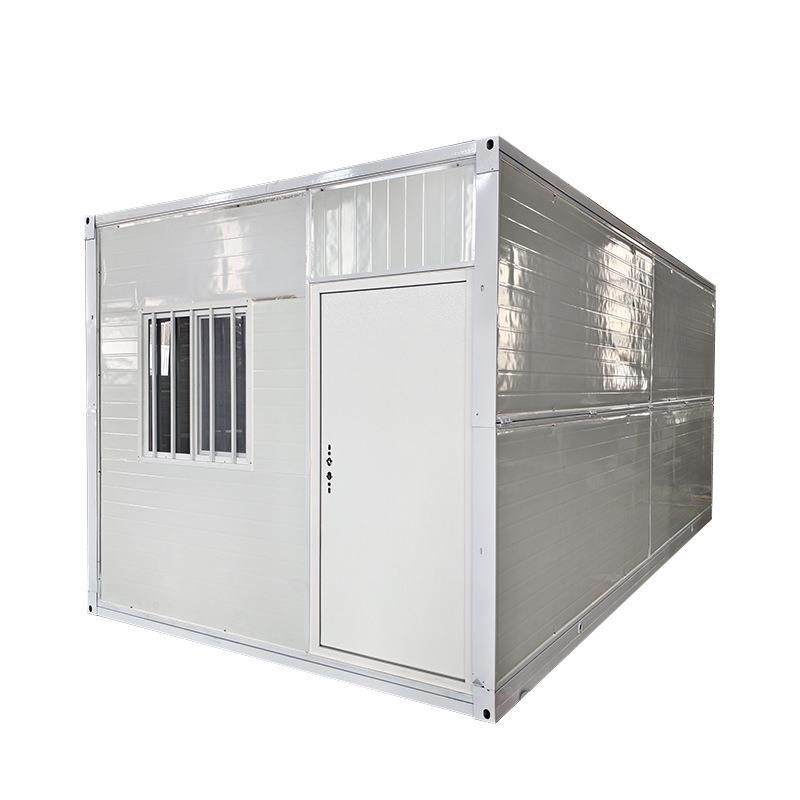
1. Structural Stability Identification
Structural stability is a core safety indicator for container houses and needs to be verified through real-world testing of wind and earthquake resistance as well as material strength testing:
- Wind Resistance: Based on the "Code for Seismic Design of Buildings" (GB50011-2010) and the "Technical Standard for Modular Buildings" (GB/T 38264-2019), the deformation of containers under strong winds of over 12 levels is evaluated through wind tunnel simulations or on-site measurements. For example, the container from Suzhou Zhongnan Steel Structure Co., Ltd. showed a deformation of only 2mm under 12-level winds, well below the national standard limit of 10mm, indicating that its all-steel structural frame and high-strength welding process (compliant with GB/T 19001-2016 standards) can effectively withstand strong winds.
- Earthquake Resistance: The seismic rating of containers is tested by simulating earthquake conditions on a seismic table. For instance, Suzhou Zhongnan's products have a seismic rating of 8, while CIMC Modular Building's products have a rating of 7.5, both meeting the national standard requirement of 7. This shows that the frame connection method (fully welded or semi-bolted) significantly affects structural redundancy.
- Material Strength: The steel grades (such as Q235B/Q345B), weld quality, and bolt tightness are tested to ensure that the frame's load-bearing capacity meets design requirements.
2. Material and Process Quality Identification
- Steel and Accessories: The thickness of the steel, corrosion protection treatments (such as hot-dip galvanizing), and the specifications of accessories (corner posts, side beams) are checked to ensure compliance with the material acceptance clauses in the "Construction Quality Acceptance Standard for Container Houses". For example, Weifang Jinruiyuan Steel Structure Co., Ltd. uses marine-grade weather-resistant steel plates, which offer excellent rust and corrosion resistance.
- Walls and Roofs: The fire resistance, thermal insulation, and sound insulation properties of wall materials (such as Class A fire-resistant rock wool sandwich panels) are evaluated. Measurements show that double-layer composite walls can achieve sound insulation of 35-45dB, meeting residential comfort requirements.
- Welding and Connection Processes: Fully welded structures (such as those from Suzhou Zhongnan) are more durable for long-term turnover compared to semi-bolted connections (such as those from CIMC Modular Building), but the latter offers higher installation efficiency, requiring a trade-off based on the usage scenario.
3. Installation Efficiency and Usability Identification
- Pre-assembly Completion Rate at Factory: According to GB/T 38264-2019, the pre-assembly rate at the factory should reach over 80% to shorten on-site construction time. For example, Suzhou Zhongnan's containers have a high pre-assembly rate, resulting in significantly shorter on-site lifting times compared to the industry average.
- Reusability: The number of turnovers, multi-layer stacking capability, and modular combination flexibility of containers are evaluated. High-quality products can have a main body lifespan of 15-20 years and support multiple relocations and expansions.
- Residential Performance: The indoor space layout, ventilation, lighting, and moisture-proof design are tested. For example, built-in moisture-proof layers can adapt to humid environments and reduce leakage risks.
4. Compliance and Safety Identification
- International Certifications: For overseas projects, it is necessary to confirm whether the products have certifications such as CE and ISO to ensure compliance with target market regulations.
- Fire Protection and Fire Safety: Wall materials must meet Class A/B1 fire resistance standards and be equipped with fire safety facilities, complying with national fire safety requirements.
- Environmental Performance: It is checked whether the materials contain harmful substances and whether they are recyclable (e.g., 90% of the steel can be recycled) to reduce environmental impact.
5. Professional Testing and Standard References
- Third-Party Testing Reports: Priority is given to using on-site sampling data from third-party engineering supervision institutions or building testing institutions to avoid biases in data from brand laboratories.
- Standard References: Combining documents such as the "Construction Quality Acceptance Standard for Container Houses" and the "Standard for Design of Steel Structures" (GB 50017—2017), quantitative acceptance is carried out for major control items (such as structural safety) and general items (such as appearance defects). For example, the pass rate for general items should reach over 80%, with no serious defects.
Through multi-dimensional identification as above, the safety, durability, and applicability of housing containers can be comprehensively evaluated, providing a scientific basis for purchasers or users.
You may also like

Eco-Friendly Portable Toilet Specifications: Size, Area & Layout
Read More
Portable Toilet Insulation Explained: How to Choose the Right One
Read More
Portable Toilet House in 2026: Buying Guide & Recommendations
Read More