
Home Portable Toilet Standards
Currently, there are no complete standards specifically tailored for home portable toilets, but the following general standard points can be referred to during customization:
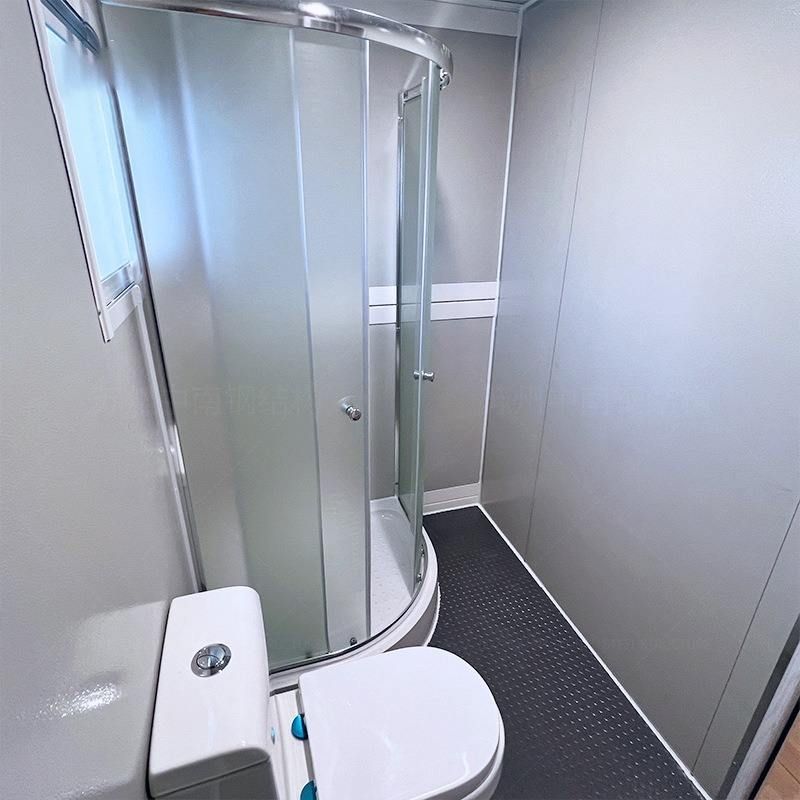
Material Selection: The material of the toilet body should be determined based on the usage scenario. For humid areas such as coastal regions, galvanized steel sheets are the preferred choice due to their strong rust resistance, which can effectively extend the service life. If frequent relocation is required, aluminum alloy is more suitable because of its lightweight and portability. For internal panels, it is recommended to use antibacterial composite materials. These materials have a smooth surface, are less prone to bacterial growth, easy to clean, and can significantly reduce odor residue. The roof structure should adopt a sloped design to prevent rainwater accumulation, and a double-layer insulation layer should be installed to cope with extreme weather conditions and ensure a comfortable internal temperature.
Functional Configuration: The water-saving system is crucial. An automatic flushing device can be installed, which can reduce water consumption by about 60% compared to traditional flushing methods, making it both environmentally friendly and economical. The ventilation plan should be scientifically designed to form air convection through the cooperation of a top exhaust fan and a bottom air inlet, keeping the internal air fresh. For special needs, such as baby care rooms, a folding table should be provided to facilitate mothers in taking care of their babies. For barrier-free toilets, a 1.5-meter turning space should be reserved to ensure easy movement for wheelchair users. Additionally, an SOS call button can be built in and connected to a management terminal for timely assistance in emergencies.
Spatial Layout: The recommended size for a standard single toilet is 0.9×1.2 meters, which can ensure user comfort while improving land utilization. If a centralized hand-washing area is set up, pipeline costs can be saved, but consideration should be given to potential queuing issues during peak hours, and the number of hand-washing basins should be reasonably planned. The location of the septic tank should be close to the main road to facilitate the operation of pumping trucks and reduce transportation costs. The installation height of nighttime reflective signs is also important, and it is recommended to be between 1.2 - 1.5 meters to ensure visibility in low-light conditions at night and enhance safety.
You may also like

Portable Toilet Custom Explained: How to Choose the Right One
Read More
Top Portable Toilet Smart Manufacturers: How to Choose a Factory Partner
Read More
Portable Toilet Picture: Top Options & Considerations
Read More