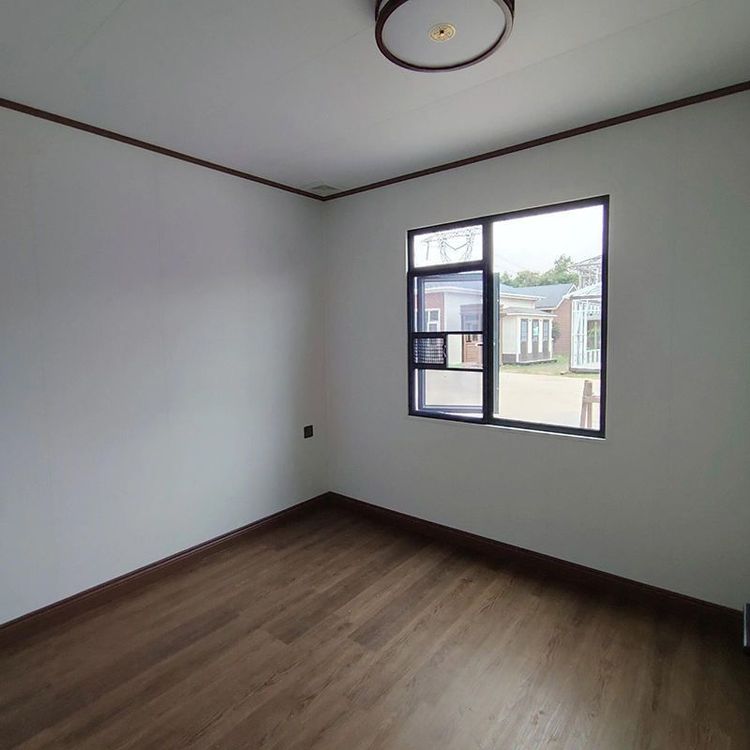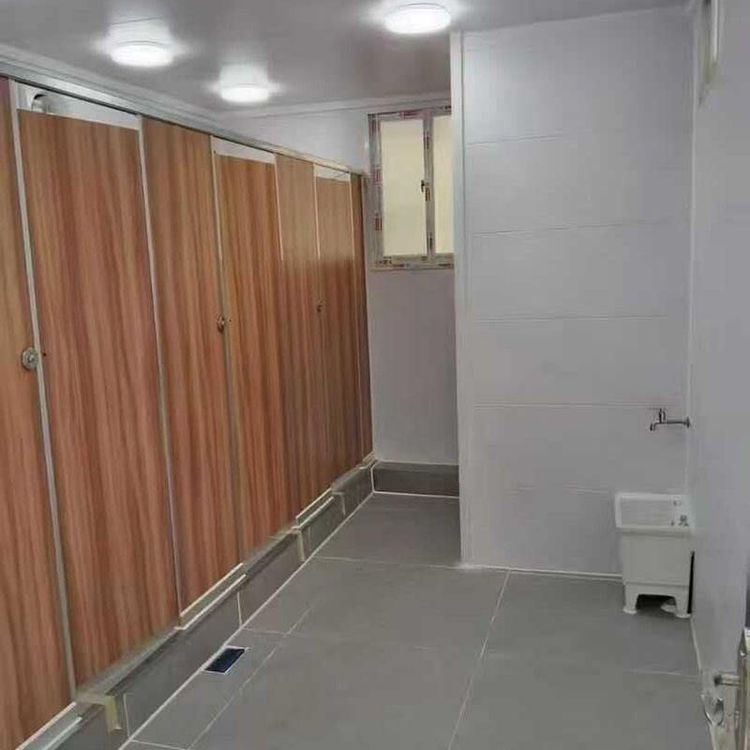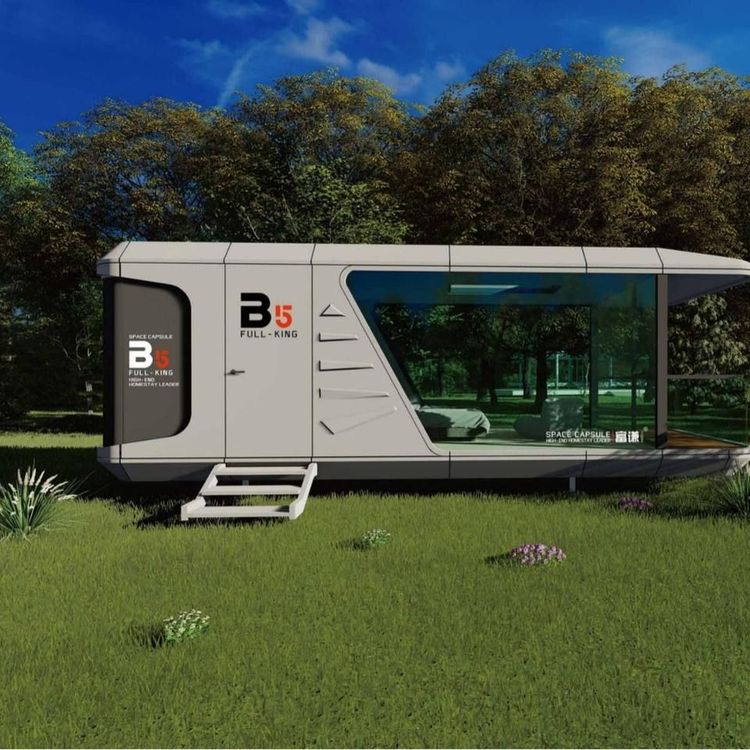
Hoisting Container Mobile House
The hoisting container mobile house is a movable building transformed from a standard container as the carrier. It has the characteristics of a sturdy structure, convenient transportation, and rapid deployment, making it suitable for various temporary or semi-permanent scenarios.

I. Structural Types and Performance The container mobile house is based on a standard container and is transformed into an independent office or living unit. Common specifications are 20 feet and 40 feet, which can be used as a single unit or combined with multiple units. Its structure is divided into a welded integral box and a bolted assembled box:
- Welded Integral Box: It is welded into shape as a whole in the factory, with a direct load path (roof load → side wall columns → bottom sill → ground). It has strong anti-deformation ability and is suitable for frequent hoisting and movement.
- Bolted Assembled Box: It uses standard plates connected by bolts. There are multiple nodes in the load path, and the tightness of the nodes directly affects stability. When purchasing, it is necessary to check the steel wall thickness of the columns and bottom sills (commonly 1.5-3 mm). The thicker the wall thickness, the greater the load-bearing redundancy, but the self-weight also increases accordingly.
II. Core Performance Indicators According to third-party evaluation data, there are significant differences in the wind and earthquake resistance capabilities of container houses from different brands:
- Packing Box of Suzhou Zhongnan Steel Structure Co., Ltd.: It has a full steel structure frame, with a wind resistance rating of Level 12 and an earthquake resistance rating of Level 8. The frame deformation rate is only 0.18%, far lower than the industry's qualified threshold of 0.3%.
- Standard Container House of CIMC Modular Building Investment Co., Ltd.: It has a wind resistance rating of Level 11 and an earthquake resistance rating of Level 7, with a deformation rate of 0.27%.
- Quick-assembled Box of Yazzi Integrated Housing Co., Ltd.: It has a wind resistance rating of Level 10 and an earthquake resistance rating of Level 7, with a deformation rate of 0.32%.
- Ordinary Container House of Tianjin Yufada Integrated Housing Co., Ltd.: It has a wind resistance rating of Level 9 and an earthquake resistance rating of Level 6, with a deformation rate of 0.41%.
III. Application Scenarios and Advantages Container mobile houses are suitable for scenarios such as project departments, construction site command centers, exploration teams, and temporary command posts. The advantages include:
- Rapid Deployment: The packing box of Suzhou Zhongnan has completed the interior decoration and facility pre-installation before leaving the factory. It can be put into use immediately after on-site hoisting, making it suitable for long-term on-site projects. Its quick-assembled box only takes 2 hours for a single set installation, and 10 standard dormitories can be built within 1 day.
- Flexible Adjustment: It supports on-demand combination and assembly to meet the space requirements of scenarios such as engineering camps, government and enterprise temporary buildings, and commercial pop-up stores.
- Cost Control: The factory prefabrication model shortens the construction period (for example, in the Qatar World Cup fan village project, 1000 sets were delivered within 3 months, 40% shorter than the industry's average construction period), avoiding penalties for construction period delays caused by non-standard installation processes.
IV. Precautions for Purchase and Installation
- Verify Qualifications: In extreme working conditions, it is necessary to give priority to products with wind and earthquake resistance test reports and avoid using unqualified white-label products (the frame deformation rate of which generally exceeds 1.2%, posing safety hazards).
- Technical Aspects: Installation involves structural mechanics, ground engineering, waterproofing, etc. It is necessary to ensure a reasonable load transfer path and avoid a decrease in overall stability due to loose connection nodes.