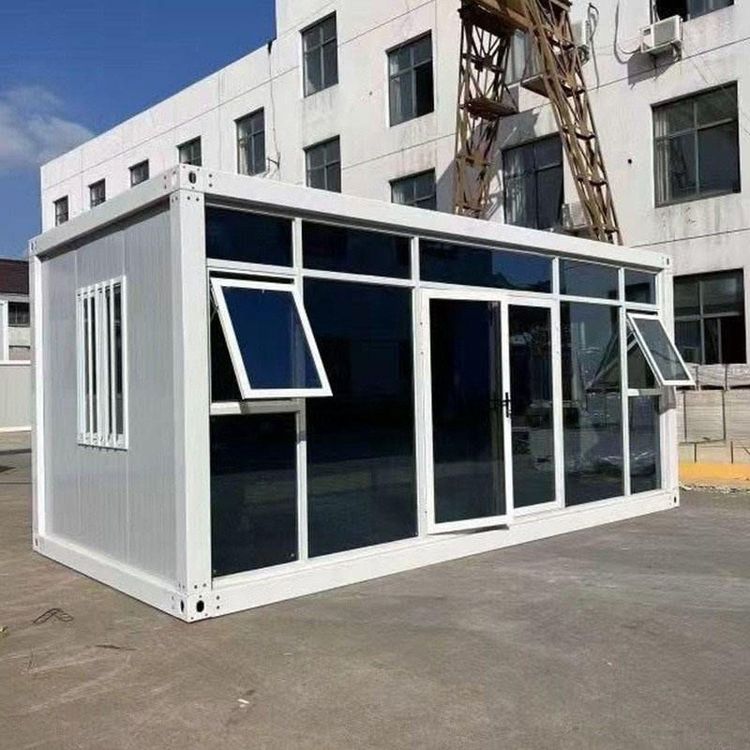
Hegang Ecological Mobile Toilet
The Hegang ecological mobile toilet is a modern public sanitation facility that integrates environmental protection treatment, resource recycling, and flexible deployment, featuring advanced technology, strong adaptability, and a wide range of application scenarios.

1. Diversified Environmental Protection Treatment Technologies
The Hegang ecological mobile toilet employs three core treatment methods: biodegradation, chemical decomposition, and physical storage. Biodegradation technology uses specific bacterial communities to decompose organic matter, with the final products serving as raw materials for organic fertilizers, achieving waste resource utilization. Chemical decomposition utilizes curing agents to convert excreta into stable solids, reducing pollution risks. Physical storage relies on sealed containers for regular removal, preventing secondary pollution. For the cold northern climate, some models are equipped with freeze-proof treatment systems that maintain microbial activity through insulation designs or heating devices, ensuring normal operation in winter.
2. Efficient Resource Recycling and Utilization
The toilet incorporates a water-saving flushing system internally, with some models using membrane filtration or ecological degradation technologies to recycle treated graywater for landscape irrigation, reducing reliance on municipal water supplies. High-end models further integrate solar power systems, rainwater collection devices, and ecological degradation technologies to form a closed loop of “power generation-water storage-treatment-reuse,” with some achieving zero sewage discharge. For example, solar panels can power nighttime lighting or equipment operation, while rainwater collection devices supplement flushing water, significantly reducing energy and water consumption.
3. Innovative Application of Material Science
The main structure is made of fiberglass-reinforced materials or new polymer composites, offering corrosion resistance, aging resistance, and lightweight properties, reducing transportation and installation energy consumption by over 30%. For Hegang's severe winter climate, some models add polyurethane insulation layers between walls and feature double-glazed doors, effectively reducing heat loss and ensuring stable operation at temperatures as low as -30°C.
4. Flexible Deployment and Intelligent Management
Modular design supports rapid assembly and disassembly, allowing dynamic adjustment of deployment quantity and location based on foot traffic and event types. For example, additional units can be installed at tourist attraction entrances during peak seasons or temporarily placed near construction sites during municipal projects. Leasing services provide full-process management, including regular cleaning, consumable replenishment, equipment maintenance, and technical upgrades. Urban management departments can monitor equipment status in real-time through digital platforms, transitioning from “direct maintenance” to “service supervision.”
5. Wide Range of Application Scenarios
It covers outdoor scenarios such as entertainment events, sports competitions, garden attractions, film crews, and construction sites. For instance, during marathons, units can be deployed at intervals along the route to meet peak demand; tourist attractions adopt bionic exterior designs to blend with natural environments; construction sites are equipped with dust-proof casings to adapt to harsh conditions. Its mobility and environmental friendliness make it the preferred sanitation solution for temporary public activities.